Stand up for the facts!
Our only agenda is to publish the truth so you can be an informed participant in democracy.
We need your help.
I would like to contribute
SUMMARY: Bill Richardson and other critics overstate the drawbacks of John Edwards' decision to take public financing.
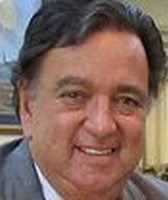
In an Oct. 5, 2007, interview on CNN, New Mexico Gov. Bill Richardson said Former Sen. John Edwards would be hurt by his decision to accept public matching funds for the primary race.
"I think what Senator Edwards did, going to public financing, really disadvantages Democrats because you're not able to raise funds between the day you win the primaries and the time you're officially nominated."
The suggestion to Democratic voters was that Richardson would be a better nominee than Edwards because he wouldn't be hamstrung by the restrictions that come with publicly subsidized campaigns.
Other Democratic candidates have made the same point, noting that Edwards would have to cap spending at $50.9-million during the primary period. That period begins Jan. 1, 2008, and formally ends at the party convention next August.
Critics argue that if Edwards were the nominee, presumably in the spring, he wouldn't have enough money left to defend against Republican attacks over the summer.
That's not entirely true.
First, it's incorrect to categorically say Edwards wouldn't be able to raise money between the primaries and the nomination. If Edwards' spending was short of the $50.9-million cap after the primaries, there's nothing in federal regulations that would prevent him from raising more primary money.
But let's assume the predictions are true that the current campaign cycle will break spending records.
Let's say Edwards spends all the way up to the $50.9-million cap on his way to becoming the presumptive nominee. Yes, the rules would prevent his campaign from spending any more at that point. But is he automatically disadvantaged, as Richardson suggests?
Not necessarily.
Richardson's statement does not consider that the Democratic Party could spend millions on a summer campaign if a clear nominee emerged by then. Independent groups and individuals also could chip in.
Consider the last presidential election. Total spending by the parties, independent groups and individuals on behalf of candidates totaled $192.4-million in 2004 — up from $14.7-million in 2000.
What's more, Edwards could help raise money for the party, which could "spend unlimited funds on his behalf," said Steve Weissman, associate director for policy at The Campaign Finance Institute.
"So it's not exactly true that Edwards would have no resources," he said.
The caveat: The law sets a limit on how much money the party and Edwards could spend while coordinating their efforts. The bulk of the money would have to be spent without coordination.
Not being able to coordinate with the party can be a less efficient way to operate, Weissman said. "It would be more difficult for Edwards," he said, "but I wouldn't say impossible."
In addition, Richardson's statement doesn't contemplate the possibility of John McCain being the presumptive Republican nominee. In August, McCain became the first presidential candidate to qualify for federal matching funds in the primaries, and he has indicated he might accept the money.
Should McCain accept public financing and emerge as his party's presumptive nominee, he and Edwards would be in the same boat when it came to fundraising.
The general point that Richardson makes is valid: a candidate's hands are tied by rules governing federal matching money — especially the state-specific spending limits that are based on voting age population instead of political reality. But he assumes too much by suggesting that Edwards' campaign would stagnate in the important months before the convention.
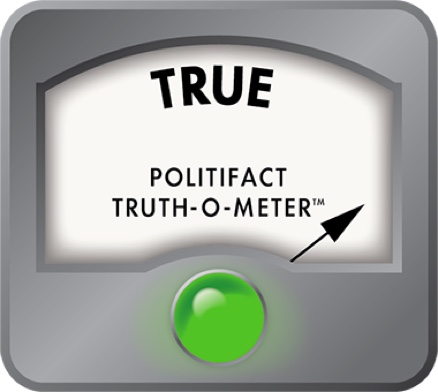
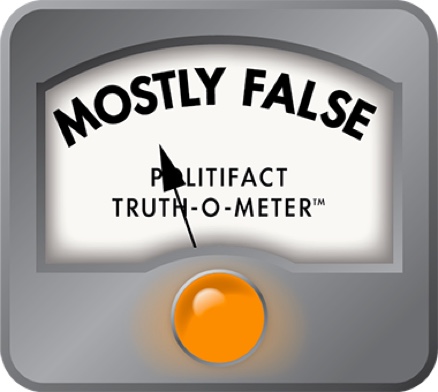
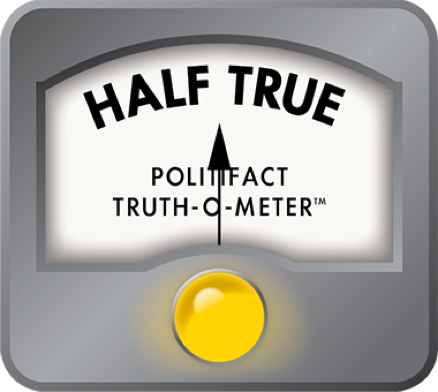
We find his statement half true.
Our Sources
Interviews: Steve Weissman, associate director for policy, The Campaign Finance Institute; Kent Cooper, co-founder, CQ MoneyLine
Inside Cable News, "Bill Richardson on CNN Newsroom" Oct. 5, 2007
Federal Election Commission, Public Funding of President Elections, April 2007
Common Cause, What is the Presidential Public Financing System?
John Edwards Campaign Web Site, Edwards Takes Next Step In Rejecting Money From Special Interests By Seeking Public Financing Sept. 27, 2007