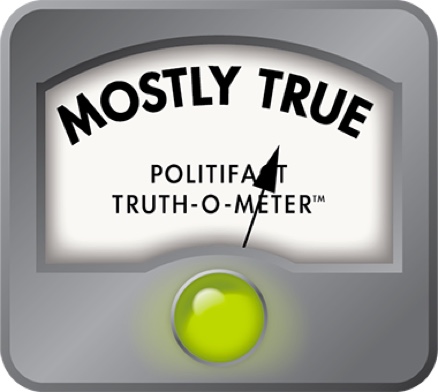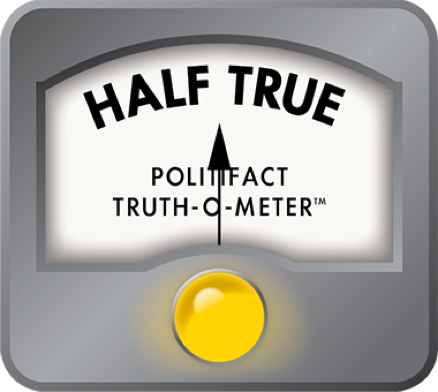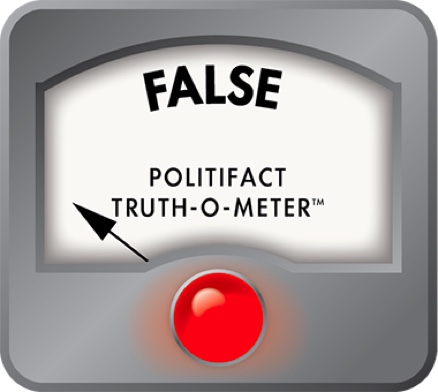
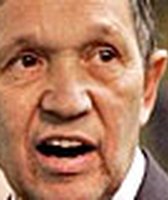
"I'm the first person who really took up the issue of the war. Four years ago I said that there was no proof that Iraq had weapons of mass destruction, and, actually... did an analysis which disproved the cause for the war."

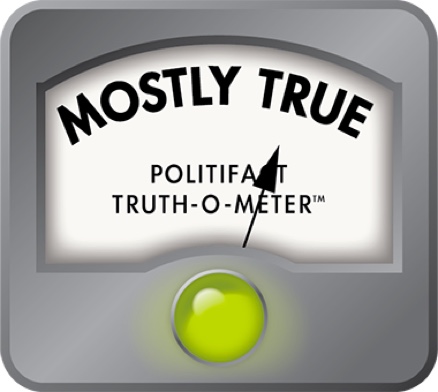
On the topic of the conflict in Iraq, Dennis Kucinich holds the high ground among his Democratic rivals who oppose the war with his 2002 vote against authorizing military action against Saddam Hussein. Of the Democrats running for president who were in Congress at the time, Kucinich is the only one who voted against the war resolution.
But to earn the crown as the "first" -- whatever that means, and Kucinich's campaign wouldn't clarify -- is a more nuanced privilege.
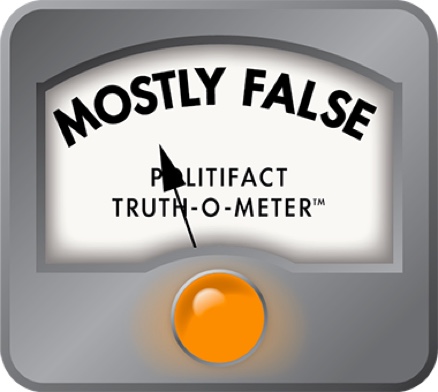
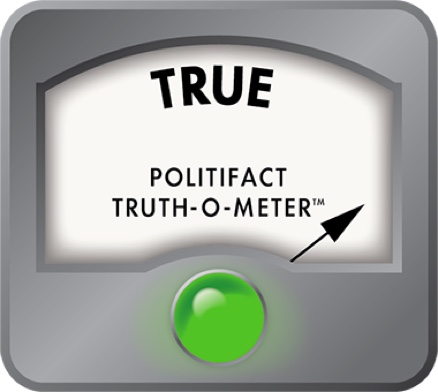
Was he the first person? No. Was he the first Congressman? No. Was he the first presidential candidate? No (Correct answer: Republican Ron Paul). Was he the first Democratic presidential candidate? Yes.
According to the Congressional Record, the Cleveland Democrat first spoke against the war in the context of Iraq in remarks made March 20, 2002. Kucinich advocated peace and warned against the slippery slope of nuclear weapons. (Paul spoke out on Nov. 29, 2001 saying "the argument that (Saddam) Hussein is producing weapons of mass destruction is the reddest of all herrings," according to the Congressional Record.)
But Kucinich earned the title as the leader of the anti-war movement in late August 2002 after holding a widely reported Capitol Hill briefing where he called for more "discussion about why we should not go to war," according to an article in the Cleveland Plain Dealer. He then began building a congressional coalition against the war.
"Unilateral military action by the United States against Iraq is unjustified, unwarranted and illegal," said Kucinich, according to The Washington Times on Sept. 20, 2002. "The administration has failed to make the case that Iraq poses an imminent or immediate threat to the United States."
Kucinich solidified his position as the opposition headmaster Oct. 3, 2002, when he took the floor of the House to present an eight-page, point-by-point analysis refuting the joint resolution on Iraq in the days before the vote.
Sources: Congressional Record, "The War on Terrorism," Nov. 29, 2001.
Congressional Record, "Peace and Nuclear Disarmament: A Call to Action," March 20, 2002.
Auster, Elizabeth. Plain Dealer, Aug. 21, 2002. "Kucinich focuses on why not to attack." Page: A3.
Fagan, Amy. The Washington Times. Sept. 20, 2002. "Democrats form anti-war coalition." Page: A14
Congressional Record, "Vote 'No' on Iraq War Resolution," Oct. 3, 2002.
Interview with Andy Juniewicz, Kucinich campaign
"Analysis of Joint Resolution on Iraq" By Dennis Kucinich
Kucinich campaign Web site, Analysis of Joint Resolution on Iraq by Dennis J. Kucinich
















In a world of wild talk and fake news, help us stand up for the facts.