Sen. Chris Murphy’s stroke at 53 highlights a trend: Strokes among younger adults have risen
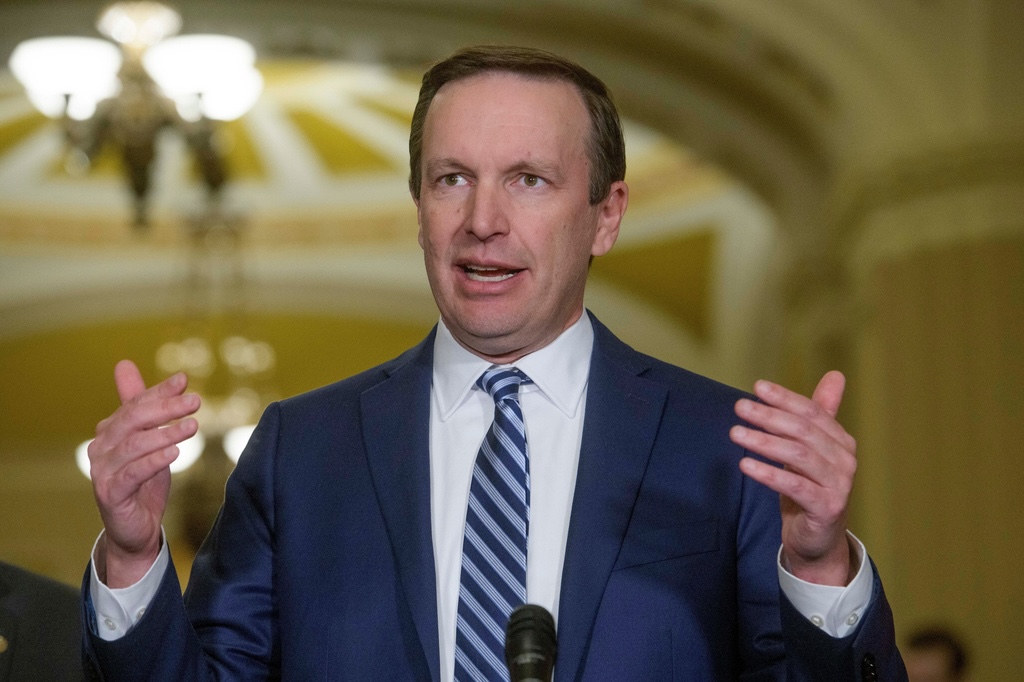


After U.S. Sen. Chris Murphy, a 53-year-old Democrat representing Connecticut, was hospitalized Oct. 31 following a stroke, his chief of staff said she was “optimistic” he will make a full recovery.
Stroke rates are higher overall among older adults, so a stroke at his age may sound surprising — but it’s become more common.
Stroke rates among adults ages 20 to 54 years old have risen in the last 30 years. Researchers found that the stroke incidence rate among adults from 1993-94 nearly doubled in 2020, jumping from 33.90 cases per 100,000 people to 62.18 cases. Stroke rates remain much higher overall among older adults, but the rate for older people declined during the same period.
When Centers for Disease Control and Prevention researchers compared stroke incidence data from 2011-13 with 2020-22, they found that stroke prevalence increased 14.6% among people 18 to 44 and 15.7% among people 45 to 64.
There isn’t one single explanation for the rise, but risk factors for stroke such as high blood pressure and obesity are up among young people, too.
A study in Florida found that from 2014 to 2022, young patients (18 to 55 years old) who experienced the most common form of stroke increasingly had existing vascular risk factors such as hypertension, coronary artery disease, diabetes or sleep apnea.
To decrease stroke risk, health professionals advise people to quit smoking and using drugs recreationally and to eat a balanced diet that incorporates many colorful fruits and vegetables. It’s important to maintain an active lifestyle and manage conditions such as high blood pressure, diabetes and cholesterol.
High blood pressure significantly increases a person’s stroke risk, and some people can feel completely healthy even if they have hypertension, Dr. Elizabeth Rosen, neurologist at Tufts Medical Center, told Prevention.
Regularly seeing a health care provider can help people identify stroke risk factors early, Dr. Aaron Shoskes, a University of Utah neurologist, said in April. A visit with a primary care doctor can reveal information about a person’s weight, family history of stroke and other health conditions.
“Once those numbers are known, the next step is working with a clinician to manage them,” Shoskes told the university. “Early intervention makes a big difference.”
RELATED: Elections cause stress for nearly 70% of US adults. Here’s how to manage the anxiety
Our Sources
Chris Murphy, [2026-11-01] Statement on Senator Murphy’s Hospitalization, Nov. 1, 2026
The New York Times, Senator Chris Murphy Is ‘Awake and Alert’ After Suffering a Stroke, Nov. 2, 2026
CNN, Stroke rates among young adults nearly doubled in 3 decades, Sept. 23, 2026
Neurology, Stroke in the Young, Sept. 23, 2026
Neurology, Temporal Trends in Vascular Risk Factor Burden Among Young Adults With Ischemic Stroke, March 25, 2025
American Heart Association, U.S. stroke rate declining in adults 75 and older, yet rising in adults 49 and younger, Feb. 3, 2022
UVA Health, Stroke Under 55: What Everyone Should Know, Sept. 16, 2026
University of Utah Health, Top Five Steps for Preventing a Stroke, June 21, 2022
JAMA Research Letter, Prevalence and Control of Diabetes Among US Adults, 2013 to 2023, Feb. 27, 2025
Prevention, Stroke Rates Have Nearly Doubled in Adults Under 55—but Why? Sept. 23, 2026
American Heart Association, High blood pressure a concern for adolescents and young adults in U.S., Sept. 05, 2024
New York-Presbyterian’s, High Cholesterol in Your 20s and 30s: Causes, Symptoms and Treatment Options,
American Heart Association, Obesity rates in the U.S. climbed to about 40% of adults and 20% of youth in 2023, July 7, 2026
Centers for Disease Control and Prevention, Prevalence of Stroke — Behavioral Risk Factor Surveillance System, United States, 2011–2022, May 23, 2024
Centers for Disease Control and Prevention, Total and High-Density Lipoprotein Cholesterol in Adults: United States, August 2021- August 2023, Nov. 2024
Centers for Disease Control and Prevention, Risk Factors for Stroke, May 14, 2024
Johns Hopkins Medicine, Types of Stroke, accessed Nov. 2, 2026