Americans told pollsters they support voter ID. Here’s how that played out in the midterms
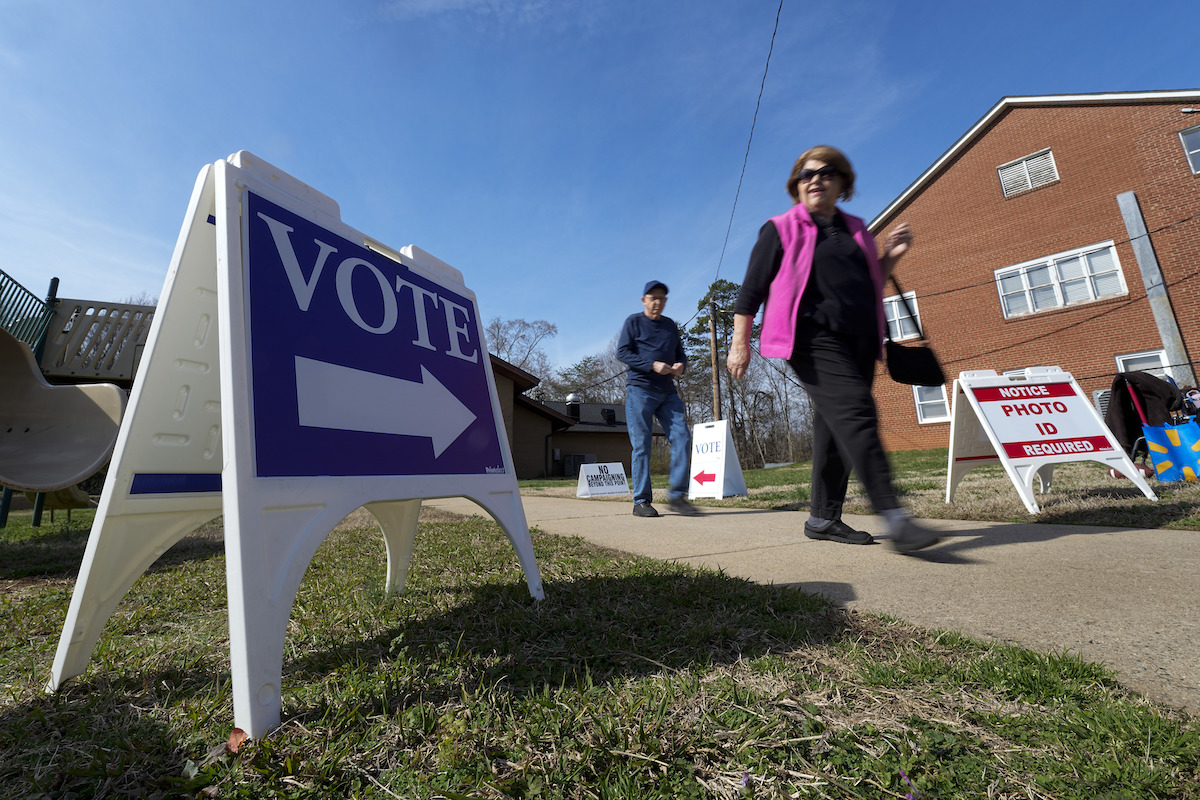


As Republican leaders have fought for stricter voter ID requirements in recent years, their refrain has been unwavering: This is a policy most Americans support.
But on Election Day 2026, voter ID measures saw mixed outcomes at the ballot box.
Some conservative social media users touted voter ID measures passing in Ohio, North Carolina and Nevada as small victories amid national Democratic wins. Oklahoma approved a similar change earlier in August.
Voter ID measures failed in Colorado and California. In Arizona, a proposition appeared headed toward defeat as of midday Nov 4, with more than 80% of the ballots counted.
The seven measures represent the largest number of voter ID questions put to U.S. voters in a single year, according to Ballotpedia.
Polling shows that Americans consistently favor voter ID, but the survey questions lack nuance and fail to capture state law subtleties, too.
“Voter ID laws are popular and they don’t do as well at the ballot box as they fare in the public opinion polls,” MIT political scientist Charles Stewart. “Majorities of voters support the idea of voter ID laws in principle, but when offered an actual law, they rejected them.”
The details of such proposals matter. For example, California’s proposal would have been one of the most restrictive in the nation, had it passed. The majority of Californians who vote by mail would have been required to either write the last four digits of their Social Security number or another government-issued number on mail ballots. Californians who vote in person would have needed to bring their government ID to the polls.
Ohio, North Carolina and Nevada
In Ohio, voters approved a constitutional amendment adding a photo ID requirement for voting in person, enshrining existing state law.
It’s a similar story in North Carolina, where voters approved a constitutional amendment to require all voters, including mail-in voters, to present photo ID. Photo ID requirements for in-person voting were already in the North Carolina constitution since 2018, but this new amendment adds mail-in voters as well.
Like Ohio, North Carolina state law already requires a photo ID to vote in person or by mail, with narrow exceptions.
“The voter ID amendment doesn’t change a single thing about the way elections in North Carolina are conducted. It simply makes it harder to change in the future,” said Chris Cooper, a Western Carolina University political scientist.
For Ohio and North Carolina voters, these amendments reiterate existing state law, so they will see less immediate change, voting rights attorney Juliet Beckstrand said. “But it creates a much higher bar for future legislatures.”
The most meaningful shift was in Nevada, Beckstrand said, where the state has not required voters to show photo ID at the polls in most cases.
Nevada voters amended the state constitution to require government-issued photo ID when voting in person, and the last four digits of a driver’s license or social security number when voting by mail — the way many Nevadans cast their ballots.
In Nevada, constitutional amendments must be approved by voters in two consecutive elections to go into effect. Nevada voters first approved this amendment in 2024 by a wide margin, so with this 2026 approval it will go into effect.
State laws about voter ID vary
President Donald Trump has sought a strict, national policy on voter ID but that failed to pass in the Senate in August.
Thirty-six states request or require voters to show some form of ID at the polls. The remaining 14 states and Washington, D.C., require no identification, but they use other methods to verify voter identity. Federal law requires first-time voters to show ID when requesting mail ballots, and some states have additional ID requirements for voters mailing in ballots.
In 2026, eight states made their ID requirements more stringent, according to the Voting Rights Lab that tracks state legislation.
View this post on Instagram
Polls show Americans support voter ID
Surveys have consistently shown majority support for photo voter ID. In 2025, the nonpartisan Pew Research Center found 95% of Republicans and 71% of Democrats favor requiring voters to show government-issued photo identification at the polls.
House Speaker Mike Johnson, the White House and other lawmakers made a nod to such polls earlier this year amid debate over the SAVE America Act, legislation which included multiple provisions such as voter ID. Republicans advocating for stricter voter ID have pushed falsehoods and comparisons that fall short.
But the polls typically present voter ID as a yes or no question, feeding the perception that views align with two distinct camps: those who support voter ID laws and those who oppose them. Supporters of stricter voter ID laws say they want to thwart fraud. Critics say tighter rules could disenfranchise eligible voters, including those who are less likely to have current government issued photo IDs, such as Black or young voters. And they note that voter impersonation is rare.
Voting law experts say polls oversimplify the debate, leaving out nuances about varying voter ID requirements, existing verification processes and the low risk of voter fraud.
Laws are often presented in public opinion surveys as a binary, said Sam Novey, chief strategist at the University of Maryland Center for Democracy and Civic Engagement.
“Yet, our research shows that large numbers of voters are impacted by the variation between laws that ‘require all voters to show government issued photo ID to vote,’” Novey wrote in an essay before Election Day.
Millions of Americans who have IDs may not be able to use them to vote, for example, if their ID was issued in another state, expired or lacks the voter’s current name or address. It’s also problematic for people who lose their wallet and lack a replacement ID in time to vote.
Some critics of certain voter ID laws see partisan intent. In Texas, handgun permits are considered valid voter IDs, but student IDs are not. Critics say this makes it easy for gun owners, a heavily Republican group, to vote but harder for students, a predominantly Democratic group.
PolitiFact North Carolina Correspondent Paul Specht contributed to this article.
Our Sources
Ballotpedia, Results for ballot measures related to voter ID, 2026
PolitiFact, SAVE America Act ad cites voter ID poll from before bill and misleads on international policies, April 17, 2026
PolitiFact, As extremes shape voter ID debate, the rules keep getting stricter, Aug. 9, 2021
PolitiFact, Wisconsin Republicans say voter ID laws are supported by 70% to 80% of the public, Jan. 23, 2026
PolitiFact, Voter ID Laws, accessed Nov. 4, 2026
New York Times, Arizona Proposition 144 Election Results 2026: Voter ID Requirement, accessed Nov. 4, 2026
Arizona Mirror, Voters poised to reject GOP bid to reshape elections and endanger voting by mail, Nov. 3, 2026
New York Times, Colorado Constitutional Amendment 84 Election Results 2026: Voter Signature and ID Requirement, accessed Nov. 4, 2026
WRAL News, NC voters OK tax, voter ID constitutional amendments. Here’s what to know, Nov. 4, 2026
Ballotpedia, Nevada Question 7, Require Voter Identification Initiative (2026), accessed Nov. 4, 2026
New York Times, Nevada Question 7 Election Results 2026: Voter ID Requirement, accessed Nov. 4, 2026
New York Times, North Carolina Constitutional Amendment SB 921 – Require voter ID 2026: Live Election Results, accessed Nov. 4, 2026
Ballotpedia, North Carolina Require Voter Identification Amendment (2026) , accessed Nov. 4, 2026
New York Times, Ohio Issue 3 Election Results 2026: Voter ID Requirement, accessed Nov. 4, 2026
Ballotpedia, Ohio Issue 3, Require Voter Identification Amendment (2026), accessed Nov. 4, 2026
Ohio General Assembly, Senate Joint Resolution Number 10, accessed Nov. 4, 2026
North Carolina General Assembly, Senate Bill 921, accessed Nov. 4, 2026
North Carolina State Board of Elections, Voter ID, accessed Nov. 4, 2026
Ohio Secretary of State, Voter Identification Requirements in Ohio, accessed Nov. 4, 2026
National Conference of State Legislatures, Statewide Ballot Measures Database, Nov. 4, 2026
Signal Ohio, What is Issue 3? Ohio’s voter ID amendment, explained, Sept. 1, 2026
The Nevada Independent, Live updates: Nevada’s 2026 election results, accessed Nov. 4, 2026
The Columbus Dispatch, Ohio Issue 3 voter ID amendment passes easily, Nov. 3, 2026
Ohio Secretary of State, Ohio Election FAQ | Voter Registration, Absentee Voting & Election Day Information, accessed Nov. 4, 2026
The Hill, Ohio approves photo ID requirement to vote, Nov. 3, 2026
North Carolina State Board of Elections, Detailed Instructions to Vote By Mail, accessed Nov. 4, 2026
Nevada Secretary of State, Voter Registration Requirements, accessed Nov. 4, 2026
VoteRiders, Nevada – VoteRiders, accessed Nov. 4, 2026
North Carolina State Board of Elections, Acceptable forms of Photo ID, accessed Nov. 4, 2026
Email interview with Ceridwen Cherry, Legal Director at VoteRiders, Nov. 4, 2026
North Carolina State Legislature, House Roll Call Vote Transcript for Roll Call #810 – 2023-2024 Session, Dec. 11, 2024
The New York Times Which States Vote by Mail the Most?,
Nevada Secretary of State, Filing a Constitutional Initiative, accessed Nov. 4, 2026
Libs of TikTok, X post, Nov. 4, 2026
Gateway Pundit, X post, Nov. 4, 2026
White House, Another New Poll Shows Massive Support for SAVE America Act, March 3, 2026
Rep. Mike Johsnon, press release, Feb. 11, 2026
Heritage Foundation, Voter fraud database, Accessed Nov. 4, 2026
Interview, Juliet Beckstrand, legal director at Deliver My Vote, Nov. 4, 2026
Email interview, Charles Stewart, MIT political science professor, Nov. 4, 2026
Interview, Chris Cooper, political scientist at Western Carolina University., Nov. 4, 2026
Interview, Sam Novey, chief strategist at the University of Maryland Center for Democracy and Civic Engagement, Nov. 4, 2026
Email interview, Harvard government professor Steve Ansolabehere, Nov. 4, 2026