U.S. Rep. Kathy Castor “repeatedly” violated “a law aimed at stopping members of Congress from insider trading.”

Ad misleads on claim that Rep. Kathy Castor violated an insider trading law
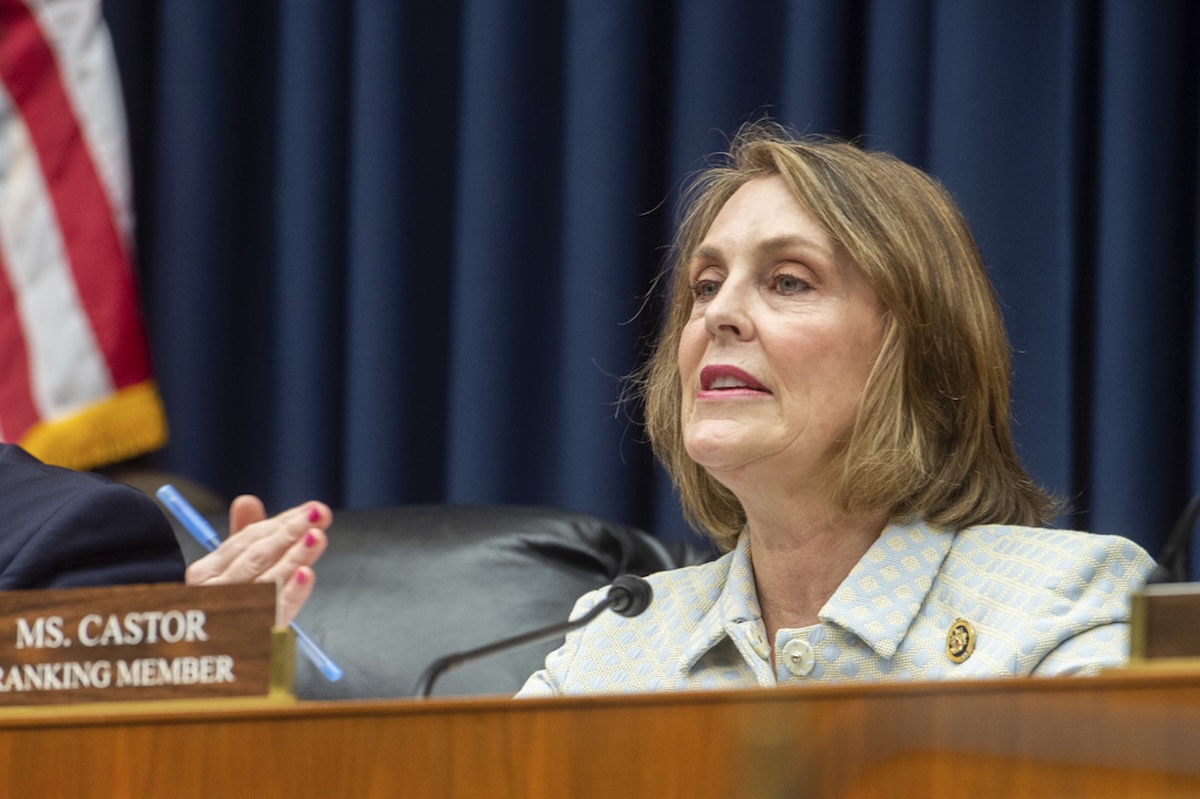
Conservative super PAC TV ads are telling some Florida voters that U.S. Rep. Kathy Castor, D-Fla., repeatedly violated a law aimed at curbing insider trading in Congress.
“Over 20 years in Congress, Kathy Castor worked the system, repeatedly violating a law aimed at stopping members of Congress from insider trading,” said one ad from Club for Growth Action, a super PAC that supports Republican candidates. The ad said she made over 200 stock trades worth up to $2.6 million, and she’s now worth up to $31 million “thanks to two decades of shady trading.”
Castor, who entered Congress in 2007, is running for reelection against Republican former state Rep. Mike Beltran in the 14th Congressional District, which Republicans redrew in 2026 to capture more right-leaning voters. As a super PAC, Club for Growth Action can raise and spend unlimited amounts of money to campaign for federal candidates.
With Americans widely opposed to members of Congress trading stocks, the topic has become a major talking point leading up to the midterms. The Congressional Leadership Fund, a super PAC seeking to elect Republicans to the U.S. House, also released ads saying Castor “broke the law” that aims to stop insider trading.
The misleading claim hinges on a 2021 filing appearing to show that Castor disclosed stock purchases after a required 45-day period. But the ad neglected a subsequent filing that corrected that record, reflecting that she made timely disclosures of those stocks.
We also found that Castor filed two reports in 2017 that reflected late disclosures. A late disclosure is not evidence of insider trading.
Castor corrected date errors
Club for Growth Action’s ad cited August 2021 articles from Business Insider and the nonprofit Foundation for Accountability and Civic Trust, or FACT, which said Castor failed to disclose stock purchases worth up to $45,000 on time. The foundation asked the Office of Congressional Ethics for an investigation into Castor and two other lawmakers. We did not find public information on whether it acted on the complaint.
The 2012 Stop Trading on Congressional Knowledge Act, or the STOCK Act, requires members of Congress to report certain stock transactions within 45 days of making them or 30 days after being notified of the trades.
For a couple of days in 2021, it appeared that Castor delayed reporting on stock transactions from the year before, which would violate the law. But this was corrected.
According to the original filing, Castor disclosed three purchases of Berkshire Hathaway Inc. stock in 2020 — on June 18, June 25 and July 15 — about a year later, on June 27, 2021.
Transactions are reported in ranges, and each of Castor’s three purchases were worth $1,001 to $15,000, putting the total at $3,003 to $45,000.
But the Business Insider and FACT stories didn’t mention that Castor submitted another filing two days later, amending the dates of those purchases from 2020 to 2021. That means she disclosed them within the 45-day window.
R. Blake Chisam, former staff director and chief counsel of the House Committee on Ethics, said the filings showed a typo, not a failure to disclose a transaction. He said the filings don’t support the “much more serious insinuation that the underlying trades were improper.”
The incident doesn’t show “evidence of misuse of confidential information,” he said.
Dan Schwager, who also previously served as the committee’s chief counsel and staff director, said such mistakes aren’t typically considered violations so much as human error. “Many, many, many people on both sides of the aisle have to file amendments to their financial disclosures every year to fix mistakes or things they missed in their paperwork,” Schwager said.
PolitiFact evaluated the 36 periodic transaction reports — disclosing 78 transactions — Castor filed since the STOCK Act passed. We found that Castor filed two reports in 2017 that showed late disclosures of three stock trades she made in 2016; the rest were filed on time, or amended.
A Castor campaign spokesperson attributed late filings to administrative oversight, and said the House Ethics Committee did not fine or penalize Castor.
In a statement to PolitiFact, Castor spokesperson Jay Rhoden highlighted Castor’s efforts to restrict congressional trading, voting in favor of the Stop Insider Trading Act in July, which the House passed 232-198. Castor was one of around a dozen Democrats who voted for the bill, which prohibits congressional members, their spouses and dependent children from buying stocks, and requires them to file public notice before selling stocks.
Castor’s stock trades are not proof of wrongdoing
Castor purchased Berkshire Hathaway stock multiple other times during 2021. According to OpenSecrets data from 2018, she’s among dozens of Congressional members from both parties who have invested in Berkshire Hathaway. The holding company, previously led by billionaire investor Warren Buffett, has dozens of subsidiaries across various sectors, including insurance, utilities and transportation. It owns the car insurance company Geico and the freight railroad company BNSF Railway.
“Berkshire is a diversified, widely held company associated with long-term investing,” Chisam said. “Buying Berkshire is the height of conventional.”
Club for Growth Action’s ad gives no other examples of Castor violating the STOCK Act. A National Republican Congressional Committee post cited an Oct. 8 Townhall article that said Castor sold stock before the World Health Organization named COVID-19 a global pandemic. We contacted the House Ethics Committee and the Office of Congressional Conduct (formerly the Office of Congressional Ethics) to ask about any past or present violations but did not hear back. Castor has not been charged with any wrongdoing.
Club for Growth Action did not respond to PolitiFact’s questions about how it determined that Castor made “over 200 stock trades worth up to $2.6 million.” Although it cited personal financial disclosures from 2014 to 2025, it’s difficult to identify which trades the ad referred to during that time period.
The ad does appear to accurately say her net worth is now up to $31 million. Castor’s 2025 financial disclosure showed her and her spouse’s assets totaling $7.9 million to $31.9 million, and no liabilities. But there’s a caveat.
“The net-worth estimate should also be treated cautiously,” Chisam said. “Adding the maximum value in every range may produce an eye-catching number, but it does not establish actual net worth. The actual figure could be — and, in my experience, likely is — substantially lower.”
Our ruling
Club for Growth Action said Castor “repeatedly” violated “a law aimed at stopping members of Congress from insider trading.”
The ad cited as evidence a financial disclosure that had a typo in the year, making the disclosure seem delayed. Castor amended the report days later to correct the year, showing that she disclosed the stock purchases in time.
Castor also filed two reports in 2017 that showed she did not make timely disclosures of three stock trades from 2016. Based on her periodic transaction reports, the rest of her stock trades were disclosed on time, or were amended.
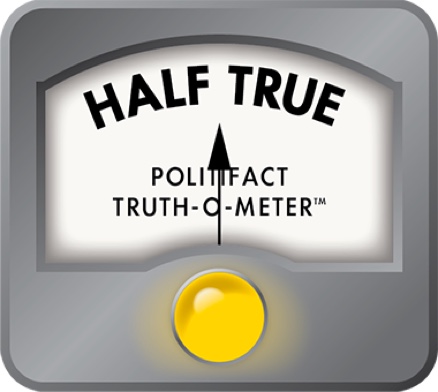
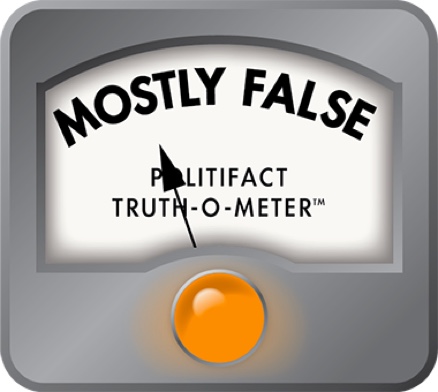
The statement contains an element of truth but ignores critical facts that would give a different impression about Castor and accusations of insider trading. We rate this claim Mostly False.
Our Sources
Email exchange with Kathy Castor’s campaign, Oct. 14, 2026
Email interview with R. Blake Chisam, partner at Fragomen’s Washington, DC office, Oct. 19, 2026
Email interview with Dan Schwager, Of Counsel at Verdi & Ogletree, Oct. 19, 2026
Club for Growth Action YouTube video, “System” (FL-14), Sept. 14, 2026
YouGov, Most Americans think congressional corruption is widespread, May 27, 2026
National Republican Congressional Committee, Corrupt Kathy Castor Used Congress to Enrich Herself & Break the Law. Now She’s Lying About., Oct. 9, 2026
CLF SuperPAC YouTube video, FL-14: Cashed In, Oct. 8, 2026
CLF SuperPAC YouTube video, FL-14: Game Over, Oct. 16, 2026
Business Insider, Democratic Reps. Lori Trahan, Kathy Castor, and Debbie Wasserman Schultz appear to have violated a federal transparency law, Aug. 2, 2021
Foundation for Accountability and Civic Trust, Ethics Watchdog Calls for Investigation into Three House Members for Breaking Federal Law, Aug. 25, 2021
Foundation for Accountability and Civic Trust, Letter to the Office of Congressional Ethics, Aug. 20, 2021
House of Representatives Office of the Clerk, Periodic Transaction Report filed by Kathy Castor, July 27, 2021
House of Representatives Office of the Clerk, Periodic Transaction Report filed by Kathy Castor, July 29, 2021
House of Representatives Office of the Clerk, 2021 Annual financial disclosure filed by Kathy Castor, May 19, 2022
House of Representatives Office of the Clerk, Periodic Transaction Report filed by Kathy Castor, Jan. 4, 2021
House of Representatives Office of the Clerk, Periodic Transaction Report filed by Kathy Castor, Feb. 18, 2021
House of Representatives Office of the Clerk, Periodic Transaction Report filed by Kathy Castor, April 14, 2021
House of Representatives Office of the Clerk, Periodic Transaction Report filed by Kathy Castor, June 14, 2021
House of Representatives Office of the Clerk, Periodic Transaction Report filed by Kathy Castor, Jan. 11, 2017
House of Representatives Office of the Clerk, Periodic Transaction Report filed by Kathy Castor, May 3, 2017
House of Representatives Office of the Clerk, 2025 Annual financial disclosure filed by Kathy Castor, May 24, 2026
OpenSecrets, Members of Congress Invested in Berkshire Hathaway, 2018
Townhall, This Florida Democrat Denies Insider Trading, but Her Financial Records Raise Serious Questions., Oct. 8, 2026
U.S. Congress, H.R.7008 – Stop Insider Trading Act, accessed Oct. 19, 2026