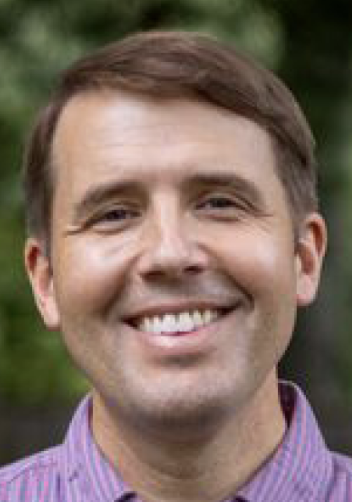
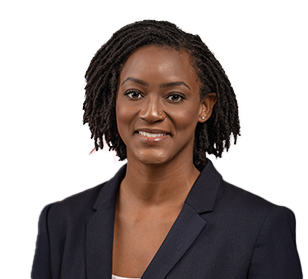
New Hampshire Democratic governor candidate Cinde Warmington “was a Purdue Pharma lobbyist. She said that OxyContin was a miracle drug.”

Was Cinde Warmington a Purdue Pharma lobbyist? Did she call OxyContin a ‘miracle drug’? Yes and yes
If your time is short
- A state document from 2001 confirms that New Hampshire Democratic gubernatorial nominee Cinde Warmington was an outside lobbyist for Purdue Pharma, the company that produced and marketed OxyContin.
- As a lobbyist for Purdue Pharma in 2002, Warmington testified in New Hampshire’s Legislature against a prescription-regulation bill the company opposed, defending the drug’s use by saying, “OxyContin is a miracle drug for many patients.”
- Purdue Pharma settled a lawsuit in 2020 over allegations that the drugmaker’s practices made addiction and overdose deaths more likely.
New Hampshire Republican Gov. Kelly Ayotte and her supporters have blasted a message about her opponent using billboards, an airplane-towed banner and even an inflatable rat stationed at the state capitol.
“Cinde Warmington was a Purdue Pharma lobbyist,” one of Ayotte’s ads says, sharing a clip of Warmington’s 2024 Democratic primary rival, Joyce Craig, speaking in a debate. “She said that OxyContin was a miracle drug.”
Warmington’s history with the company that created OxyContin, a pain drug that became linked to addiction and overdoses, is well documented.
Warmington has said she was a junior lawyer assigned to take Purdue Pharma as a client more than 20 years ago. She did not have a full understanding of the company’s actions in promoting the use of OxyContin, she said, until they were revealed in subsequent litigation. She said in a recent interview that she has “regret” for that work.
But a transcript of her 2002 testimony against state legislation to tighten rules for prescribing opioids such as OxyContin shows that, even at that early juncture, Warmington faced questions about the drug’s addictiveness.
The rise and fall of OxyContin
In the mid 1990s, Purdue Pharma began selling OxyContin, a slow-release pill based on the pain reliever oxycodone. Purdue Pharma funded more than 20,000 educational programs on managing pain and gave money to professional associations to increase the medication’s use.
From 1991 to 2011, OxyContin prescriptions tripled. At the same time, opioid-related deaths nearly tripled, too. Distribution peaked in 2012 with over 255 million prescriptions.
Drugmakers, including Purdue Pharma, faced a barrage of lawsuits for creating and fueling the first wave of the opioid epidemic. In 2020, Purdue Pharma agreed to plead guilty to three federal criminal charges and said it would pay more than $8 billion for treatment programs and shutter the company. The Sackler family, which controlled Purdue Pharma when it was making OxyContin, was also made to pay under a settlement announced in 2025.
Warmington’s role with Purdue Pharma
During the period when Purdue was making and promoting OxyContin, Warmington worked as an attorney for the law firm Shaheen & Gordon. State records show she was a registered lobbyist for Purdue Pharma as of Dec. 4, 2001, about two years after her law school graduation. She also held a master’s in business administration.
On April 9, 2002, Warmington testified before the New Hampshire state Senate on behalf of Purdue Pharma. The company was opposing a bill that would require doctors to try at least three other medications before prescribing OxyContin or an equivalent.
During the hearing, Democratic state Sen. Sylvia Larsen asked Warmington, “Would you not consider OxyContin, a well-known drug, to have a high potential for misuse or abuse? … Wouldn’t you agree that it should be monitored for its adherence to clinical protocol?”
Warmington said she would defer to a physician on the details of potential addiction, but she acknowledged, “To say that Oxycontin has been abused — it certainly has been in the press — I think that we can all say that it is a drug of abuse, as are all narcotics. It is not the most abused narcotic in the state of New Hampshire, but it is a drug of abuse. It is attractive to abusers, and it is an issue that is of great concern to Purdue Pharmaceuticals.”
Warmington went on to refer to “a drug that has truly been a medical breakthrough for patients who need it. Restricting access to all of those patients as a means of preventing abuse is inappropriate.”
Later in the hearing, Warmington used the words cited in Ayotte’s ad. She said the proposed legislation “fundamentally changes the available options for physicians. OxyContin is a miracle drug for many patients, and that’s why it has been so popular, that’s why it is used so much because it has very few side effects and it is able to address patient’s pain.”
What has Warmington said about her work for Purdue Pharma?
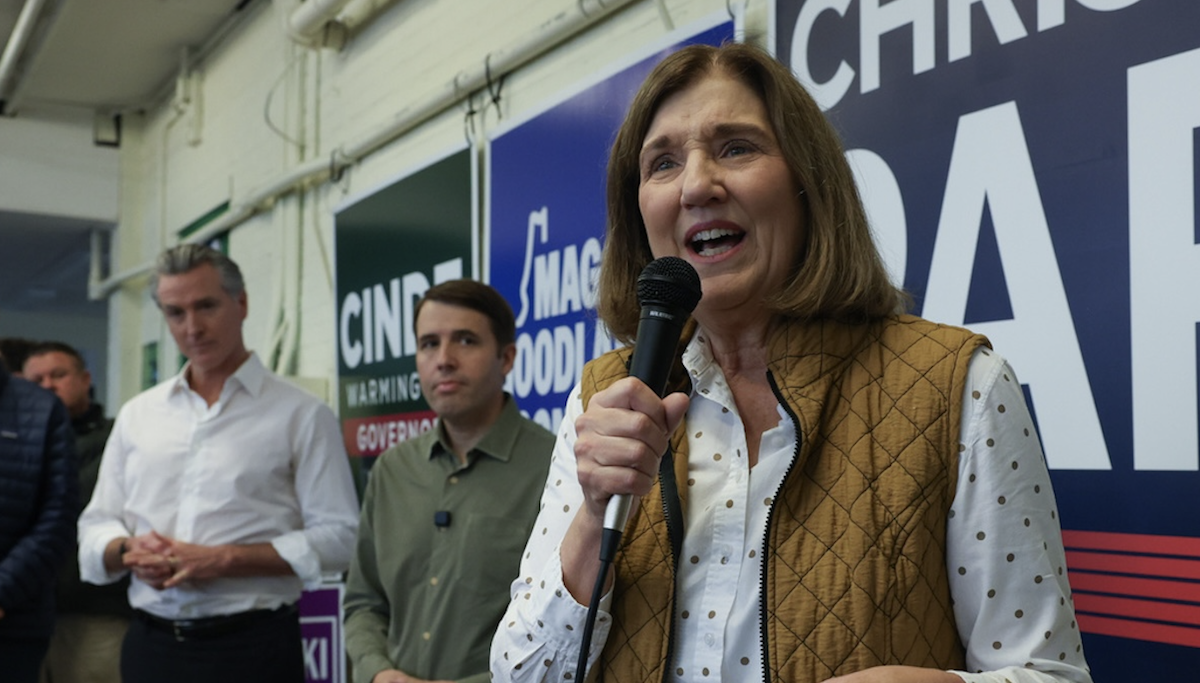
When Warmington was running for the Democratic Party’s 2024 gubernatorial nomination, the eventual winner — former Manchester Mayor Joyce Craig — criticized Warmington’s past work for the company.
In response to the accusations resurfacing in her latest campaign, Warmington released a direct-to-camera video, in which she said her father “struggled with addiction most of his adult life, and a lot of people in my family have struggled with addiction over the years. … I went into healthcare because I wanted to help people.”
In 2001, she said, “I was assigned a case by a partner to represent Purdue Pharma” and saw her role as “fighting for patients to get access to the healthcare that their doctors thought that they needed. What I did not know at the time was that Purdue Pharma was engaged in this massive criminal fraud, something that would be exposed only over years of litigation. … To be clear, if I had known in 2001 what we all later learned, I would never, ever have done this work.” She said her work for Purdue Pharma ended in 2002.
Although the full story of Purdue Pharma’s actions in marketing OxyContin would only come to light years later after litigation, journalists and federal officials had been raising alarms about the drug’s widespread abuse and the company’s skyrocketing sales for at least two years by the time Warmington faced that question at the April 2002 hearing.
In August 2001, a U.S. House Energy and Commerce subcommittee held a hearing during which lawmakers questioned Purdue Pharma executives about the drug’s potential for abuse. That same year, The New York Times ran an article headlined, “Sales of Painkiller Grew Rapidly, But Success Brought a High Cost.” Two other articles detailed how the federal government was asking Purdue Pharma to limit its marketing and distribution of the drug and how Purdue Pharma chose not to use safeguards to prevent OxyContin abuse.
In an Oct. 19 interview with New Hampshire Public Radio, Warmington said, “I certainly regret having anything to do with this work, knowing what we all know now.”
Warmington’s campaign has also highlighted her work for the state’s executive council, an elected branch of government, to secure funding for addiction treatment. She has criticized Ayotte’s decision as then-New Hampshire attorney general not to join a 2007 lawsuit by 26 state attorneys general against Purdue Pharma. She also has noted that an Ayotte-led political action committee received campaign donations from members of the Sackler family — which owned Purdue Pharma when it was promoting OxyContin — as late as 2016.
Our ruling
Ayotte’s ad said, “Cinde Warmington was a Purdue Pharma lobbyist. She said that OxyContin was a miracle drug.”
A state document from 2001 confirms that Warmington was an outside lobbyist for Purdue Pharma. The company settled a lawsuit in 2020 over allegations that the drugmaker’s practices made addiction and overdose deaths more likely.
As a lobbyist for the company, Warmington testified in New Hampshire’s legislature against a prescription-regulation bill that Purdue Pharma opposed. During a 2002 hearing about the legislation, Warmington defended the drug’s use, saying, “OxyContin is a miracle drug for many patients.”
Warmington has said she would not have represented Purdue Pharma had she known about company actions on OxyContin that came to light in subsequent litigation. But by the time of her testimony, lawmakers in a congressional hearing and journalists in New York Times investigations had raised questions about the role the company was playing in a growing number of overdose deaths linked to OxyContin.
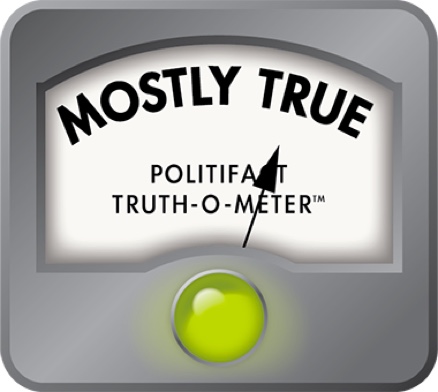
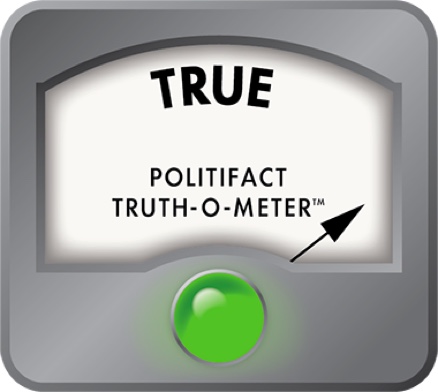
We rate the statement True.
Our Sources
Kelly Ayotte, ad, began Aug. 23, 2026
New Hampshire, lobbying registration form, 2001
New Hampshire state Senate, hearing testimony, April 9, 2002
New Hampshire H.B. 1218, 2002
Cinde Warmington, direct-to-camera video, Aug. 11, 2026
Government Accountability Office, “OxyContin Abuse and Diversion and Efforts to Address the Problem,” December 2003
U.S. House Committee on Energy and Commerce, Subcommittee on Oversight and Investigations, “OxyContin: Its Use and Abuse,” Aug. 28, 2001
Federal Election Commission, Kelly PAC disclosure, 2016
Annual Review of Public Health, The Prescription Opioid and Heroin Crisis: A Public Health Approach to an Epidemic of Addiction, Jan. 12, 2015
WMUR, “NHGOP billboards target Democrats over opioids, low-flush toilets,” Feb. 19, 2026
National Institute on Drug Abuse, Increased drug availability is associated with increased use and overdose, January 2018
Keene Sentinel, “Old testimony on OxyContin raises questions in Warmington’s bid for governor,” June 17, 2023
Concord Monitor, “The rise of oxycontin and our state’s opioid crisis,” May 15, 2016
New Hampshire Bulletin, “Why do Republicans keep calling Cinde Warmington an opioid lobbyist? Here’s the backstory,” June 8, 2026
New York Times, ““Sales of Painkiller Grew Rapidly, But Success Brought a High Cost,” March 5, 2001
New York Times, “U.S. Asks Painkiller Maker To Help Curb Wide Abuse,” May 1, 2001
New York Times, “Maker Chose Not to Use A Drug Abuse Safeguard,” Aug. 13, 2001
NHPR, “Warmington defends lobbying work for Purdue Pharma in campaign video,” Aug. 11, 2026
NPR, “Purdue Pharma and Sackler family members to pay $7.4B in national opioid settlement,” Jan. 24, 2025
CNN, “OxyContin maker to plead guilty to federal criminal charges, pay $8 billion, and will close the company,” Oct. 21, 2020
PolitiFact, “Opioid epidemic shifts from prescription painkillers to street drugs,” Oct. 14, 2019
Statement to PolitiFact from Kelly Ayotte’s campaign, Oct. 5, 2026
Statement to PolitiFact from Cinde Warmington’s campaign, Oct. 5, 2026