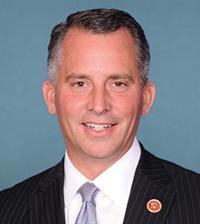
New Hampshire U.S. Senate candidate John E. Sununu “cashed in” with “Big Pharma,” earning “up to $35 million.”


In NH Senate race, Chris Pappas said John E. Sununu ‘cashed in’ with ‘Big Pharma.’ That’s exaggerated
If your time is short
- New Hampshire Republican U.S. Senate candidate John E. Sununu’s prior experience as a senator opened doors for him in lucrative positions at law firms, corporate boards and consulting firms.
- Pappas used the high end of a disclosed net worth range — $35 million — when he could have used the low end of the range of $7.9 million.
- Pappas also attributes Sununu’s windfall specifically to the pharmaceutical industry, when roughly $5 million can be clearly documented as coming from a major medical technology company.
In New Hampshire’s open-seat U.S. Senate race, Democratic Rep. Chris Pappas has been accusing his Republican opponent, former Sen. John E. Sununu, of getting rich off pharmaceutical industry money.
In an Oct. 13 debate, Pappas said, “Now, Sen. Sununu voted with Big Pharma when he was in office. He voted to keep prescription drug prices high, and then, after he was defeated, he went and cashed in, working for these same corporate special interests, earning up to $35 million dollars.”
Financial disclosure forms show that Sununu has a net worth of between $7.9 million and $36.3 million, far higher than it was when he left the Senate in January 2009. About $5 million of that came from a major medical technology company, documents show. But even if one counts medical tech as “Big Pharma,” Pappas’ statement that Sununu made “up to $35 million” from the industry is based on a cherry-picked figure.
Sununu’s campaign did not respond to inquiries for this article.
How did Pappas arrive at $35 million?
Sununu released two financial disclosure statements as part of his Senate candidacy, one in 2025 and one in 2026.
The forms show a total net worth up to $35 million, but Pappas’ description of what the figure means omits context.
The form asks for information on income received for work, stocks and bonds, and ownership of real estate, minus outstanding loans. Candidates are asked to provide estimates of their holdings within broad ranges.
In its analysis of the forms, PolitiFact partner WMUR-TV reported that the sum of Sununu’s assets fell somewhere in the range of $7.9 million to $36.3 million. So Pappas cherry-picked the highest number in the range, which is more than four times the lowest number.
In 2009, before departing the Senate, Sununu declared assets between $297,000 and $855,000. Pappas arrived at the $35 million figure by subtracting the 2009 high-end figure ($855,000) from the 2026 high-end figure ($36.3 million).
This growth since 2009 shows that Sununu has fared well financially since leaving the Senate; he’s served as a corporate board member, in a job at a prominent law firm (he is not a lawyer) and as a consultant in lucrative fields.
It’s not unusual for lawmakers to benefit from their congressional experience after leaving office. As a former senator, Sununu would have had value to a law firm with a lot of clients interested in understanding how Congress and the executive branch works.
He also served as a longtime board member of Boston Scientific, a medical device company, and had consulting relationships with financial firms such as TAP Advisors since 2016.
What did Sununu earn from pharmaceutical companies?
From 2009 to 2024, Sununu served on the board of Boston Scientific, a major producer of medical devices. Regulatory filings show that he earned about $1.8 million in fees over those 15 years, plus almost $3 million in stock grants. Together, that equals nearly $4.8 million.
Some may consider a medical technology company to be distinct from the pharmaceutical sector. However one counts the $4.8 million gain, it underlines the risks of relying on the high end of the range in financial disclosure forms to say that Sununu earned $35 million.
The Senate disclosure form lists Sununu’s Boston Scientific stock holdings as falling within the range of $5 million to $25 million. Sununu may have purchased additional Boston Scientific stock on his own, boosting his holdings from the $3 million disclosed on the regulatory forms to the minimum $5 million cited in the Senate disclosure range.
But Pappas’ $35 million figure relies on the high end of the Senate disclosure form’s range — $25 million — not the $5 million on the lower end. Boston Scientific is the largest single asset disclosed on that form; the $25 million estimate is the cornerstone of Pappas’ $35 million figure. But the figures disclosed in the regulatory filings suggest that Sununu’s Boston Scientific stock holdings could be closer to the lower end of that scale.
Separately, the disclosure forms show that Sununu held between $110,012 and $425,000 in stocks and bonds of pharmaceutical companies, including positions in Pfizer, Merck, AbbVie, Johnson & Johnson, Astrazeneca and Bristol Myers Squibb.
How does Sununu’s work at the law firm factor in?
In 2010, the law firm Akin Gump Strauss Hauer & Feld LLP announced it had hired Sununu as an adjunct senior policy adviser. He does not appear to have been a registered lobbyist either; we didn’t find any lobbying disclosure filings for him, which would be required if he were formally lobbying members of Congress or their staff. It’s not uncommon for law firms to hire nonlawyers and nonlobbyists to consult with clients or to provide advice. Sununu spent about a decade with the firm.
The liberal online outlet Meidas Touch reported that from 2010 to 2019, Akin Gump received lobbying fees worth $10.3 million from “big pharma clients,” including Pfizer, Gilead Sciences, Bayer and the trade group PhRMA.” Without context, that might sound like a lot, but the firm has many other clients outside of pharmaceuticals.
The firm’s other recent lobbying clients have included the older Americans advocacy group AARP, the consulting firm Accenture, software publisher Adobe, AES Wind Generation, the Agua Caliente Band of Cahuilla Indians, Alabama Shipyard, the grocer Albertson’s, aluminum producer Alcoa, the Alliance of Automobile Manufacturers, the Alliance to Protect Nantucket Sound, Amazon, and American Airlines. That’s just a sampling of the firm’s clients whose names begin with the letter “a.”
Our ruling
Pappas said Sununu “cashed in” with “Big Pharma,” earning “up to $35 million.”
Sununu’s experience as a senator opened doors for him in lucrative positions at law firms, corporate boards and consulting firms, and records show he made at least $5 million from Boston Scientific after leaving Congress.
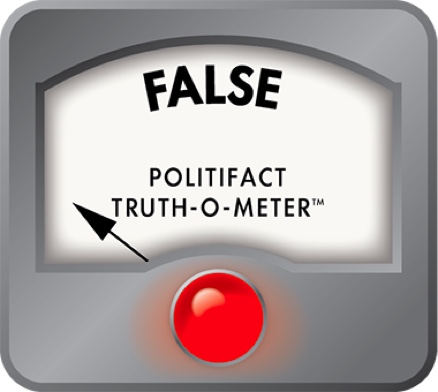
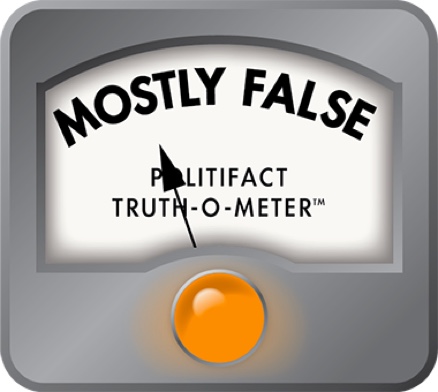
But Pappas draws on the high end of the range on Sununu’s financial disclosure form to assert he made up to $35 million. Pappas ignores that the low end of the range was $7.9 million. Although $5 million is not close to the $35 million Pappas cited, it accounts for a substantial portion of Sununu’s post-Senate wealth. The statement contains an element of truth but ignores critical facts that would give a different impression. We rate it Mostly False.
Our Sources
Chris Pappas, remarks in a debate, Oct. 13, 2026
U.S. Senate, financial disclosure home page, accessed Oct. 26, 2026
Lobbying Disclosure Act search page, accessed Oct. 26, 2026
TAP Advisors, biography of John E. Sununu, accessed Oct. 26, 2026
Akin Gump Strauss Hauer & Feld LLP, “Former U.S. Senator John Sununu Joins Akin Gump,” July 7, 2010
Insurance Journal, “Lloyd’s Appoints Former U.S. Senator Sununu as Member of Council,” Jan. 30, 2019
WMUR-TV, “Financial disclosure statements show most candidates for US House, Senate in NH are millionaires,” April 17, 2026
Meidas Touch, “GOP Senate Candidate John E. Sununu Omits Ties to Big Pharma in Interview,” Jan. 12, 2026
Statement to PolitiFact from the Chris Pappas campaign, Oct. 21, 2026