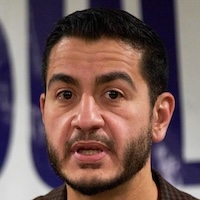
Democratic U.S. Senate candidate Abdul El-Sayed is “a jihadist Muslim Brotherhood member.”
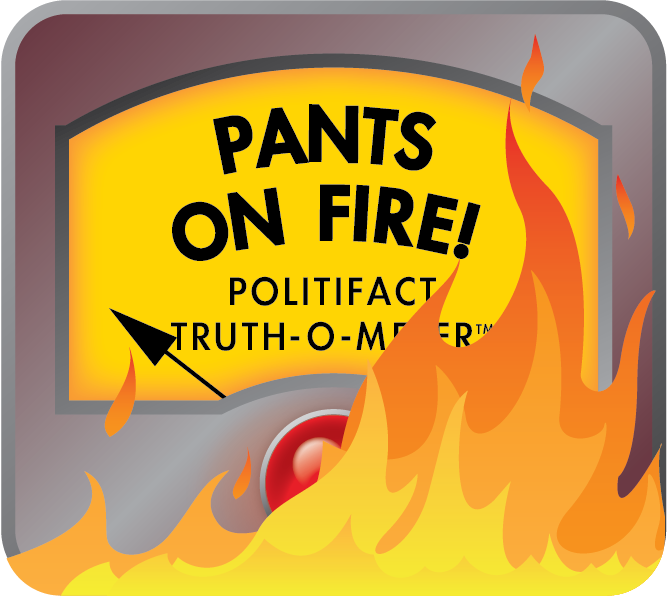
Pants on Fire! Trump calls Michigan’s Abdul El-Sayed a ‘jihadist,’ escalating anti-Muslim attacks
If your time is short
- A jihadist is someone who advocates military means to promote Islam in society and government. Michigan U.S. Senate candidate Abdul El-Sayed has never advocated violence to promote Islam.
- He has never been a member of the Muslim Brotherhood, has disavowed the group, and holds political positions that conflict with its views.
- President Donald Trump’s statement is an escalation of anti-Muslim attacks targeting El-Sayed throughout this Senate campaign.
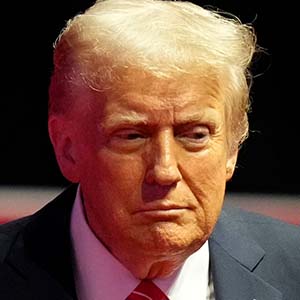
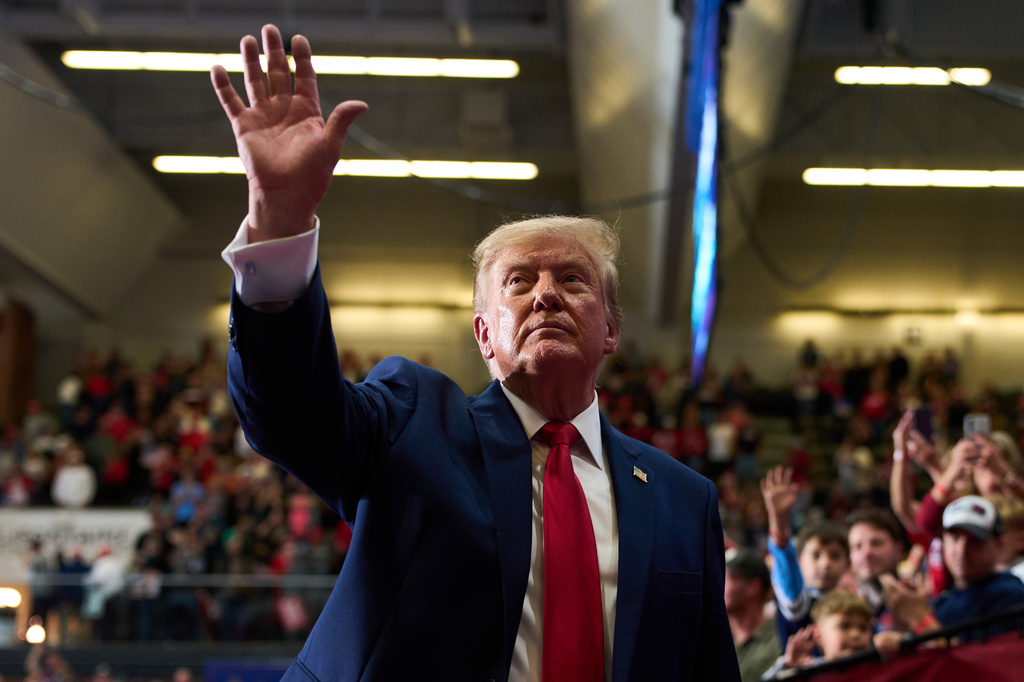
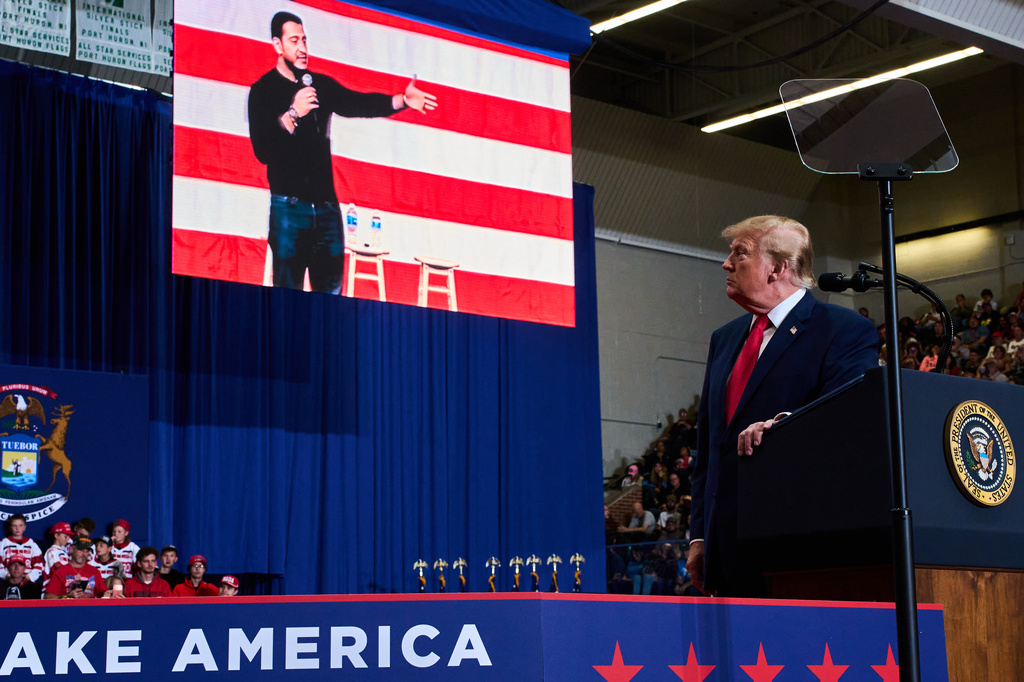
President Donald Trump ramped up anti-Muslim rhetoric against Democrat Abdul El-Sayed in a Michigan rally, calling the U.S. Senate candidate a “jihadist” and baselessly associating him with violent extremism.
“I’m here to keep a jihadist Muslim Brotherhood member from becoming a United States senator,” Trump said Oct. 25. He made clear who he was referring to moments later. “The people of Michigan are going to defeat Abdul Mohamed … El-Sayed.”
Trump tried to tie El-Sayed to the Muslim Brotherhood, an Islamist political movement that started in Egypt in 1928, and accused him and his family members of supporting extremism. Even for a race in which Republicans have regularly accused El-Sayed of aligning with extremists, Trump was particularly brazen in his remarks, at one point comparing El-Sayed to the terrorists who hijacked planes on 9/11.
During the rally, Trump introduced the father of Todd Beamer, a Michigan man who died on United Airlines Flight 93, which crashed into a Pennsylvania field after passengers fought the hijackers on Sept. 11.
“Twenty-five years later, Michigan needs to stand up and fight—just like Todd did—to stop a jihadist from walking into the Capitol,” Trump said.
El-Sayed is running against Republican former U.S. Rep. Mike Rogers, who joined Trump at the Port Huron rally, for the Senate seat held by outgoing Democratic Sen. Gary Peters.
He added that El-Sayed couldn’t be trusted with state secrets and said he’d “be the only senator that will have to go through a metal detector” to enter the Senate. Trump said El-Sayed wants the United States to “go to Shariah law,” something we’ve rated Pants on Fire.
A jihadist is someone who believes in using military means to promote Islam in society and government. El-Sayed has never done that, and he’s not a member of the Muslim Brotherhood, which primarily operates in the Middle East.
The White House did not respond to our request for evidence for Trump’s claim. At an Oct. 26 Detroit news conference, El-Sayed called Trump’s attacks “deflections and deceptions based on no evidence.”
What is a jihadist?
Jihadism is generally understood as an ideology that believes in using military means to promote Islam both socially and in government. It’s often used to describe violent extremist groups such as al-Qaida and ISIS.
“There is absolutely no credible reason to apply the term to El-Sayed,” said Mohammad Hassan Khalil, a religious studies professor who directs the Muslim studies program at Michigan State University.
El-Sayed has repeatedly said he agrees with the protections for religious freedom in the U.S. Constitution, and he’s not campaigning to impose Islamic religious rules in the United States. He has never called for violence to promote Islam.
“To my mind, this is a clear example of anti-Muslim bigotry and fearmongering,” Khalil told PolitiFact.
El-Sayed isn’t a Muslim Brotherhood member
The Muslim Brotherhood has branches in several Middle Eastern countries. The various branches aren’t under a common leadership, and there’s a variety of ideologies among its national organizations.
Broadly, the groups are religiously conservative and call for aligning government and daily life with the laws of Islam, or Shariah. Some offshoots have engaged in violence, but the Egyptian Muslim Brotherhood has rejected violence since the 1970s.
Each branch is a formal organization with member rolls and recruiting processes, said Nathan Brown, a George Washington University professor who studies Middle Eastern politics.
El-Sayed, who is a U.S. citizen born in Michigan, is not a member of the Muslim Brotherhood. He has disavowed the group and denied any ties with it.
“If he had been a member of the Muslim Brotherhood they would have kicked him out because of his various stances,” said Juan Cole, a University of Michigan professor who studies Islamic and Middle Eastern history. “He supports LGBTQ rights. That’s not a Muslim Brotherhood position … The whole thing is just made up out of whole cloth.”
The Trump administration has designated some branches of the Muslim Brotherhood as terrorist organizations. This includes the Egyptian and Jordanian branches for providing material support to Hamas, the militant group that controls Gaza.
What El-Sayed said during Egyptian revolution
During the Michigan rally, Trump said El-Sayed’s “writings of the past” were extreme, and he said El-Sayed signed a letter of support for the Muslim Brotherhood.
“Mohamed El-Sayed himself signed a letter supporting the Muslim Brotherhood urging them to—quote—purge the journalists and the police,” Trump said, referring to El-Sayed by his middle name, which he does often.
In November 2012, El-Sayed signed a statement with 45 other Egyptian Americans, identified in the letter as Egyptian community leaders, defending President Mohamed Morsi, who was affiliated with the Muslim Brotherhood. (PolitiFact used Google Translate to translate the statement from its original Arabic to English.) Morsi had won Egypt’s first democratic election after a popular uprising ousted authoritarian President Hosni Mubarak.
“He was the only democratically elected president in Egyptian history,” Cole said. “The fact that El-Sayed supported Morsi in 2012 means nothing about his more specific politics. It means he promoted democracy.”
At the time, Morsi had issued a decree shielding his decisions from judicial review as a new constitution was being developed. The statement El-Sayed signed supported that decision, but said Morsi should give up those expanded powers after a new constitution was in place. It also included a call to “purge the media and police.” Cole said some of the elements of the government at the time were still loyal to Mubarak. Brown, at George Washington, said Morsi’s supporters claimed the incoming president’s opponents were using the courts to overturn his election. But while the statement El-Sayed signed “is certainly pro-Morsi and partisan,” Brown said, it’s not an expression of support for the Muslim Brotherhood.
In an earlier essay published by The Huffington Post, El-Sayed wrote in support of the protests that led to the uprising, saying concerns about a Muslim Brotherhood takeover shouldn’t dissuade the U.S. from supporting the pro-democracy demonstrations. That essay supported the democratic movement generally, not the Muslim Brotherhood.
Our ruling
Trump said El-Sayed is a “jihadist Muslim Brotherhood member.”
El-Sayed, a Muslim, has never advocated for jihadism and he’s disavowed the Muslim Brotherhood. His stated political beliefs don’t align with the group’s.
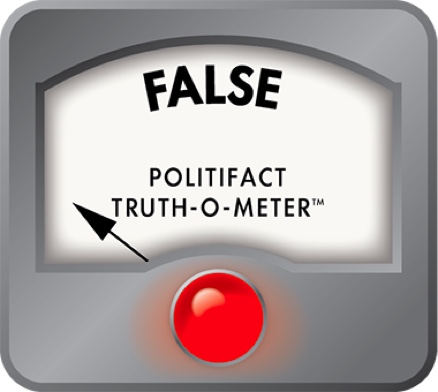
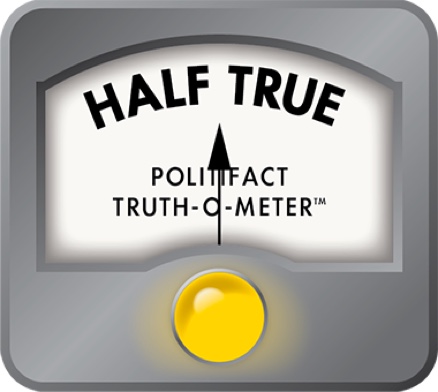
The baseless statement plays on anti-Muslim tropes. We rate it Pants on Fire!
Our Sources
Email interview with Nathan J. Brown, professor of political science and international affairs at George Washington University, Oct. 26, 2026
Email interview with Mohammad Hassan Khalil, professor of religious studies and director of the Muslim Studies Program at Michigan State University, Oct. 26, 2026
Phone interview with Juan Cole, professor of history at the University of Michigan, Oct. 26, 2026
Forbes Breaking News,WATCH LIVE: President Donald Trump Hosts Midterm Rally In Port Huron, Michigan, Oct. 25, 2026
The Washington Post, Examining Muslim Brotherhood claims in Michigan’s Senate race, Oct. 23, 2026
PolitiFact, Mike Rogers said Abdul El-Sayed didn’t disavow the Muslim Brotherhood. Video shows he did, Oct. 19, 2026
PolitiFact, El-Sayed condemned Michigan synagogue attack. Critics said his other comments appeared to justify it, Oct. 1, 2026
PolitiFact, Republicans attacking Abdul El-Sayed say he supports Shariah in the US. That distorts an old video., Aug. 10, 2026
BBC News, What is jihadism?, Dec. 10, 2014
Abdul El-Sayed, X post, Oct. 17, 2026
Council on Foreign Relations, Egypt’s Muslim Brotherhood, updated Aug. 15, 2019
U.S. Department of State, Designations of Muslim Brotherhood Chapters, accessed Oct. 26, 2026
U.S. Department of the Treasury, Treasury Disrupts Muslim Brotherhood and Hamas Financial Networks, accessed Oct. 27, 2026
NBC News, NBC Nightly News with Tom Llamas Full Episode – Oct. 14, Oct. 14, 2026
Al Jazeera, ‘Deflections’: Abdul El-Sayed responds to Trump’s anti-Muslim attacks, Oct. 26, 2026
Al-Ahram, A statement from Morsi’s supporters in America endorses his decisions and calls on him to “purge the media and police”, accessed Oct. 27, 2026
Wilson Center, Egypt, accessed Oct. 27, 2026
the Guardian, Protests erupt across Egypt after presidential decree, Nov. 23, 2012
the Guardian, Egypt: Mohamed Morsi cancels decree that gave him sweeping powers, Dec. 8, 2012
Brookings, What Just Happened in Egypt?, accessed July 4, 2013