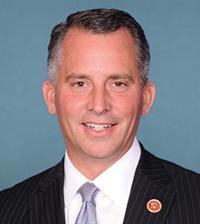
President Donald Trump’s tariffs are “costing the average family $4,200 out of their pocket.”
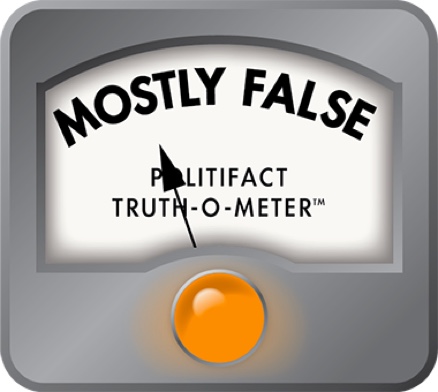


Christina Bohannan says Trump’s tariffs are costing families $4,200. That’s Mostly False.
If your time is short
- Christina Bohannan’s campaign arrived at its $4,200 figure using numbers that cover two years — 2025 actual numbers and 2026 projected numbers. Her number also counts January 2026 collections twice.
- Actual collections have shown the 2026 projected numbers Bohannan relied on to be high.
- Other credible analyses estimate lower 2026 per-household costs ranging from $820 to $1,100 and give two-year estimates in the ballpark of $1,800 to $2,200.
Christina Bohannan, Democratic candidate for U.S. House in Iowa’s 1st Congressional District, said President Donald Trump’s tariffs come with a $4,200 price tag for families.
“These reckless tariffs are wreaking havoc on Iowa’s families, small businesses, and farmers — costing the average family $4,200 out of their pocket,” she said in a Des Moines Register candidate Q&A.
Bohannan criticized her Republican opponent, incumbent Mariannette Miller-Meeks, for voting in favor of the tariffs and called for them to be repealed.
In an email statement to PolitiFact Iowa, Bohannan’s campaign cited two analyses from the Democratic staff of the Joint Economic Committee, a standing economic policy advisory panel made up of members from both congressional chambers.
Although the campaign’s number is based on plausible estimates of tariff costs, the $4,200 figure results from adding together two estimates that together cover two years and overlapping periods, and one of those estimates is a year-long projection based on one month of data. More credible estimates put 2026 per-household costs between $820 to $1,100, and give two-year estimates in the ballpark of $1,800 to $2,200.
The $4,200 figure includes projected costs
The Joint Economic Committee released analyses in February and in March. Both were issued after the U.S. Supreme Court invalidated the legal authority Trump cited in April 2025 when he first announced tariffs on nearly every nation.
The committee’s February report estimated that U.S. families had already paid $1,745 in tariff costs between February 2025 and January 2026.
A month later, after Treasury Secretary Scott Bessent said that replacement tariffs that the White House issued using different legal authority would leave tariff revenue “virtually unchanged,” the JEC committee’s Democrats issued an update projecting U.S. families would pay about $2,500 per household over the next year.
Bohannan’s campaign reached its $4,200 number by adding $1,700 to $2,500.
But the $2,500 figure was a prediction premised on January’s tariff collections; it assumed collections and the share of costs passed on to consumers would stay at January levels.
Treasury records show monthly net collections later fell below January’s level.
The campaign’s calculation also counted January 2026 twice.
Tariff revenue fell after Supreme Court ruling
After the Supreme Court’ s February ruling that Trump did not use proper authority to impose tariffs, Trump announced a temporary 10% import surcharge under a different authority. The JEC Democrats’ report assumed the surcharge would leave tariff revenues unchanged.
As a result of the ruling, the federal government started refunding importers for the tariffs the government had improperly collected.
The U.S. Bureau of Economic Analysis estimated the government owes approximately $166 billion, excluding interest, to affected importers and businesses. The JEC’s March report didn’t specify how those refunds would affect its estimates, and how they affect household costs depends in part on whether businesses pass the savings along to the consumers.
Monthly customs-duty collections fell after the Supreme Court decision. According to September Treasury Department data, the federal government collected about $27.74 billion in gross customs duties in January 2026, compared with $22.16 billion in March.
Tariff collections in September were about $25.27 billion, but the government also refunded $19.36 billion, which led to $5.91 billion in net tariff revenue. The figures show that net receipts did not remain at January’s level through the first nine months of the year.
Spread across U.S. households, net customs receipts fell from roughly $206 per household in January to $188 in September before subtracting refunds.
What other estimates show
Other research groups estimate a smaller household tariff burden for 2026 than the roughly $2,500 projected by the JEC’s Democratic staff.
In an email interview, Erica York, a senior economist at the Tax Foundation, a nonpartisan 501(c)(3) research think tank based in Washington, D.C., said her organization estimates an average household cost of $820 under current tariffs.
Other estimates include:
- Tax Policy Center: Its tariff tracker estimates an average annual burden of $920 per tax unit in 2026. The organization estimated that Trump’s initial tariffs, until they were struck down in February 2026, cost Americans about $1,250 per household (this stretches into early 2026, so it’s not an exact 2025 estimate).
- Tax Foundation: About $1,000 per household in 2025 and $820 in 2026 for a combined two-year estimate of roughly $1,820.
- Yale University’s Budget Lab: Its analysis estimates an average annual household cost of about $1,100 in 2026 under current law. The report doesn’t provide a separate 2025 estimate.
“The groups differ slightly in methodology and in tariff policies analyzed, but the household estimates are in a tight, cohesive range,” she said.
Even if we were to overlook those methodological differences, the organizations all produced two-year estimates somewhere between $1,800 and $2,200, far far less than the $4,200 Bohannan cited.
Not all tariff costs are passed directly to consumers, because businesses often absorb some through lower profits. Still, households can bear those costs indirectly. York said businesses that absorb tariff costs may cut back on wages, hiring or investments. A February analysis by Federal Reserve Bank of New York researchers found U.S. businesses and consumers bore nearly 90% of the economic burden of the 2025 tariffs.
The burden also varies by income. A separate Federal Reserve analysis found lower-income households bore a disproportionate burden of tariffs’ costs.
Our ruling
Bohannan said Trump’s tariffs are “costing the average family $4,200 out of their pocket.”
That number is misleading. Bohannan’s campaign arrived at that figure using numbers that cover two years — 2025 actual numbers and 2026 projected numbers. Her number also counts January 2026 collections twice.
The data also doesn’t account for post-Supreme Court ruling changes to the Trump tariff policies and assumes January’s tariff revenue and consumer cost assumptions would continue for the full year.
Other credible estimates put 2026 per-household costs at between $820 and $1,100, and two-year estimates between $1,800 and $2,200, far less than what she cited.
The statement contains an element of truth but ignores critical facts that would give a different impression. We rate it Mostly False.
Our Sources
Iowa City Press-Citizen, candidate Q&A for Iowa’s 1st Congressional District race, Oct. 7, 2026
Email statement from Christina Bohannan’s campaign, Oct. 19, 2026
U.S. Congress Joint Economic Committee, Democratic staff, “UPDATE: Families to Pay $2,500+ in Tariff Costs This Year,” March 13, 2026
U.S. Congress Joint Economic Committee, Democratic staff, “Amid Trump’s Ongoing Tariffs, Families Could Pay More Than $2,500 in Tariff Costs This Year,” March 2026
U.S. Congress Joint Economic Committee, Democratic staff, “American Families Have Paid More Than $1,700 Each in Tariff Costs Since Trump Entered Office,” February 2026
Email interview with Erica York, senior economist at the Tax Foundation, Oct. 21, 2026
Email interview with Katheryn Russ, economics professor at the University of California, Davis, Oct. 26, 2026
Tax Foundation, “Trump Tariffs Tracker: Rates, Revenue, and Impact,” accessed Oct. 26, 2026
Tax Policy Center, “TPC Tariff Tracker,” accessed Oct. 21, 2026
The Budget Lab at Yale, “The State of U.S. Tariffs,” accessed Oct. 21, 2026
U.S. Supreme Court, Learning Resources, Inc. v. Trump, Feb. 20, 2026
The White House, “Imposing a Temporary Import Surcharge to Address Fundamental International Payments Problems,” Feb. 20, 2026
Federal Reserve Bank of New York, “Who Is Paying for the 2025 U.S. Tariffs?,” Feb. 12, 2026
Federal Reserve Board, “Paying More and Buying Less: 2025 Tariffs and U.S. Household Spending,” June 2026, revised August 2026