Exposed to COVID-19? A new drug may keep the infection away. Here’s how it works

If your time is short
- The oral antiviral Xocova is designed to reduce the chances of a person contracting COVID-19 after being exposed to the virus. To be effective, it should be taken within 72 hours of exposure.
- It could be most beneficial for people who are at high risk of developing a severe infection, including the elderly and immunocompromised.
- Out-of-pocket costs for the medication run around $1,400. Following the Food and Drug Administration’s late spring approval, the drug isn’t yet covered by many insurers. But that could change.
You may have gotten the text — the one in which a friend or family member lets you know they just tested positive for COVID-19: Fingers crossed I didn’t give it to you.
Cue the overanalyzed sneeze, the stress-inducing sore throat, the deliberations over what plans should be canceled.
A newly approved drug aims to interrupt that cycle.
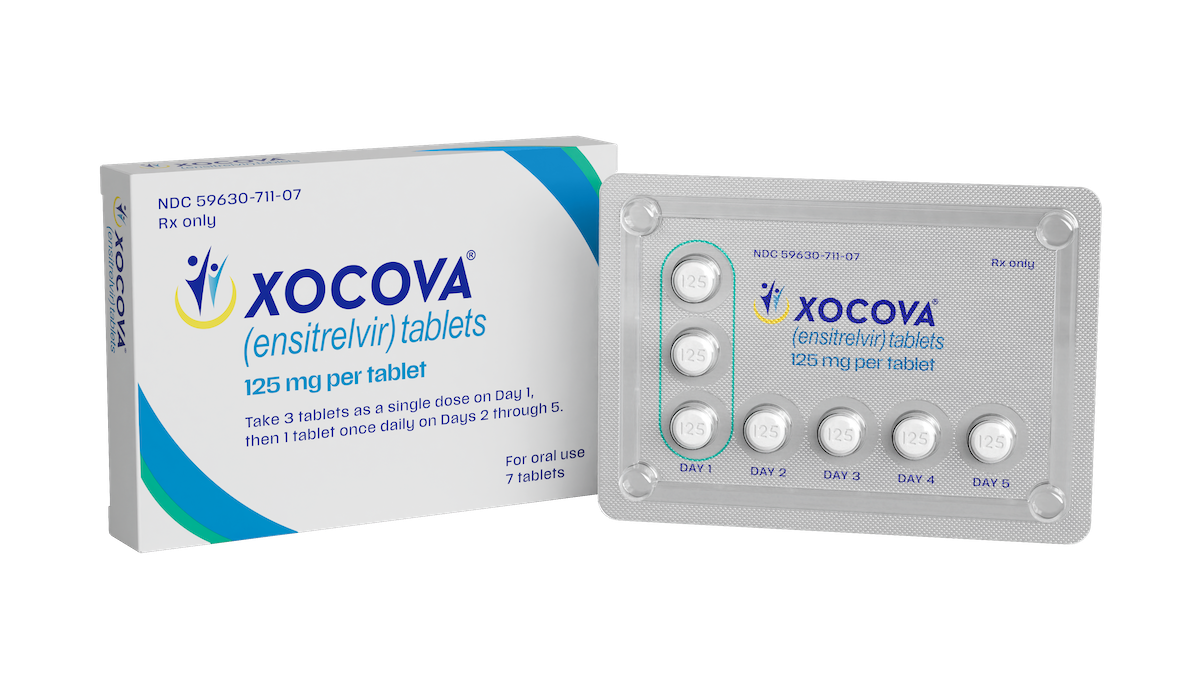
The oral antiviral medication ensitrelvir (en-SI-trel-veer), sold under the brand name Xocova (zoe-koe-vah), is designed to reduce the chances of a person developing COVID-19 after being exposed to the virus.
The U.S. Food and Drug Administration approved Xocova in late spring, and in July it became available for doctors to prescribe it to U.S. patients.
A clinical trial showed Xocova reduced by 67% rates of symptomatic illness among those who took the five-day drug course compared to those who did not take it.
The drug’s current $1,400 price tag means it’s unlikely to be widely prescribed until insurers decide to cover it. Yet, doctors say it could be a good tool for helping patients who are at high risk of developing severe infections, including those who are elderly and immunocompromised. For everyone else, experts said, taking the drug may not offer a tremendous advantage.
How does it work?
A person exposed to COVID-19 can begin taking the five-day Xocova regimen within three days of that initial exposure. Patients take three tablets on Day 1 followed by one pill a day for the next four days.
Xocova inhibits the activity of an enzyme the coronavirus needs to make copies of itself.
“The idea is that early on, before the virus gets a chance to replicate to the level that your immune system can’t rein it in — that you start getting symptoms, you start getting sick — this antiviral is going to work with your immune system to shut that down,” said Dr. Daniel Griffin, an infectious disease specialist at Columbia University.
It works similarly to Tamiflu or Xofluza that may be prescribed to prevent the flu from developing. But unlike those drugs, Xocova is not approved in the U.S. to also treat the COVID-19 once a person has tested positive. The antiviral drug Paxlovid, meanwhile, is approved for COVID-19 treatment and not prevention.
If I have been vaccinated, why would I need this?
It’s still possible to get sick with COVID-19 even after being vaccinated.
A COVID-19 vaccine teaches the body to recognize the proteins on the surface of COVID-19 viruses and fight them off. So when a person is exposed and the virus starts to replicate, the vaccine helps their immune system either fight it off before developing symptoms, or else contribute to a milder sickness.
As an antiviral, Xocova helps to slow down viral replication in a different way, giving your body even more of a boost to prevent enough virus from accumulating and causing you to get sick.
What did clinical data show about its effectiveness?
In a clinical trial involving more than 2,000 people who lived with someone with COVID-19, only 2.9% of people who took Xocova when they tested negative for the virus went on to develop a case of symptomatic COVID-19 within 10 days. That was compared with 9% who became symptomatic with COVID-19 after taking a placebo.
The clinical trial defined having COVID-19 as testing positive and having at least one symptom.
That’s a 67% drop in the relative likelihood of getting sick. The sample included people who had been vaccinated for COVID-19, but not in the past six months.
Although not reported as a major finding in the study, there was also a drop in asymptomatic cases. Regardless of symptoms, 14% of the treatment group tested positive versus 21.5% of the placebo group.
How is it most likely to be used?
The drug is mostly to benefit high-risk people who are already less protected by the vaccine, and who could develop life-threatening symptoms if they get sick. It could also be effective in curbing nursing home outbreaks and protecting exposed healthcare workers.
The benefits for people who are generally healthy are less clear.
“The benefit was not large enough to just give to everyone who comes into contact with someone with active COVID-19 (e.g. to go on a weekend trip!),” Dr. Monica Gandhi, professor and infectious disease specialist at the University of California San Francisco, told Well Informed in an email.
What are Xocova’s side effects?
Drug manufacturer Shionogi said Xocova’s most common side effects were headache, diarrhea and cough. Allergic reactions are rare, but possible. It should not be taken if you are pregnant or breastfeeding.
Certain medications can also interact dangerously with the drug or make it less effective, including simvastatin, taken for high cholesterol; colchicine, for treating gout attacks; and carbamazepine, a seizure and nerve pain drug. Even herbal supplements like St. John’s Wort can interact with the medicine.
There’s no way I can afford this. When is insurance coverage likely?
That’s unclear. As of Aug. 7, the drug did not have Medicaid, Medicare, or commercial coverage, the manufacturer told us via email.
“Shionogi is actively working with private and government health insurance plans across the country to ensure broad and rapid health plan coverage of XOCOVA at the lowest possible patient out-of-pocket cost,” the drug manufacturer told us in an email.
“I suspect some insurance companies will cover it, but then there’ll be a question of for whom,” said Griffin. The drug may only be covered for high-risk patients or groups who are more likely to be hospitalized if they catch COVID-19.
How does this compare with other drugs?
Drugs like Paxlovid are available to treat COVID-19 once a person is symptomatic, but researchers have been looking for a drug like Xocova since the beginning of the pandemic.
“If you want to interrupt that chain of transmission, having a postexposure prophylaxis is good,” said Dr. David Boulware, professor of infectious diseases at the University of Minnesota, using the medical term for medication that is taken to prevent illness after being exposed to it.
Boulware was among scientists who studied whether hydroxychloroquine might be a good prophylactic candidate back in March 2020. (It wasn’t.)
Had Xocova come out at the height of the pandemic, it would have been a more significant development. But now, with less severe strains, and less spread, demand is lower.
Other drugs tested as potential ways to stop transmission included ivermectin and Paxlovid, but neither showed promising results.
Our Sources
Interview with Dr. David Boulware, professor of infectious diseases at the University of Minnesota, Aug. 6, 2026
Email interview with Dr. Monica Gandhi, professor and infectious disease specialist at the University of California San Francisco, Aug. 6, 2026
Interview with Dr. Daniel Griffin, infectious disease specialist at Columbia University, Aug. 6, 2026
Email interview with Dr. David Smith, infectious disease specialist at University of California San Diego, Aug. 5, 2026
Email interview with Dr. Paul Sax, infectious disease specialist at Harvard Medical School, Aug. 6, 2026
Email statement from Shionogi, Aug. 7, 2026
Shionogi, Shionogi Announces U.S. Availability of XOCOVA® (ensitrelvir), the First and Only Oral Option to Help Prevent COVID-19 Following Exposure, July 29, 2026
New England Journal of Medicine, Ensitrelvir for Covid-19 Postexposure Prophylaxis in Household Contacts, May 13, 2026
New England Journal of Medicine, Supplemental Appendix, May 13, 2026
GoodRx, Xocova 2026 Prices, Coupons & Savings Tips, Accessed Aug. 10, 2026
Xocova, homepage, accessed Aug. 7, 2026
Shionogi, Xocova patient info, accessed Aug. 7, 2026
New England Journal of Medicine, A Randomized Trial of Hydroxychloroquine as Postexposure Prophylaxis for Covid-19, Aug. 2020
Mayo Clinic, Different types of COVID-19 vaccines: How they work, Dec. 24, 2025
Communications Biology, Molecular mechanism of ensitrelvir inhibiting SARS-CoV-2 main protease and its variants, July 2023
Clinical Infectious Diseases, Ensitrelvir for the Treatment of Nonhospitalized Adults with COVID-19: Results from the SCORPIO-HR, Phase 3, Randomized, Double-blind, Placebo-Controlled Trial, Jul 18, 2025
Pharmaceutics, A Pilot, Randomised, Placebo-Controlled, Double-Blind Trial of a Single Oral Dose of Ivermectin for Post-Exposure Prophylaxis of SARS-CoV-2, Sept. 16, 2025
New England Journal of Medicine,Oral Nirmatrelvir–Ritonavir as Postexposure Prophylaxis for Covid-19, July 17, 2024
Xofluza, xofluza, accessed Aug, 7, 2026
Tamiflu, Tamiflu, accessed Aug, 7, 2026
Paxlovid, Paxlovid, accessed Aug, 7, 2026
Journal of Family Medicine and Primary Care, Effect of Ivermectin prophylaxis in prevention of COVID 19: Meta-analysis and systematic review, Dec. 16, 2022
Smithsonian Magazine, This Pill Can Prevent You From Getting Covid-19 After Exposure to the Disease-Causing Virus, According to a Clinical Trial, May 22, 2026