Vaccine research spans decades and doesn’t show they cause autism

If your time is short
- Decades worth of credible scientific studies have not linked vaccines to autism.
- Researchers have examined the alleged link from multiple angles in studies involving more than a million people and repeatedly reached the same conclusion: Vaccines aren’t causing autism.
- The vast majority of scientists, doctors and leading medical organizations have dismissed the idea of a link between vaccines and autism because an ever-growing body of credible research does not support it.
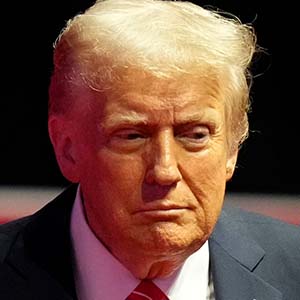
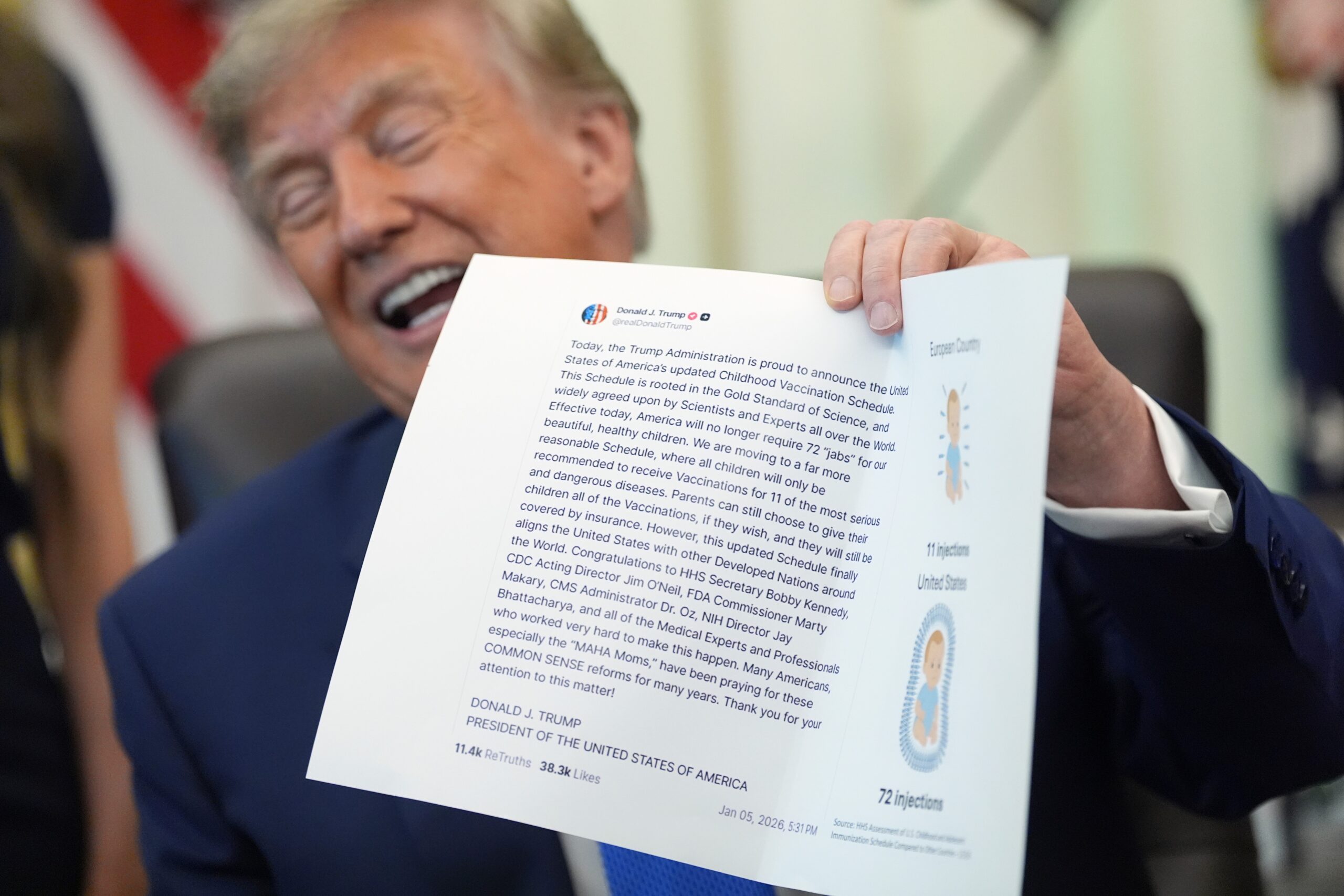
President Donald Trump has called for big changes for how U.S. children are vaccinated. As he signed an executive order recommending a new schedule for vaccines, the president said the new plan would have a “huge impact on autism.”
Credible studies have not linked vaccines to autism. Research, in fact, shows the opposite.
Autism — also known by its medical name autism spectrum disorder or ASD — refers to a neurodevelopmental condition related to brain development that influences how a person behaves and communicates.
Time and again, researchers have found no association between childhood vaccines and autism.
“Dozens of studies involving millions of people show there is no link between vaccines and autism, and yet federal leaders continue to promote this outdated, disproven idea to scare families,” American Academy of Pediatrics president Dr. Andrew D. Racine said.
Joshua Anbar, an Arizona State University healthcare administration and policy professor and someone who has researched autism’s prevalence, said extensive study leaves him highly confident that the condition is unrelated to vaccines.
His conclusion comes from many findings across very large populations, different study designs, different countries and health systems and more.
The idea that vaccines cause autism dates back to a 1998 paper in The Lancet that claimed to have found a connection. It was discredited by fellow researchers as an “elaborate fraud.” The paper’s lead author was stripped of his medical license for deliberately falsifying the research, and The Lancet published a retraction.
You may not have time to comb through dozens of studies, so we did it for you. Here’s a closer look at the conclusions from four studies that show why scientists today say they are confident that vaccines do not cause autism.
No. 1: There is no link between the measles vaccine and autism.
In 2002, a large New England Journal of Medicine study focused on the combination measles, mumps and rubella vaccine also known as the MMR.
It analyzed data on more than 537,000 Danish children born from January 1991 through December 1998. It found that 440,655 children — or 82% of the children — had received the MMR vaccine whereas only 738, a fraction of 1% of the overall group, had received some sort of autism spectrum diagnosis.
Researchers determined that, compared with unvaccinated children, children who received the MMR vaccine were not at increased risk of developing autism.
Other large studies have also found no link between MMR vaccines and autism, including a 2002 Pediatrics study of more than 535,000 children ages 1 to 7 years vaccinated in Finland in the 1980s and a 2019 Annals of Internal Medicine paper that followed 657,000 children born in Denmark from 1999 to 2010.
No. 2: Comprehensive data reviews find no credible evidence vaccines cause autism.
Facing parental concerns about vaccines causing autism in the early 2000s, U.S. health agencies asked the Institute of Medicine to assemble a team and assess the scientific evidence.
That 15-member Immunization Safety Review Committee, which included pediatricians, epidemiologists, biostatisticians and other experts, conducted a comprehensive research review, analyzing over 200 relevant studies.
The group concluded in 2004 that the “body of epidemiological evidence favors rejection of a causal relationship between the MMR vaccine and autism.”
The report also looked into the safety of thimerosal, a mercury-based preservative that prevents bacteria and fungal growth in multi-dose influenza vaccine vials. Antivaccine activists have claimed thimerosal is an autism-causing agent in vaccines for over 20 years.
The committee also found that available epidemiological evidence also does not support the idea that vaccines containing thimerosal cause autism.
Other large reviews have reaffirmed the Institute of Medicine findings.
In 2025, the World Health Organization reviewed studies published from 2010 to August 2025 — about 15 years of evidence — and concluded that the “overwhelming weight of the evidence” affirmed current vaccines’ safety and showed “no causal link” with autism or neurodevelopmental disorders.
No. 3 Dropping MMR vaccination rates do not coincide with dropping autism diagnoses.
In 2005, scientists in Japan and the U.K. approached the MMR vaccine’s alleged link to autism from another angle.
If the vaccine was causing autism, then dropping MMR vaccination rates would spark a drop in autism cases, researchers theorized. To test it, they examined the MMR vaccination program in Yokohama, Japan.
The city’s MMR vaccination rates began dropping around 1988 and no MMR vaccines were given in 1993 or after. The total incidence of autism among children under age 7 increased significantly among children born in 1988 through 1996 and then “rose dramatically” beginning with children born in 1993, according to the study published in the Journal of Child Psychology and Psychiatry.
The researchers concluded that the MMR vaccine could not explain the rising incidence of autism and was therefore unlikely to be autism’s cause.
No. 4: Combining and analyzing data from multiple studies doesn’t link vaccines to autism.
In 2014, three researchers published a meta-analysis study in the journal Vaccine. A meta-analysis combines and analyzes data from several other studies. In this case, the researchers selected studies that assessed the relationship between administering vaccines and the subsequent development of autism.
In the end, they analyzed data from 10 studies that together involved more than 1.2 million children.
Analyzing that combined data showed no relationship between the vaccine and autism, researchers wrote. It also found no relationship between autism and the MMR vaccine, thimerosal or mercury.
“Meta-analyses have their own limitations and depend on the quality of the studies they include, but this paper is helpful for seeing whether findings remain consistent when evidence from multiple populations and study designs is considered together,” Anbar said.
RELATED: RFK Jr.’s statements about autism and environmental toxins conflict with ample research
RELATED: What is the vaccine preservative thimerosal? What to know about it and its removal from flu vaccines
Our Sources
Emailed Statement from Kimberly Ha, senior director of research and programs at the Organization for Autism Research, Aug. 11, 2026
Email interview with Christopher J. Smith, chief science officer at Southwest Autism Research & Resource Center, Aug. 11, 2026
Emailed statement from Alycia Halladay, chief science officer at Autism Science Foundation, Aug. 11, 2026
Email interview with Joshua Anbar, healthcare administration and policy professor at Arizona State University, Aug. 12, 2026
PolitiFact, Viral image perpetuates misconception that vaccines cause autism, Aug. 29, 2016
PolitiFact, 5 facts about vaccines, Nov. 1, 2019
PolitiFact, RFK Jr.’s statements about autism and environmental toxins conflict with ample research, April 24, 2025
PolitiFact, What to know about the CDC’s baseless new guidance on autism, Nov. 21, 2025
Roll Call, Remarks: Donald Trump Signs an Executive Order on Vaccination Schedules, Aug. 10, 2026
PBS NewsHour, WATCH LIVE: Trump expected to sign executive order on childhood vaccines, Aug. 10, 2026
American Academy of Pediatrics, Fact Checked: Vaccines: Safe and Effective, No Link to Autism, accessed Aug. 11, 2026
Autism Science Foundation, Autism Science Foundation Challenges Administration’s Claims Linking Vaccines to Autism, Aug. 10, 2026
Autism Science Foundation, Literature Reviews: Autism and Vaccines, accessed Aug. 11, 2026
The New England Journal of Medicine, A Population-Based Study of Measles, Mumps, and Rubella Vaccination and Autism, Nov. 7, 2002
Pediatrics, Neurologic Disorders After Measles-Mumps-Rubella Vaccination Available to Purchase, Nov. 1, 2002
Annals of Internal Medicine, Measles, Mumps, Rubella Vaccination and Autism: A Nationwide Cohort Study, March 5, 2019
National Academies, Institute of Medicine, Read “Immunization Safety Review: Vaccines and Autism” at NAP.edu, 2004
PolitiFact, What is the vaccine preservative thimerosal? What to know about it and its removal from flu vaccines, June 26, 2025
World Health Organization, Vaccines, thimerosal and autism spectrum disorder: Evidence review 2010 to 2025, 2025
Journal of Child Psychology and Psychiatry via the Association for Child and Adolescent Mental Health, No effect of MMR withdrawal on the incidence of autism: a total population study – Honda – 2005 – Journal of Child Psychology and Psychiatry, Feb. 18, 2005
ScienceDirect, Vaccines are not associated with autism: An evidence-based meta-analysis of case-control and cohort studies, June 17, 2014
The British Medical Journal, Wakefield’s article linking MMR vaccine and autism was fraudulent, Jan. 6, 2011
HealthyChildren.org, Vaccine Safety: Examine the Evidence, accessed Aug. 11, 2026
Immunize.org, Evidence Shows Vaccines Unrelated to Autism, April 22, 2026
American Academy of Pediatrics, AAP Statement in Response to Executive Order on Vaccines, Aug. 10, 2026
Annals of Internal Medicine via Autism Science Foundation, Measles, Mumps, Rubella Vaccination and Autism: A Nationwide Cohort Study, March 5, 2019
Pediatrics, On-time Vaccine Receipt in the First Year Does Not Adversely Affect Neuropsychological Outcomes, May 24, 2010 (PDF here)
New England Journal of Medicine, Early Thimerosal Exposure and Neuropsychological Outcomes at 7 to 10 Years, Sept. 27, 2007
Chest Journal, Cohort Studies: Design, Analysis, and Reporting, July 2020
Canadian Medical Journal Association via PubMed Central, Lancet retracts 12-year-old article linking autism to MMR vaccines, Feb. 4, 2010
The Lancet, RETRACTED: Ileal-lymphoid-nodular hyperplasia, non-specific colitis, and pervasive developmental disorder in children, Feb. 28, 1998