Drug overdoses decreased in Maine because the Trump administration “sealed the border.”

Maine drug overdoses are down. Is Vance right that Trump’s border policies are the cause?
If your time is short
- After two decades of rising deaths, U.S. fatal overdoses declined by more than 21% from 2024 to 2025.
- In Maine, fatal overdoses were about 20% lower in 2025 than in 2024. Overdose deaths also declined from 2023 to 2024.
- Drug policy experts point to multiple factors for the declines, such as less availability of fentanyl and increased access to the overdose-reversing medication naloxone, which predate the Trump administration’s border policies.
Vice President JD Vance said the Trump administration’s border strategy kept drugs out of Maine and saved lives.
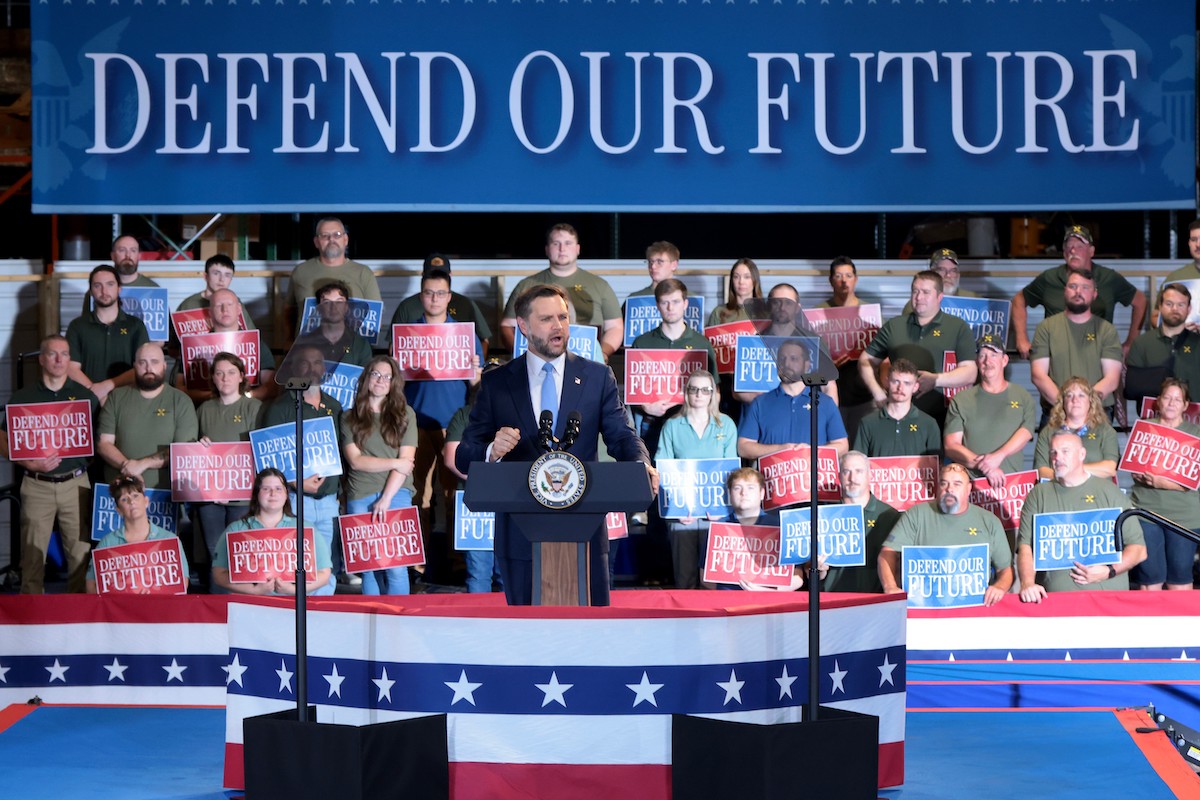
“Last year in 2025, did you know that overdoses in the state of Maine were down by 20%, and already in 2026 they’re down by another 17%?” Vance said in an Aug. 24 speech at Compotech, a defense contractor in Brewer, Maine. “We sealed the border, and that’s what happened, my friends, and that’s why we did it.”
Vance didn’t specify whether he meant fatal overdoses but he later nodded to deaths, saying “tens of thousands of Mainers died from fentanyl overdoses by that poison.”
Vance’s number was an exaggeration; the annual number of Maine fatal overdoses is in the hundreds.
But he was correct that Maine’s overdose deaths have dropped. PolitiFact wondered if Vance was also right about what caused the decline.
We asked the vice president’s office for information to support Vance’s statement and a spokesperson referred us to the Trump administration’s efforts to dismantle fentanyl networks and the declining death toll.
Maine’s declining fatal overdoses pre-dated the Trump-Vance administration. Drug policy researchers credit multiple factors, and Trump’s border policy is not one.
“We did not literally seal the borders (to fentanyl)” Carnegie Mellon drug policy researcher Jonathan P. Caulkins told PolitiFact. “Obviously some is still getting in; otherwise deaths would be zero.”
Drug overdoses started declining before Trump’s second term
Most illicit fentanyl in the U.S. comes from Mexico and is made with chemicals from China.
In recent years, the drug mostly entered the U.S. via the southern border at official ports of entry, and 83.5% of the smugglers in fiscal year 2024 were U.S. citizens.
But after two decades of rising deaths, fatal overdoses dropped by 21.4%from 2024 to 2025, the U.S. government reported in January. About one month into the Trump administration, the U.S. Centers for Disease Control and Prevention said multiple factors contributed to the decline, including broader distribution of the overdose-reversing medication naloxone, better access to treatment, shifts in the illegal drug supply and the post-pandemic resumption of prevention and response.
The majority of states had declines in fatal overdoses, including Maine.
Maine had 391 fatal overdoses in 2025, about 20% fewer than 2024, according to data compiled by the state and the University of Maine. During the first half of 2026, fatal overdoses dropped about 9.5% compared with the first half of 2025. Among overdose cases, fentanyl was the most common drug used; it is often combined with other drugs.
Vance omitted that fatal overdoses started declining in Maine during the Biden administration; deaths dropped. The number of fatal overdoses in 2024 was 19% lower than in 2023 which was also 16% lower than deaths in 2022.
“The evidence supports multiple factors for this reduction in overdose deaths, especially fentanyl deaths, rather than pointing to a closing the US border as a single cause,” wrote Marcella Sorg, a University of Maine medical and forensic anthropologist whose team provides research for the state’s opioid response, in an email to PolitiFact.
Maine officials also point to steps they have taken to provide treatment and recovery. Since August 2019, Gov. Janet Mills’ administration has distributed more than 870,000 doses of naloxone. Maine has invested in behavioral health specialists, recovery coaches and treatment and support in various places, from jails to workplaces.
The state has laws aimed to reduce addiction, including strict opioid prescription rules and to encourage people to seek help if someone they are with overdoses.
Sifting through Vance’s evidence
The Trump administration in July highlighted the decline in fentanyl overdoses from 2024 to 2025. It cited steps it said disrupted the supply, including designating cartels as terrorist organizations and signing the HALT Fentanyl Act, a bipartisan bill that made permanent a 2018 rule that classified knockoffs as Schedule 1 drugs, resulting in harsher sentences for possession.
The administration also pointed to its strikes on vessels it says are carrying drugs. In January, Trump said drugs entering the U.S. by sea were down substantially as a result of the vessel strikes; we rated that False. His administration provided no evidence the boats were carrying drugs.
We sent the administration’s evidence to experts on drug policy.
“It is very difficult to parse out with certainty the specific policies that caused overdose deaths to come down,” Regina LaBelle, a Georgetown professor of addiction policy. “You can just as easily point to other reasons, including more treatment in jails and prisons,” noting a study on that factor, or naloxone access.
Peter Reuter, a University of Maryland public policy and criminology professor, said “there is no proof” those administration steps caused the decline in overdoses. He said the most plausibly effective intervention on the list was the president closing a trade loophole for an import tax exemption for packages valued at less than $800. Known as the de minimis exemption, it was meant to curb drug trafficking.
“No study has been done of how this (exemption) has affected fentanyl supplies; it would indeed be hard to design such a study,” Reuter said.
Caulkins said there is no control group or mechanism to show what would have happened without those measures. In their January paper in the journal Science, Caulkins and Reuter said fentanyl became less available in the U.S. and Canada in 2023 as China took action against manufacturers of what are known as “precursors” — chemicals used to make fentanyl. The crackdown partly followed pressure from the Biden administration..
However, Caulkins said that is only a hypothesis, one that is not easy to test. He also said that the fentanyl supply appeared to be down for longer than one would expect from those chemicals restrictions.
“So it seems plausible that various other actions, perhaps including by the governments of the U.S., Mexico and Canada, contributed to the ongoing tightness in supply,” Caulkins said. “It is plausible that the measures that Vance mentions made some contributions in that regard.”
Reuter previously told PolitiFact that the purity of fentanyl seized by the Drug Enforcement Administration began to decrease around the same time as overdose deaths started to decline in the U.S. and Canada in 2023.
“It’s very likely that (the change in purity) has something to do with precursor supply, because that’s what the two markets share,” he said.
In August, Reuter and a coauthor wrote for Brookings, a think tank, “The true explanation of the falling number of drug overdose deaths is almost certainly some combination of supply-side changes, demand-side adaptation, and the hard-to-quantify effects of community organizations doing the daily work of harm reduction.” The article did not mention Trump’s border policy.
Our ruling
Vance said “we sealed the border” and drug overdoses decreased in Maine.
Overdoses in Maine are down — they were about 20% lower in 2025 than in 2024. The declines started under the Biden administration.
Experts on drug policy — including the CDC during the second Trump administration — point to multiple factors that have contributed to the decline, including shifts in the illegal drug supply and access to medication and treatment.
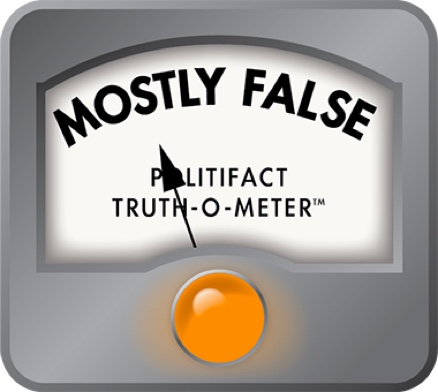
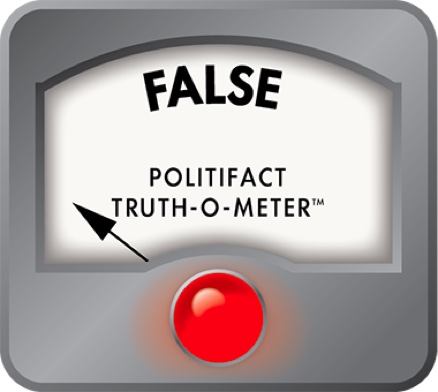
Researchers found no evidence that Trump border policies led to a decrease in drug deaths in Maine and the Trump administration’s evidence did not show that either. We rate this statement False.
Staff Writer Madison Czopek contributed to this fact-check.
RELATED: What’s driving down US overdose deaths? Experts cite drug supply changes, increased naloxone
Our Sources
White House, Vice President JD Vance Delivers Remarks in Brewer, ME, Aug. 24, 2026
White House, President Trump’s Relentless Strategy Is Dismantling Fentanyl Networks and Saving Lives, July 13, 2026
Maine Drug Data Hub, Accessed Aug. 24, 2026
Maine monthly overdose report, December 2025
WMTW, State of addition, Accessed Aug. 25, 2026
Portland Press Herald, Maine drug overdose deaths continue to plummet, Nov. 10, 2025
NewsCenter Maine, Bangor overdose deaths rise as Maine sees statewide decline, Aug. 6, 2026
National Institutes of Health, Treating opioid addiction in jails improves treatment engagement, reduces overdose deaths and reincarceration, Sept. 10, 2025
U.S. Centers for Disease Control and Prevention, CDC Reports Nearly 24% Decline in U.S. Drug Overdose Deaths, Feb. 25, 2025
Science, Did the illicit fentanyl trade experience a supply shock? Jan. 8, 2026
Brookings, Exploring the sources of the decline in US drug overdoses, Aug. 6, 2026
New York Times, Family Presses for Information About Fatal ICE Shooting in Maine, Aug. 17, 2026
PolitiFact, Fact-checking JD Vance on Maine Democrats, Medicaid fraud and autism coverage, May 14, 2026
PolitFact, What is fentanyl? The facts and myths on the synthetic opioid driving drug overdoses, Aug. 21, 2025
PolitiFact, The US-Canada trade war: What happened? What’s next? Aug. 24, 2026
Emain interview, Marcella Sorg, research professor, Department of Anthropology, Climate Change Institute and Margaret Chase Smith Policy Center at University of Maine, Aug. 25, 2026
Email interview, Ben Goodman, Gov. Janet Mills spokesperson, Aug. 25, 2026
Email interview, Jonathan P. Caulkins, professor of operations research and public policy at Carnegie Mellon University, Aug. 25, 2026
Email interview, Peter Reuter, public policy and criminology professor, University of Maryland, Aug. 25, 2026
Email interview, Regina LaBelle, professor in addiction policy and practice. Georgetown University, Aug. 25, 2026
Email interview, Brandon Marshall, professor of epidemiology at Brown University School of Public Health, Aug. 24, 2026
Email interview, Lori Ann Post, geriatric medicine professor at Northwestern University, Aug. 24, 2026