Senate rejects Republican bill requiring a photo ID to vote
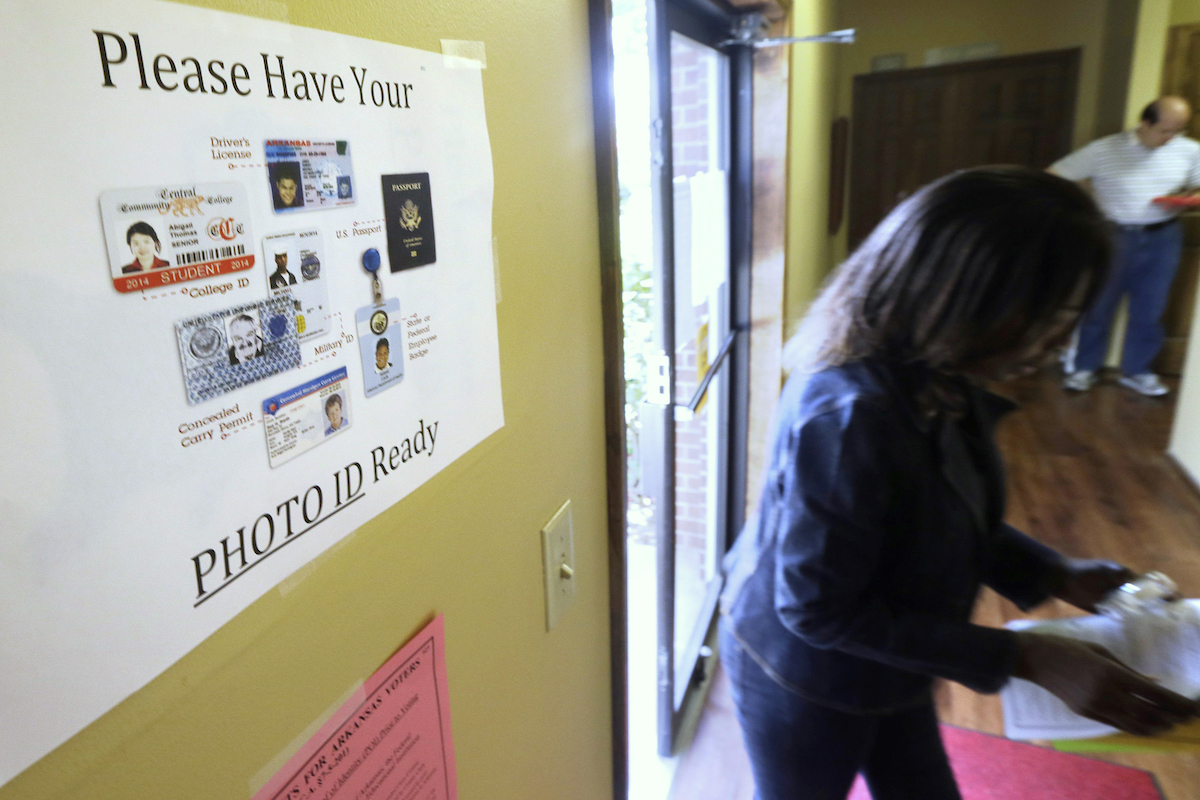

The U.S. Senate on Aug. 8 voted against Republican-backed legislation to create a national voter ID policy, a priority of President Donald Trump before the midterm general elections.
When voters head to the polls in November, they will follow state laws about the identification necessary to cast a ballot.
In February U.S. House Republicans passed the SAVE America Act, which would require people to present a government-issued photo ID when voting in person and submit a copy of that ID when returning a mail ballot. The legislation stalled in the Senate.
Republicans then tried a pared-down approach: Sen. Jon Husted, R-Ohio, introduced a bill Aug. 5 solely about requiring a photo ID for voting. It said voters must present a government-issued photo ID at the polls such as a driver’s license or passport. It also said for those voting by mail, they must provide a copy of their photo ID or the last four digits of their Social Security number and an affidavit attesting that the person can’t obtain a copy of their ID.
The legislation had exceptions, including for military servicemembers. Husted’s proposal failed to get the 60 votes it needed to pass; senators voted along party lines, 52-46.
Thirty-six states already request or require voters to show some form of ID at the polls. The remaining 14 states and Washington, D.C., require no identification, but they use other methods to verify voter’s identity, such as asking for a home address or birth date. Federal law requires first-time voters to show ID when requesting mail ballots, and some states have additional ID requirements for voters mailing in ballots.
In 2026, eight states made their ID requirements more stringent, according to the Voting Rights Lab that tracks state legislation. For example, Florida and New Hampshire will no longer allow student IDs as an acceptable form of voter ID. Iowa no longer lets a registered voter attest to a voter’s identity.
Ohio Gov. Mike DeWine, a Republican, vetoed a bill requiring voter ID to cast a mail ballot. He said the proposal would not discourage fraud or add security, and “would create an additional and significant burden for Ohioans who vote by mail.”
Trump’s push for a national voter ID policy is built on the falsehood that Democrats stole the 2020 election. Officials in Trump’s first administration said the election was secure. Voter impersonation at the polls is rare.
The Senate returns from recess in mid-September. Some states begin voting by mail or early in person in September, which means the president has likely run out of time for ID changes this election cycle.
We will keep monitoring this pledge, but given the failed attempts so far, we rate it Promise Broken.
RELATED: How is Trump faring on his campaign promises? PolitiFact’s MAGA-Meter keeps the score
Our Sources
Congress.gov, S.5271 – A bill to amend the Help America Vote Act of 2002 to require voters to provide photo identification. Aug. 8, 2026
Voting Rights Lab, 2026 Legislative Session in Review, June 29, 2026
The Center for Election Innovation and Research, Dates for 2026 Early In-Person and Mail Voting, June 2026
Gov. Mike DeWine, Press release about voter ID for voting by mail, June 24, 2026
PolitiFact, Trump’s own advisers add to evidence that election wasn’t stolen, June 10, 2022
PolitiFact, Voter impersonation is rare, North Carolina’s Cooper says, April 5, 2021