Why Republicans are focusing on transgender issues in competitive 2026 campaigns


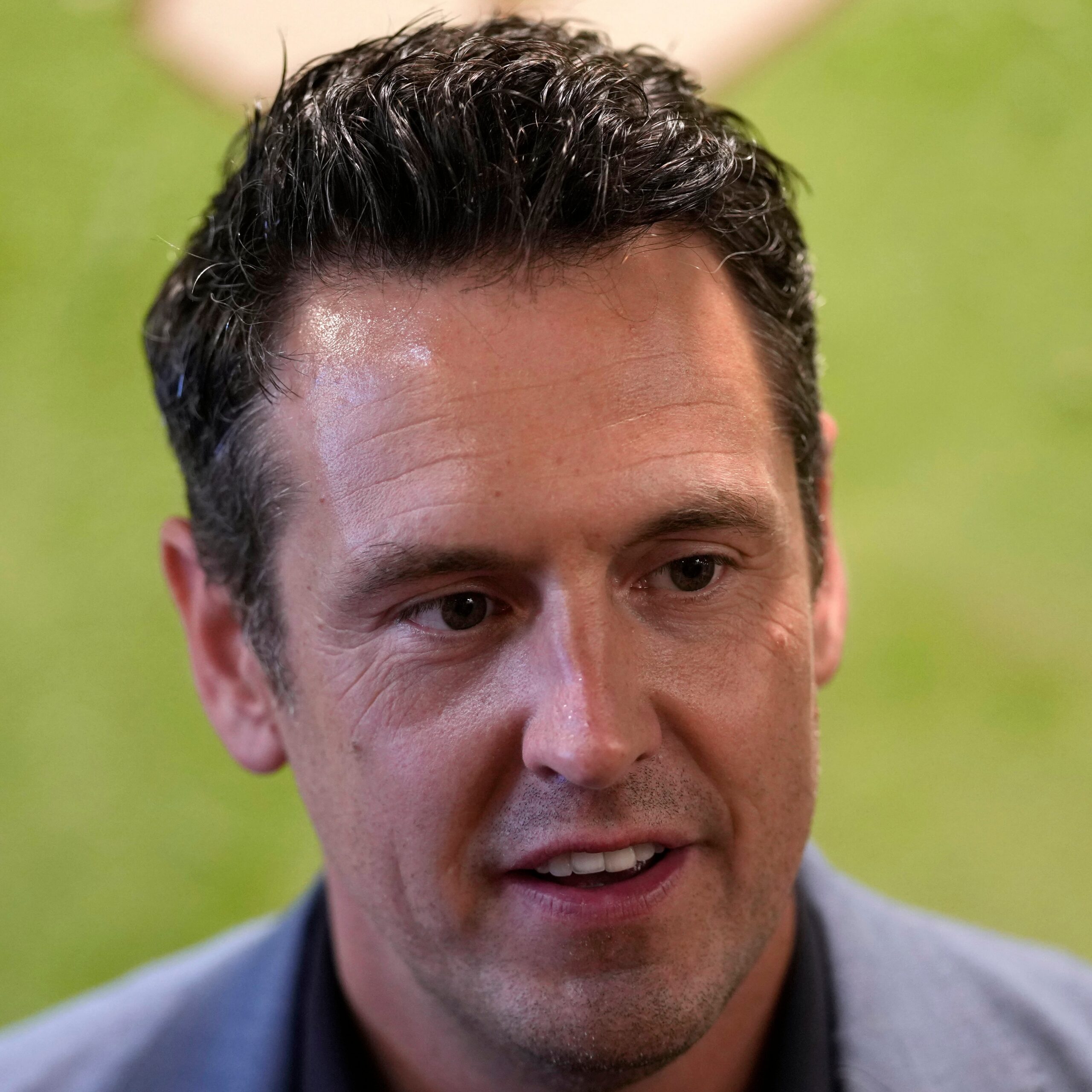
A recent Kansas ad targeting Democratic U.S. Senate candidate Adam Hamilton, a United Methodist pastor, shows him standing in front of footage of dancing drag queens and says he “preaches the gospel of woke.”
The ad, one of many using anti-transgender rhetoric to attack Democrats in competitive midterm elections, misleadingly stitches together clips to make the case that Hamilton is out of touch with voters on social issues. When the ad quotes Hamilton saying, “How we define gender… we have a whole array of sexualities,” it is combining separate sentences he said in an interview to create a quote he never said.
The clips came from a 2021 podcast appearance, during which Hamilton’s comments were more nuanced than the ad portrays. He expressed clear support for same-sex marriage and challenged more conservative Christian views. But he didn’t outline specific transgender policy positions and said the church shouldn’t make decisions based on public opinion.
The Kansas ad mimics others across the country. In Georgia, Iowa, Ohio and Texas, ads targeting Democrats over transgender athletes’ sports participation and gender affirming medical care for minors have become commonplace. The ads often omit context about a candidate’s votes or statements to make a sweeping policy attack.
The messaging is an effort to tap into a strategy that was successful for President Donald Trump in 2024. In the closing weeks of that campaign, Trump hammered former Vice President Kamala Harris on transgender issues to paint her as outside the cultural mainstream. Terry Schilling, president of the conservative group American Principles Project, said in a podcast earlier this year that the ads were a decisive factor in Trump’s victory.
“It swung the most voters over to him, the most swing voters,” Schilling said in a January episode of The Daily Signal podcast. “They said their top issue was that Kamala cared more about transgender issues than people like them.”
American Principles Project’s research on the ads found that they made voters more likely to vote for Trump, and other research found the messaging successfully convinced some swing voters that Harris was too focused on cultural issues. It’s unclear how significant the impact was.
The focus on athletics and youth medical care center on issues that majorities of Americans are already uncomfortable with, said Andrew Flores, an American University professor who researches LGBTQ issues in politics. Gallup polling from 2025 found that 69% of U.S. adults believe transgender athletes should only be allowed to play on sports teams that match their birth sex. Pew Research Center data shows a smaller majority, 56%, support a ban on minors receiving transition-related medical care. Pew’s research found support for these restrictions has increased since 2022.
Republican ads target sports, medical care
This year’s ads about transgender issues have primarily covered two policies: transgender athletes’ participation in women’s and girls’ sports, and gender affirming medical care — particularly surgery — for minors.
When asked why Republicans are focusing on these topics, Republican National Committee spokesperson Hunter Lovell said in a statement to PolitiFact that Democrats are “defending child gender mutilation and allowing boys to infiltrate girls’ locker rooms and sports.”
Gender transition surgery for minors is exceedingly rare, and no medical guidelines support providing it for young children. Any medical care for transgender minors — which may include puberty blockers and hormone therapy — requires parental consent.
In the Iowa U.S. Senate race, Republican U.S. Rep. Ashley Hinson’s first ad after the primary said her Democratic opponent, state Rep. Josh Turek, supports “sex changes for kids,” with images of surgeons in an operating room — a claim PolitiFact rated False. In the Florida gubernatorial race, Republican U.S. Rep. Byron Donalds debuted a similar false attack, saying Democrat David Jolly supports “gender-changing surgeries on kids.”
⭕ Sex changes for kids.
⭕ Amnesty for criminal illegals.
⭕ 90% tax rate on hardworking Americans.That’s what Josh Turek is fighting for.
And that’s why we’re going to beat him. pic.twitter.com/QdfQblUsPV
— Ashley Hinson (@hinsonashley) June 3, 2026
Republican U.S. Rep. Buddy Carter in Georgia, who lost the May Senate primary to U.S. Rep. Mike Collins, aired an ad that included a male portraying a transgender woman, and contrasted Carter’s anti-transgender positions with Democratic incumbent Sen. Jon Ossoff. An Ohio ad revived a 2024 false attack, tying Democrat and U.S. Senate candidate Sherrod Brown to “boys in girls’ sports.”
A recent AI-generated ad portrayed Texas U.S. Senate Democratic candidate James Talarico wearing a dress and singing about transgender children.
Gender policy issues can also represent broader voter anxiety about rapid cultural change, experts said.
“There’s a general cultural milieu on the right that the world as they know it doesn’t exist anymore, and I think trans people offer an anchor to put a lot of those anxieties on,” said TJ Billard, a Northwestern University communications studies professor and executive director of the Center for Applied Transgender Studies.
Democratic response is fractured
Although the Republican attacks are unified, Democrats’ responses are not.
Some candidates have publicly distanced themselves from Republicans’ most extreme accusations. Turek in Iowa and Talarico in Texas both said they oppose gender affirming surgeries for minors, without arguing for a broad ban on medical treatment.
Tyson Brody, a spokesperson for Hamilton’s campaign in Kansas, said Hamilton does not think girls should “compete against boys” in sports and that gender affirming surgeries shouldn’t be performed on children.
“But no one should attack or demean a small and vulnerable group of people just to score political points,” Brody said. “Adam thinks Washington spends far more energy on this issue than on the things Kansans actually lose sleep over, like fixing health care or lowering costs.”
When candidates remain silent against the attacks, it can give voters the impression the candidate holds extreme views on social issues in general, said Lanae Erickson, senior vice president for social policy at the center-left think tank Third Way.
“The goal (for Democrats) is to get (them) back to being able to explain their own position rather than simply avoiding the issue,” she said.
Responding to criticism of his vote against a measure aimed at restricting transgender athletes’ participation in K-12 sports, Ossoff said in 2025 that school districts and athletic associations should decide on participation rules. He said the bill was overreach and involved “subjecting the bodies of adolescent student athletes — children — to intrusive investigation.”
Tyler Hack, executive director of the Christopher Street Project, a transgender-rights political advocacy group, said candidates should explain the practical implications of policies restricting transgender youth and frame them as questions of privacy and bodily autonomy.
“We know that when you talk to people about genital inspections in schools for girls, as young as 4 years old, who don’t look feminine enough in the eyes of Republicans, they think that’s gross,” Hack said.
In Michigan, Republicans have criticized Democratic Senate candidate Abdul El-Sayed over his statement that gender-affirming care for minors should be covered under a single-payer health care system.
In an Aug. 24 interview with Fox News host Jesse Watters, El-Sayed, who has a medical degree, said the government shouldn’t be involved in the decision and appealed to doctor-patient relationships.
“If you disagree that health care decisions need to be made by a doctor, and parents, and a patient, then I just think we agree to disagree,” El-Sayed said.
Experts said it’s unclear whether the anti-transgender attacks will benefit Republicans this year. Voters consistently list the economy and affordability as their top issues in the midterm elections. And there’s some indication Republicans’ aggressive messaging is backfiring, Erickson said. A recent Fox News poll found voters trust Democrats more than Republicans on transgender issues by a 13-point margin.
Don Haider-Markel, a University of Kansas political science professor, said the anti-trans messaging was less effective in the 2025 gubernatorial elections and recent special elections.
Flores, the American University professor, said it’s unclear the ads are swaying voters, but they could mobilize people on the margins.
“Even though this is a continuation of a strategy, it’s not necessarily clear that this is a winning strategy, per se.” Flores said. “I haven’t seen as much convincing evidence that it’s always going to be a working strategy.”
Our Sources
Phone interview with Andrew R. Flores, associate professor of government at American University, Aug. 26, 2026
Phone interview with Tyler Hack, executive director of the Christopher Street Project, Aug. 25, 2026
Phone interview with Lanae Erickson, senior vice president for Social Policy, Education and Politics at Third Way, Aug. 26, 2026
Phone interview with TJ Billard, associate professor of communication studies at Northwestern University and executive director of the Center for Applied Transgender Studies, Aug. 26, 2026
Email interview with Donald P. Haider-Markel, professor and chair of political science at the University of Kansas, Aug. 25, 2026
Email exchange with Tyson Brody, Adam Hamilton campaign spokesperson, Aug. 27, 2026
Email exchange with Hunter Lovell, Republican National Committee spokesperson, Aug. 26, 2026
Email interview with Lauren Gray, vice president of communications and public affairs at the National Center for LGBTQ Rights, Aug. 27, 2026
AdImpact, Woke Not Broke campaign ad, accessed Aug. 27, 2026
The Weight, Human Sexuality — ‘Changing My Position’ with Adam Hamilton, Sept. 20, 2021
PolitiFact, In Iowa Senate race, Hinson ad distorts Turek’s stance on gender-affirming care for minors, June 5, 2026
PolitiFact, AI ads skewed Talarico’s words and positions. It’s part of a changing scene in political advertising, June 22, 2026
The Washington Post, Trump, allies lean into anti-transgender message in final campaign pitch, Oct. 22, 2024
The Daily Signal, Culture War Plot Twist: Conservatives Are Actually Winning | Terry Schilling, Jan. 29, 2026
PolitiFact, Transition-related surgery limited to teens, not ‘young kids.’ Even then, it’s rare, Aug. 10, 2022
Ashley Hinson, X post accompanying the “sex changes for kids” ad, June 2, 2026
Iowa Legislature, Senate File 496, accessed Aug. 26, 2026
Fox News, GOP Georgia Senate candidate targets vulnerable Jon Ossoff in ad depicting transgender ‘fan’, May 27, 2025
YouTube, Jon Husted 2026 Campaign Ad | Ohio Senate | Sherrod Brown ‘You’re Fired’, May 30, 2026
PolitiFact, Republican super PAC twists Democratic Sen. Sherrod Brown’s votes on transgender athletes, Oct. 10, 2024
Reagan Reese, X post sharing an AI-generated James Talarico ad, June 9, 2026
PolitiFact, Byron Donalds’ ad deceptively edited David Jolly clip on gender-affirming care, Aug. 19, 2026
Gallup, Two-Thirds in U.S. Prefer Birth Sex on IDs, in Athletics, June 10, 2025
Pew Research Center, Americans have grown more supportive of restrictions for trans people in recent years, Feb. 26, 2025
The Hill, James Talarico says he opposes gender reassignment surgery for minors | Rising, June 9, 2026
The Atlanta Journal-Constitution, How Republicans are using transgender politics to pressure Democrats, March 4, 2025
RNC Research, X post, Aug. 12, 2026
Abdul El-Sayed, Abdul El-Sayed takes on Jesse Watters: ‘I feel good about beating Rogers who we both agree is beta’, Aug. 25, 2026
Pew Research Center, As the 2026 Midterms Approach, Economy Is Front and Center, July 23, 2026
Erin in the Morning, Fox News Poll: Democrats +13 on Transgender Issues, April 24, 2026
American Principles Project, New Poll: Transgender Issue Ads Moved Voters to Trump, Republicans, Nov. 26, 2024
Blueprint 2024, Why America Chose Trump: Inflation, Immigration, and the Democratic Brand, Nov. 8, 2024