Since the passage of the “Jon Husted-backed” HB 6, Ohioans’ residential utility rates have gone up $663 a year.

Sherrod Brown blames HB 6 for electric bill spike. Experts say the law wasn’t the main cause
If your time is short
- Sen. Jon Husted was a vocal supporter of House Bill 6 that the Ohio legislature passed in 2019.
- Ohio’s residential electricity prices have risen $702.36 from HB 6’s 2019 enactment to June. The number Sherrod Brown referenced is from 2019 to January.
- Experts say HB 6 was one factor, but the main drivers were increased supply side costs, which are rising because of a reliance on natural gas as oil prices climb, more data centers, and surging costs from regional power producer auctions.
In the special election for an Ohio Senate seat, the state’s increasing residential electricity bills are in the political spotlight.
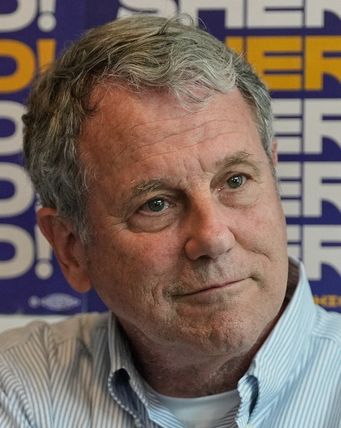
Democratic former Senator Sherrod Brown, who will face Republican Sen. Jon Husted, posted July 1 on X: “Since the passage of the corrupt, Jon Husted-backed (House Bill 6) bailout, your utility rates have gone up $663 a year.”
The post linked to an article citing monthly utility data from the Public Utilities Commission of Ohio to calculate a $663.36 annual electric bill increase from the law’s enactment in October 2019 to January. The article says HB 6 contributed to the increase.
The Ohio legislature passed House Bill 6, or HB 6, in 2019 and it was tied to what was widely recognized as the largest political corruption case in Ohio’s history. Eight people were charged with crimes including racketeering, public corruption and bribery.
The bill included mandated utility bill surcharges to subsidize failing power plants and allowed FirstEnergy to levy charges regardless of consumer use.
But experts told PolitiFact that although HB6 was a factor, the law was not the main driver of the $663 annual increase. Instead, they attribute it to an influx of data centers, international conflicts and rising prices from regional power grid auctions.
What did HB 6 seek to do and what was Husted’s involvement?
HB 6 was a $1.3 billion bailout to FirstEnergy, an Ohio-based utility company.The 2019 legislation led to consumers subsidizing failing power plants through monthly surcharges.
FirstEnergy spent $60 million on bribes to Ohio political figures to ensure the law’s passage.
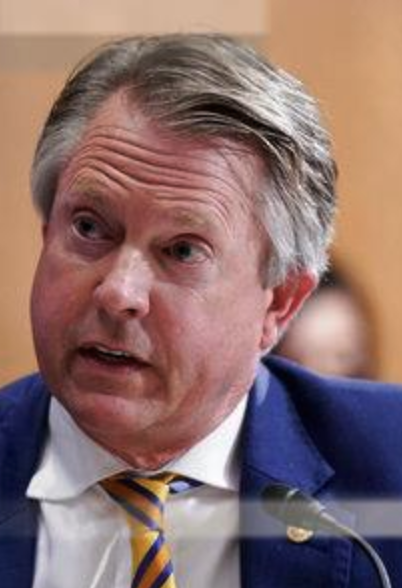
Husted championed HB 6’s passage as lieutenant governor. He has not been charged with any crimes or accused of wrongdoing; when testifying in March, he said he had no knowledge of the bribery.
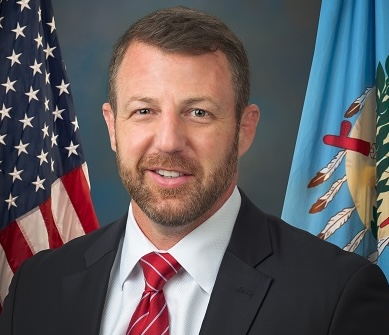
His 2018 campaign with Gov. Mike DeWine received heavy financial support from nonprofits and political action committees funded by FirstEnergy. Trial records include text messages and emails where FirstEnergy executives call Husted their “golden boy” and describe his high engagement in convincing both DeWine and state lawmakers to pass the bill. (In 2025 DeWine appointed Husted to fill the remaining term of J.D. Vance, who became vice president. Husted is running now to keep the seat, which Brown held previously from 2007 to 2025.)
HB 6 had four parts: a nuclear plant bailout; a guarantee of set profits not tied to consumer usage; coal plant subsidies; and the reduction of green energy mandates with plans to eventually eliminate them.
Husted’s campaign spokesperson, Amy Natoce, told PolitiFact “The subsidies contained in HB 6 were repealed, so it is quite literally impossible for HB 6 to be raising utility rates.” The rate increases were in effect for six years before they were repealed.
The bailout for two of FirstEnergy’s nuclear plants added mandatory monthly surcharges to nearly all residential, commercial and industrial utility bills and was expected to generate $150 million annually. In 2021, after the FBI arrested people for racketeering, House Bill 128 repealed the surcharge before FirstEnergy collected any funds. HB 128 also repealed the utility’s ability to guarantee itself a baseline level of revenue by raising base rates.
The coal plant subsidies, which led to a $1.30-$1.50 monthly charge for residential consumers, ended in May 2025. The cuts to Ohio’s energy efficiency requirements and Renewable Portfolio Standards, which formerly forced utility companies to buy a portion of their power from renewable sources, have been maintained.
How much have rates changed, and what’s driving increases?
Brown’s figure comes from comparing average annual residential bills from October 2019 and January. The 2019 annual bill was about $1,070 and the January bill was about $1,734.
The rate has continued to increase since January; based on data from Ohio’s Public Utilities Commission, the average June monthly bill was $155.65 (or $1,867.80 annually).
When contacted for comment, Brown’s campaign cited these figures and shared a document that said the law “contributed” to the utility increase. They also cited a 2025 study from Runnerstone, an energy engineering consulting firm, showing that Ohio residents have paid $527 million because of HB 6 subsidies.
However, Brown misleads by citing HB 6 as the main driver of rising rates.
“There’s no way anyone with a straight face could tell you that House Bill 6 raised electric bills by $663,” said Dr. Noah Dormady, an Ohio State University associate professor in public policy analysis and energy policy, and an expert witness in the HB 6 racketeering trial,. “To attribute all of this cost to House Bill 6 is irresponsible.” Dormady said the price hikes are because of utility companies facing increased demand from data centers and Ohio-specific retail auctions where suppliers are price gouging. He also pointed to increased energy costs because of the Ukraine-Russia and Iran wars.
Ohio relies on a regional grid and competitive wholesale power market, operated by PJM Interconnection. PJM determines what mediums to source power from, while power producers participate in wholesale capacity markets and are paid for expected demand. Dormady explained that investor-owned distribution utilities in Ohio during retail auctions purposefully restrict supply so bidding prices are higher. These translate into higher supply rates on consumer bills.
According to energy reports from Third Way, a centrist think tank and advocacy organization, supply rates make up about half of monthly electricity bills. Natural gas prices have been unusually high this year because of the closure of the Strait of Hormuz and war in Iran, but PJM’s recent prioritization of natural gas generation has contributed to the higher supply rates.
Molly Bryden, a researcher at liberal-leaning think tank Policy Matters Ohio, said a leading cause for the energy hikes is utility companies hiking rates to combat data centers’ usage. Ohio utilities have asked the Public Utilities Commission of Ohio to increase distribution and transmission rates, citing data center growth; some approved cases may add an additional $10 per month in the coming years.
Our ruling
Brown said since the passage of the “Jon Husted-backed” HB 6, Ohioans’ utility rates have gone up $663 a year.
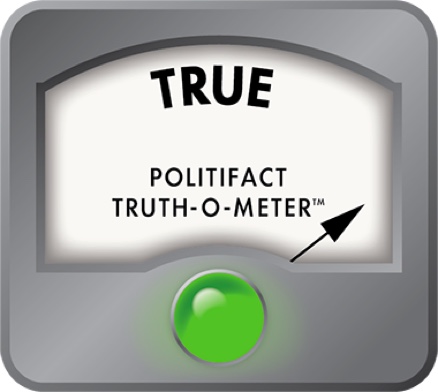
Husted was a vocal supporter of HB 6.
The article Brown cited compares the annual rate of $1,070 at the time of legislation’s enactment in October 2019 with the rate in January, which was $1,734, a $663 increase.
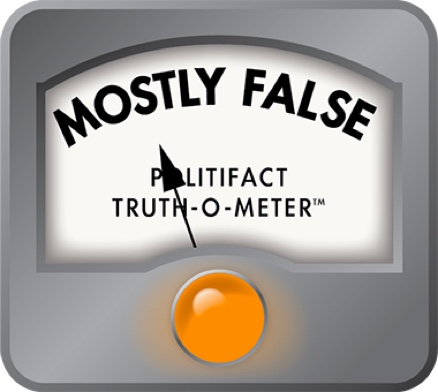
However, much of the increase reflects wholesale electricity prices, increased data center demand, and a reliance on natural gas. Brown misleads by linking the increase to the legislation.
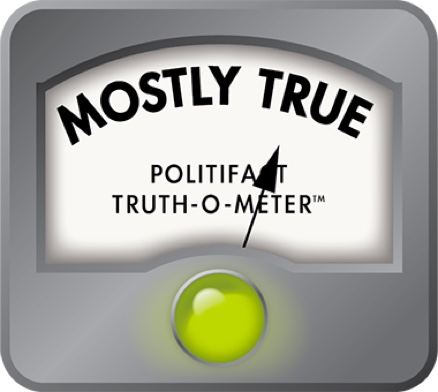
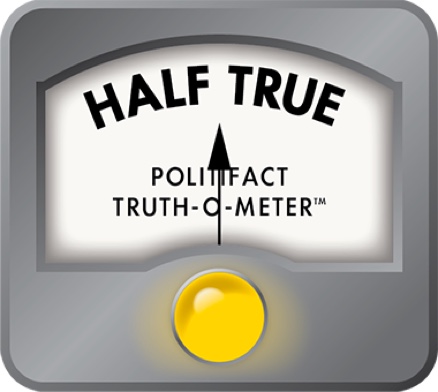
The statement is partially accurate but leaves out important details. We rate it Half True.
CORRECTION, July 21, 2026: This story was updated to more accurately describe the Ohio power market.
Our Sources
Advanced Energy United, PJM Stalled the Clean Energy Transition: Affordability and Reliability Depends on Getting it Back on Track, Feb. 4, 2026
Common Cause, House Bill 6 Scandal Timeline: Ohio’s Largest Corruption Case, July 1, 2026
Cleveland.com, Lt. Gov. Jon Husted says he ‘encouraged’ passage of HB6 but ‘wasn’t involved in the legislative process,’ Aug. 16, 2022
Cleveland 19 News, U.S. Senator Jon Husted testifies in FirstEnergy HB 6 trial, Mar. 10, 2026
Cleveland 19 News, Majority of Northeast Ohio electric customers could see hefty increase to bill in 2027, June 23, 2026
Dickinson Wright, Ohio Enacts Sweeping Energy Legislation: HB 6 Bails Out Nuclear, Coal; Rolls Back Renewables and Energy Efficiency, Sept. 2019
Ohio Capital Journal, FirstEnergy gave $1 million to boost Ohio Lt Gov Husted’s campaign before scandal, document shows, April 10, 2024
Ohio Legislative Service Commission, House Bill 128, June 30, 2021
Ohio Public Utilities Commission, Supplemental Testimony of Morgan Harper on Behalf of the Ohio Environmental Council, Jan. 20, 2026
Ohio Public Utilities Commission, Utility Rate Survey Dashboard, accessed July 16, 2026
PolitiFact, How much have data centers increased electricity prices?, June 12, 2026
Sherrod Brown, X Post, July 1, 2026
PolitiFact, Trump is wrong: Gas prices have reached near record highs, not ‘come down very substantially’., May 8, 2026
TiffinOhio.net, Husted backed the corrupt HB 6 bailout. Ohio households now pay $663 more a year, Feb. 26, 2026
The Columbus Dispatch, Roots of HB 6 corruption scandals run deep in Ohio, justice department must investigate, March 4, 2024
Third Way, “Electric is Out of Control”: Rising Energy Costs in Central Ohio, May 11, 2026
Email Interview with Molly Bryden, sustainability researcher at Policy Matters Ohio, July 13, 2026
Interview with Noah Dormady, associate professor of public policy at Ohio State University, July 3, 2026