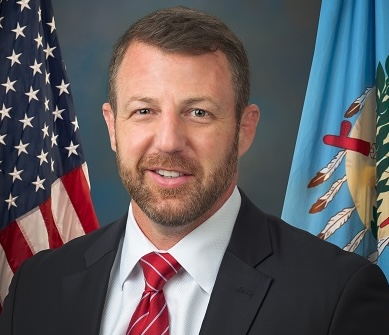
“With our democracy on the line against Donald Trump in 2024, El-Sayed told Democrats to vote uncommitted — even after Gov. (Gretchen) Whitmer warned those efforts would help elect Donald Trump.”
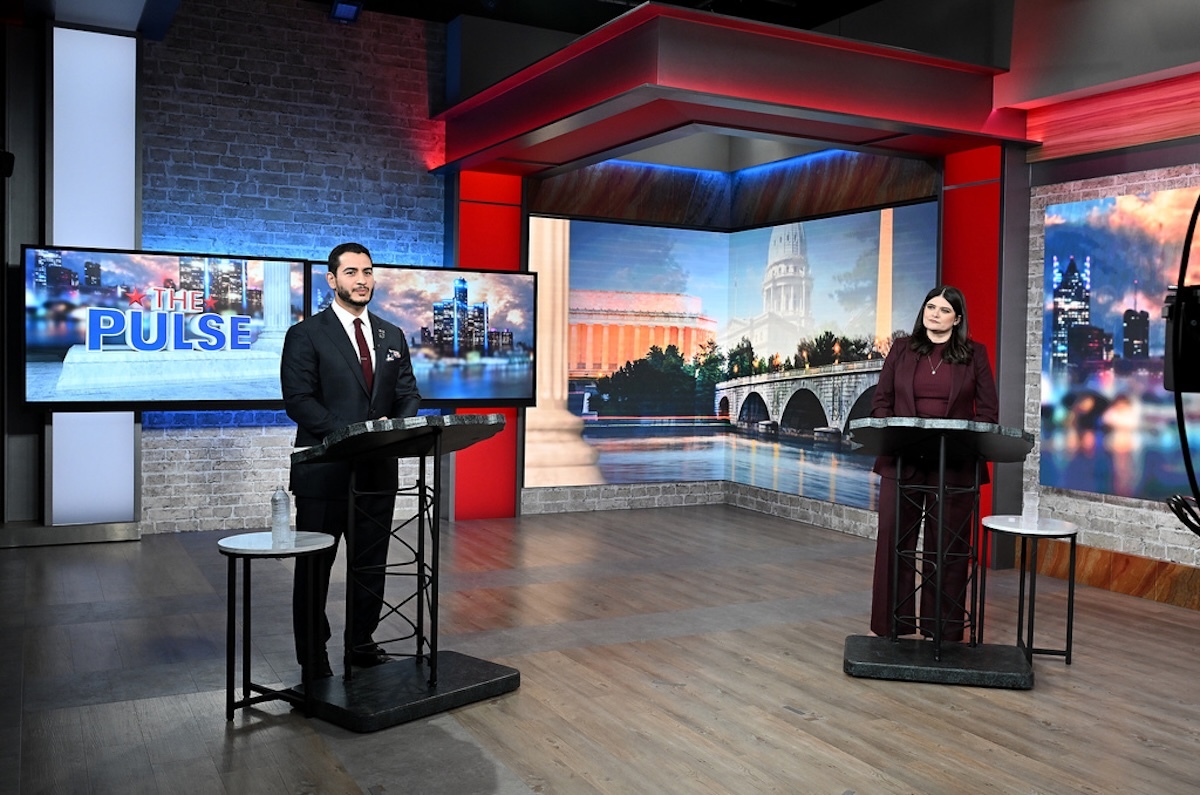
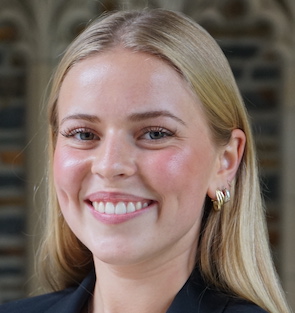
El-Sayed advocated voting uncommitted in MI’s 2024 Democratic primary. But he endorsed Harris in the general
If your time is short
- Abdul El-Sayed supported the uncommitted movement in Michigan’s February 2024 Democratic primary despite a warning from Michigan Gov. Gretchen Whitmer that it could help elect Donald Trump.
- Then-President Joe Biden won Michigan’s Feb. 27, 2024, primary with 81.1% of the vote, but 100,000 voters cast “uncommitted” ballots to protest Biden’s policies on Israel-Hamas war.
- Months later, the day after Biden withdrew from the race, El-Sayed endorsed Vice President Kamala Harris for the Democratic presidential nomination and encouraged “all of us” to unite behind Harris.
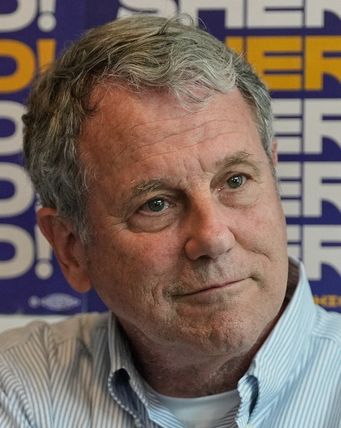
As polling showed Michigan Senate candidate Abdul El-Sayed ahead of his Democratic primary competitor, an ad blamed him for President Donald Trump’s 2024 election.
“With our democracy on the line against Donald Trump in 2024, El-Sayed told Democrats to vote uncommitted —- even after Gov. (Gretchen) Whitmer warned those efforts would help elect Donald Trump,” a narrator’s voice said in the United Democracy Project-funded ad published on YouTube July 28.
United Democracy Project, a Super PAC affiliated with the American Israel Public Affairs Committee, has spent nearly $25 million supporting El-Sayed’s opponent, Rep. Haley Stevens, D-Mich., in the race.
The winner of the Aug. 4 primary will likely face Republican Rep. Mike Rogers, who has no primary competitors, in the Nov. 3 general election. The seat is open following Democrat Sen. Gary Peters’ January announcement that he would not seek a third term.
El-Sayed advocated for Democrats to vote uncommitted in Michigan’s February 2024 primary election. But the United Democracy Project ad omits that El-Sayed went on to endorse then-Vice President Kamala Harris soon after then-President Joe Biden dropped out of the race in July 2024.
The uncommitted movement gained momentum in 2024 as some Democrats found themselves frustrated by the Biden administration’s approach to the Israel-Hamas war. Voting uncommitted, which is only allowed in some states’ primary elections, means voting without endorsing any of the listed candidates, usually to send a message to party leaders that the options are inadequate.
Although experts say the movement was effective at raising intra-party debate, it’s not clear whether it had an impact in sinking Harris’ election.
El-Sayed’s campaign did not respond for comment.
Race pits ‘establishment’ candidate against ‘progressive’
El-Sayed, 41, is an epidemiologist and former public health official whose campaign promotes Medicare for All and eliminating corporate money from politics.
He has received endorsements from Sen. Bernie Sanders, I-Vt., Rep. Alexandria Ocasio-Cortez, D-N.Y., and Sen. Elizabeth Warren, D-Mass. He holds what are often seen as progressive views on immigration, taxing billionaires and ending military cooperation with Israel. He has received campaign support from the Democratic Socialists of America, though he said that he is not a socialist.
Stevens, 43, has been in Congress for seven years and in federal politics for over a decade. Her campaign is centered on her legislative experience and advancing American manufacturing. She has received endorsements from Senate Minority Leader Chuck Schumer, D-N.Y., Rep. Nancy Pelosi, D-Calif., and Whitmer.
Throughout the campaign, El-Sayed has drawn attention to AIPAC’s support for Stevens. As of July 30, FEC disclosures showed AIPAC had spent nearly $35 million on Stevens’ campaign — the most it’s expended on a single race. Democrats are divided over the United States’ aid to Israel during the war in Gaza, an issue of special interest in Michigan, home of the nation’s largest concentration of Arab Americans.
El-Sayed promoted 2024 ‘uncommitted’ movement prior to Biden’s campaign withdrawal
On Feb. 8, 2024, almost three weeks before Michigan’s Feb. 27, 2024, primary election, Whitmer urged uncommitted primary voters to consider the stakes of a second Trump term.
She said she understood the dissenting opinions but warned that Trump’s reelection would have significant consequences.
“A potential second term for the former president would be very hard on all the communities that are still being impacted by what’s happening overseas as well and that’s something that shouldn’t be lost on people’s calculation too,” Whitmer was quoted as saying in a Detroit Free Press article.
Days later, El-Sayed said in a Facebook post, “I’m voting #UNCOMMITTED in the February 27th Michigan Democratic presidential primary.”
He called Trump an “existential threat” but said he wanted to “send a message in February before it’s too late,” calling for an immediate cease-fire in the Israel-Hamas war and saying it was critical for Biden’s team “to understand that votes in November have to be earned.”
Biden went on to win Michigan’s primary with 81.1% of the vote. About 100,000 people voted uncommitted — 13.2% of all voters. In Dearborn, where 55% of residents are of Middle Eastern descent, Biden won only 4,517 votes, losing the primary to 6,290 uncommitted ballots, — a significant loss after easily winning the vote there in 2020.
When we asked the United Democracy Project for evidence behind its ad’s claim, the organization pointed us to El-Sayed’s tweets supporting the uncommitted movement, and a Feb. 28 X post in which he touted the uncommitted movement’s impact by comparing it to a 150,000-vote “margin of victory in a hotly contested general” presidential election from 2020. “The message is clear,” El-Sayed’s tweet said, “ceasefire now. Let’s not risk these votes in November.”
Five months later, Biden dropped out of the race.
El-Sayed threw his support behind Harris a day after Biden dropped out
One day after Biden’s July 21 announcement that he would be discontinuing his campaign and instead endorsing Harris’ nomination to be the Democratic presidential candidate, El-Sayed tossed his support to Harris.
“Considering the dangers of the Republican nominee & potential of her leadership, it’s time for all of us to unite behind @KamalaHarris to defeat Trump,” El-Sayed wrote.
He soon expressed his optimism for Harris’ potential to change U.S. policy in Gaza, citing her decision to boycott Biden’s visit to Israel and her call to a prominent Palestinian-American activist whose family members were killed in strikes.
How did the uncommitted movement affect the 2024 election?
Trump won the 2024 presidential election, sweeping all seven key swing states, including Michigan.
Trump won 49.73% to Harris’ 48.31% in Michigan — just over an 80,000 vote difference. In Dearborn, a predominantly Arab American city where nearly 60% of voters selected “uncommitted,” Trump won 42.48% of the vote with Harris receiving only 36.26%. Had all Trump’s votes in Dearborn gone to Harris, she still would not have had enough to secure the majority statewide. Harris won Wayne County, which includes Dearborn, with 63%.
Harris won the Michigan counties in the November election that had the highest uncommitted vote percentages in the February primary.
Miles Coleman, associate editor at Sabato’s Crystal Ball at the University of Virginia Center for Politics, said the uncommitted movement didn’t prove to be a significant contributor to Harris’ loss, either in Michigan or nationwide.
Polls and analyses have shown that some of the factors contributing to Trump’s win included voter concerns about the economy, high voter turnout among his supporters and his success attracting a more racially and ethnically diverse voter coalition. Harris’ shortened campaign created its own challenges.
Coleman said that even if Michigan’s uncommitted voters had not cast any votes, or if they had voted for Harris, Harris would have still lost Michigan. Coleman attributes Harris’ loss in Michigan primarily to frustration with the economy and association with Biden’s presidency, though he added that intraparty disunity over Israel Palestine policy did not help her cause.
Our ruling
A Super PAC’s pro-Stevens ad said, “With our democracy on the line against Donald Trump in 2024, El-Sayed told Democrats to vote uncommitted — even after Gov. Whitmer warned those efforts would help elect Donald Trump.”
After Whitmer warned Michigan’s uncommitted voter movement could benefit Trump, El-Sayed posted on Facebook that he was voting uncommitted in the state’s February primary in an effort to send a message about the Biden administration’s handling of the war in Gaza.
But after Biden dropped out of the race in July, El-Sayed endorsed Harris for the Democratic nomination and for president.
The uncommitted movement changed voter behavior in some areas of Michigan that were formerly heavily Democratic-voting, but it had little effect on the overall 2024 election outcome, experts say.
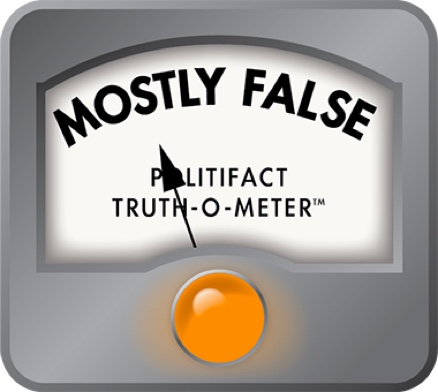
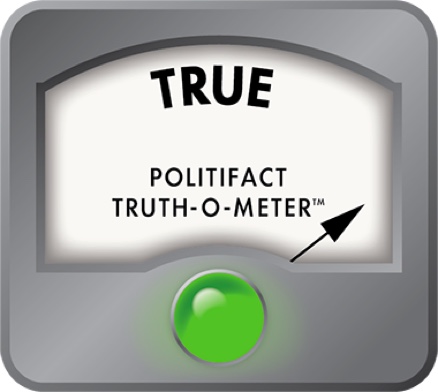
The ad is partially accurate but leaves out important details. We rate it Half True.
Our Sources
Abdul El-Sayed, Instagram post, July 28, 2026
Abdul El-Sayed, Facebook post, Feb. 18, 2024
Abdul El-Sayed, X post, Feb. 28, 2026
Abdul El-Sayed, X post, July 22, 2024
Abdul El-Sayed, X post, July 25, 2024
Abdu El-Sayed, X post, July 27, 2024l
Abdul For US Senate, Abdul’s Priorities, accessed July 31, 2026
AP News, Michigan’s largest Arab American cities reject Biden over his handling of Israel-Hamas war, Feb. 28, 2024
AP News, AIPAC has spent a record amount on Michigan’s Senate primary, the biggest test of its influence yet, July 19, 2026
Arab American Institute, Michigan, accessed July 31, 2026
Bridge Michigan, Fact check: Haley Stevens, Abdul El-Sayed clash over AIPAC, electability, July 27, 2026
Bridge Michigan, Michigan 2024 results: 13% of Democrats ‘uncommitted.’ Will it matter to Biden?, Feb. 28, 2024
Cook Political Report, A Comprehensive New Data Analysis Into Why Harris Lost in 2024, May 19, 2025
Detroit Free Press, Whitmer to Democrats ditching Biden in primary: ‘There’s a lot at stake’, Feb. 8, 2024
Detroit Free Press, Trump wins Dearborn amid anger over Gaza and Lebanon; Jill Stein receives 18% of vote, Nov. 6, 2024
Detroit Free Press, With one precinct in Dearborn remaining, ‘uncommitted’ beating Biden in the city, Feb. 28, 2024
Haley Stevens for US Senate,MI Hope Agenda, accessed July 31, 2026
FactCheck.org, United Democracy Project, Sept. 26, 2024
NPR, ‘Uncommitted’ movement doesn’t endorse Harris, but asks supporters to vote against Trump, Sept. 19, 2024
NBC News, How Trump won — and how Harris lost — the 2024 election, Nov. 8, 2024
Politifact, Abdul El-Sayed says AIPAC funded poll, but doesn’t provide evidence, July 24, 2026
PolitiFact, In U.S. Senate race, Haley Stevens blurs lines on Michigan utility donations, July 29, 2026
PolitiFact, What Trump’s communism claims miss about Democrats and democratic socialists, July 9, 2026
Politico Playbook Podcast, How Michigan is shaping the Democratic Party, July 30, 2026
Pramila Jayapal, X post, July 28, 2026
Pew Research, Behind Trump’s 2024 Victory, a More Racially and Ethnically Diverse Voter Coalition, June 26, 2025
The American Presidency Project, 2024 Election, accessed July 31, 2026
The New York Times, AIPAC Attacks and an ‘Ogre’ Jab: 6 Takeaways From Michigan’s Senate Debate, July 27, 2026
The New York Times, Why Harris Remains Unlikely to Break From Biden on Israel and Gaza, Oct. 18, 2024
The New York Times, Michigan Presidential Election Results, Dec. 5, 2024
The United Democracy Project, Youtube video, July 28, 2026
Email Interview with John Miles Coleman, associate editor of Sabato’s Crystal Ball, July 30, 2026
Email Interview with Josh Putnam, founder of FHQ Strategies LLC, July 30, 2026