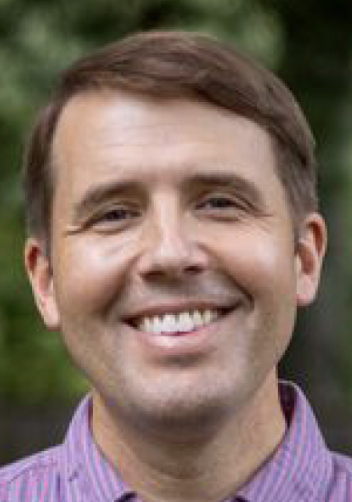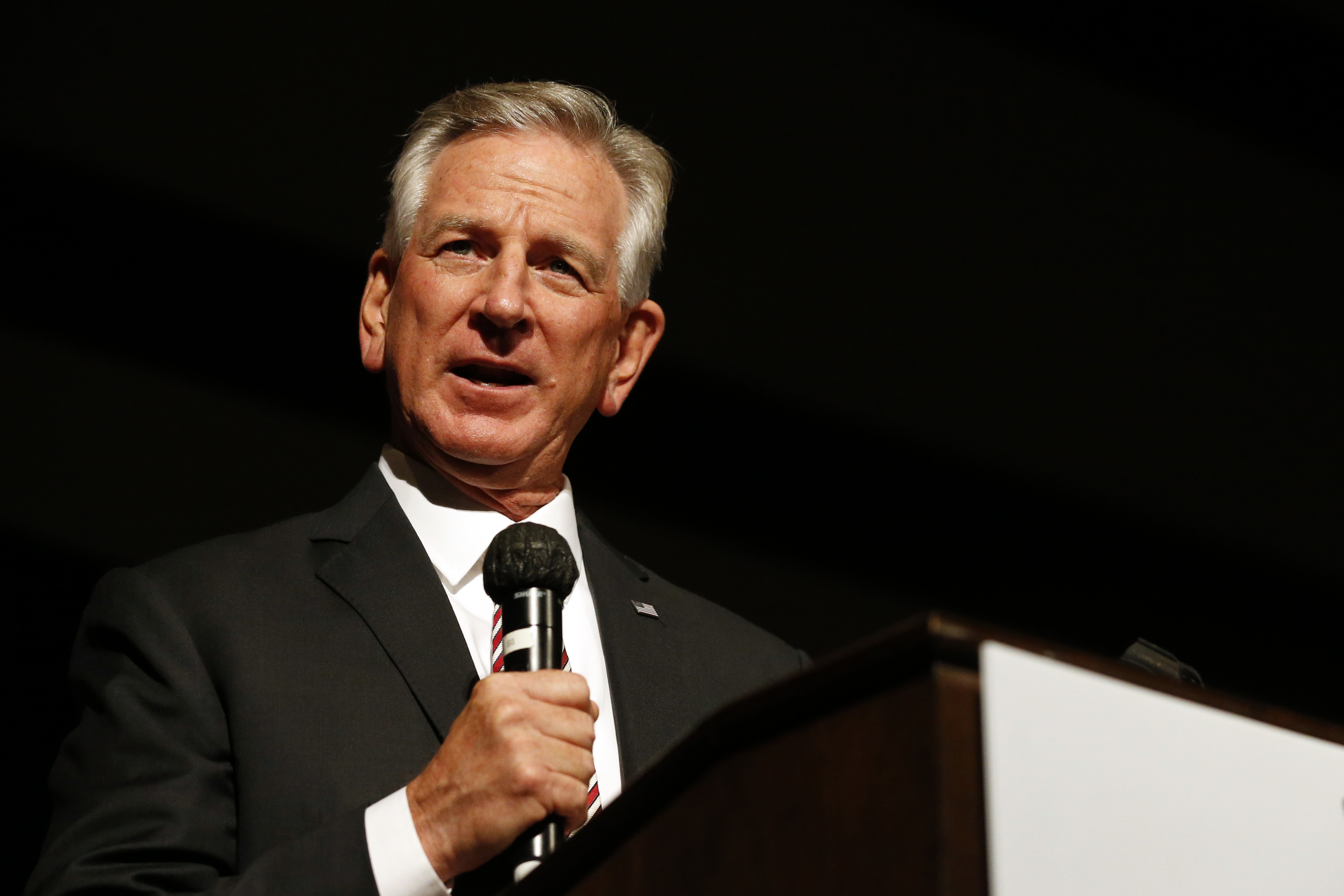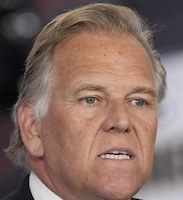
Sen. Jon Husted voted “to kick 490,000 Ohioans off their healthcare.”

Are nearly 500,000 Ohioans losing their healthcare because of Jon Husted?
If your time is short
- The One Big Beautiful Bill Act is projected to reduce Medicaid spending over 10 years and did not extend enhanced subsidies for the Affordable Care Act. Sen. Jon Husted, R-Ohio, supported that law.
- KFF, a nonpartisan health policy think tank, estimated that 350,000 to 580,000 Ohioans could lose insurance because of both the Medicaid changes and lack of ACA subsidies.
- That number is a projection, so it could change.
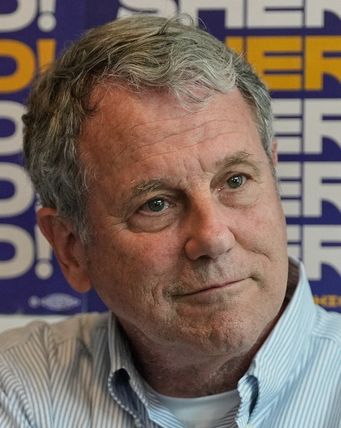
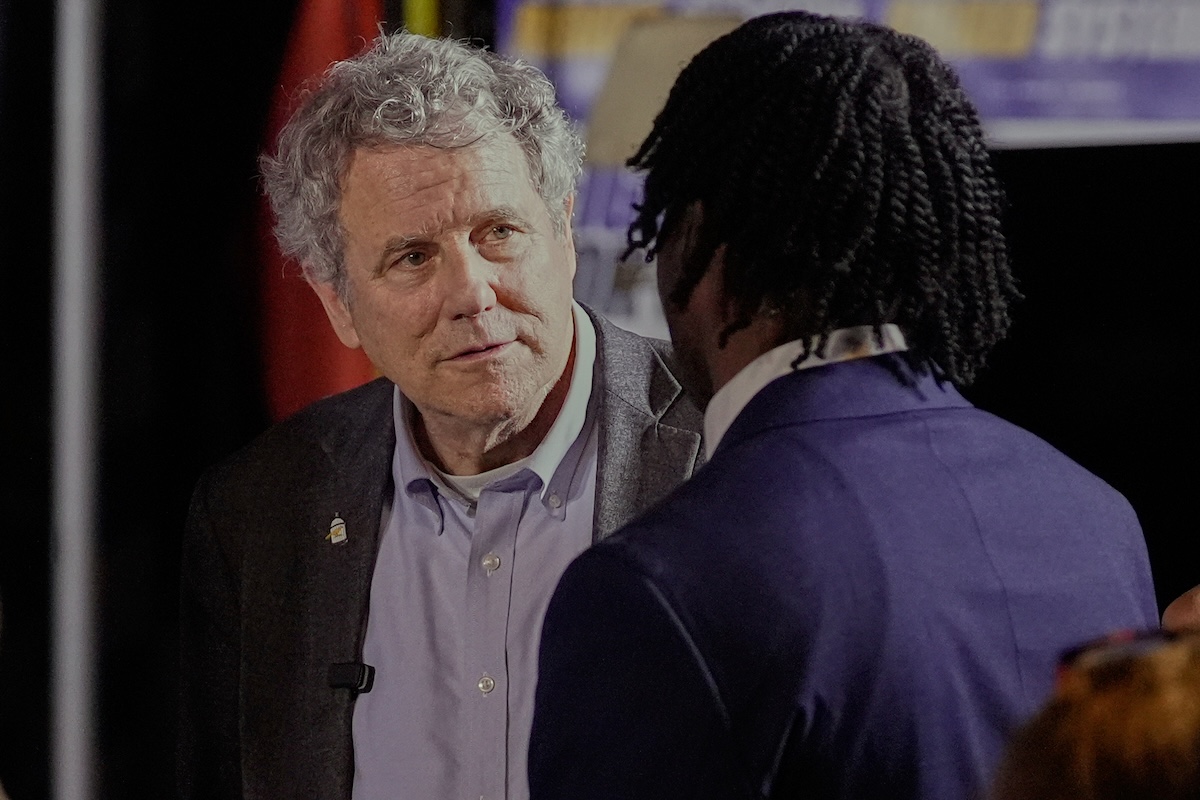
Former Sen. Sherrod Brown, an Ohio Democrat now campaigning to return to the chamber, is pushing back on attacks over transgender policy with a healthcare data point of his own.
In a Brown campaign ad, a series of voters say they’re befuddled that ads against Brown focus on transgender issues when there are more urgent matters at stake, like higher prices for groceries and electricity.
One of the voters said Husted voted “to kick 490,000 Ohioans off their healthcare.”
This is broadly in line with credible, independent estimates, but lots remains to be seen about how these changes will play out, and how many people will be affected.
The 2025 law that Husted supported cuts healthcare spending
Brown’s campaign referred PolitiFact to Husted’s 2025 vote in favor of President Donald Trump’s signature tax and spending legislation, the One Big Beautiful Bill Act. That measure passed the Senate, 51-50, with Vice President JD Vance breaking a tie.
The bill did many things — including extending expiring tax rates and lightening taxation of tips and overtime — but the part relevant to the ad’s claim is its healthcare provisions.
One section of the legislation concerned Medicaid, the federal-state program that offers health insurance to lower-income and disabled Americans. The legislation added a requirement that recipients show that they are working. Supporters said this would encourage recipients to work; critics said most Medicaid recipients were already working and the law’s burdensome paperwork requirements could end up pushing them off the rolls.
The legislation also tightens the definition of immigrants with lawful status who may qualify for coverage.
The Congressional Budget Office, Congress’ nonpartisan number-crunching arm, projected that the law would reduce federal healthcare spending by more than $1 trillion over 10 years and leave 10 million additional Americans uninsured.
Husted’s campaign said he supported the One Big Beautiful Bill Act because it focused Medicaid spending on core groups of recipients who need the program.
The bill included “modest work requirements targeted at able-bodied adults,” Husted spokesperson Amy Natoce told PolitiFact. Making that change prioritizes “Ohioans living with disabilities, kids living in poverty and the elderly,” she said.
Republicans who drafted the law rejected Democrats’ proposal to extend pandemic-era enhanced subsidies to buy insurance plans under the Affordable Care Act.
Democrats warned that without subsidies, more people would lose healthcare coverage because they wouldn’t afford their premiums.
Husted’s role in the enhanced subsidy expiration is more nuanced than his role in passing the Medicaid changes. Husted voted for the One Big Beautiful Bill Act without an extension, but he later sponsored a bill to extend the subsidies for two years, along with some other provisions, including blocking subsidies for lawfully present immigrants. Husted’s bill had no cosponsors and did not advance.
A separate effort to extend the enhanced subsidies passed the House but died in the Senate.
How many people stand to lose insurance because of these policy changes?
Brown’s campaign pointed us to Congressional Budget Office data collected by the Democratic staff of the Joint Economic Committee. This data, which was released before the vote on the bill, found that 489,815 Ohioans over 10 years would lose coverage after the act’s passage and if the enhanced subsidies were not extended.
That Democratic analysis was published in June 2025, before the bill passed in July.
KFF, a nonpartisan health policy think tank, analyzed CBO data in August 2025 and estimated a range of potential state-by-state insurance losses from these policy changes.
KFF allowed for uncertainty in how the law would be implemented in each state. The group said the number of Ohioans losing insurance from a combination of the Medicaid changes and the expiration of ACA subsidies could be 350,000 to 580,000.
Brown’s 490,000 figure falls slightly above KFF’s 460,000 midpoint.
Accounting only for the Medicaid changes, KFF projected a smaller number of Ohioans losing insurance — 250,000 to 420,000, with a midpoint of 340,000.
A June 2026 study by another nonpartisan think tank, RAND, examined only the Medicaid losses, not the impact of the subsidy expiration. It projected that roughly 254,000 Ohioans would lose Medicaid coverage, which is in the same range as KFF, though on the lower end.
Christine Eibner, a RAND senior economist, told PolitiFact that adding in the losses from disappearing insurance subsidies should “get the RAND numbers into the range” of KFF’s numbers.
Eibner said it’s too soon to settle on hard figures. Not only do the projected losses cover a 10-year period, but the work requirements don’t take effect until Dec. 1, 2027, “and they are expected to have the biggest impact on coverage of all the provisions” in the law.
Joseph R. Antos, an emeritus senior fellow at the American Enterprise Institute, a conservative think tank, agreed. “The KFF number is something of a shot in the dark,” he said. But it’s also the only state-by-state assessment of both Medicaid and Affordable Care Act insurance losses that analysts have to work with today, he said.
Our ruling
Brown’s ad said Husted voted “to kick 490,000 Ohioans off their healthcare.”
Husted in 2025 voted for the One Big Beautiful Bill Act, which reduced Medicaid spending; his campaign said the changes allow the program to focus on core coverage groups, such as children and people with disabilities. The law did not renew the enhanced subsidies for Affordable Care Act coverage, and they expired in 2025.
KFF estimated that 350,000 to 580,000 Ohioans could lose coverage. Brown’s 490,000 is slightly above that midpoint. A more recent study by RAND found results broadly in line with KFF, though on the lower end of that range.
These 10-year projections come from credible organizations, and Brown chose the middle of the range. But the number of people affected could be different based on several factors, including how states implement the changes.
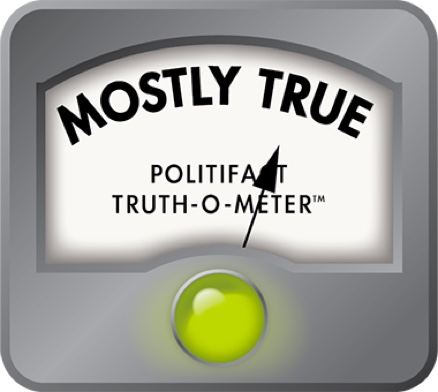
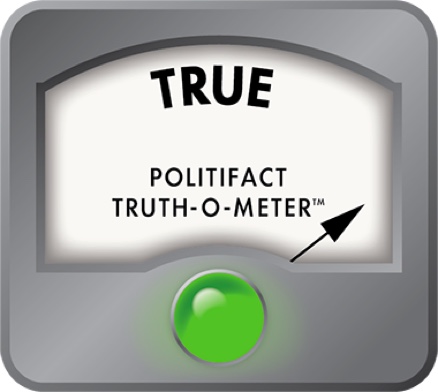
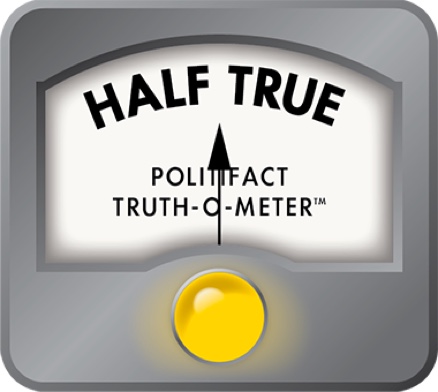
The statement is partially accurate but leaves out important details, so we rate it Half True.
Our Sources
Sherrod Brown, campaign ad, Sept. 18, 2026
Congress.gov, One Big Beautiful Bill Act, accessed Oct. 6, 2026
Senate roll call vote on the One Big Beautiful Bill Act, July 1, 2025
House roll call vote on H. R. 1834, Jan. 8, 2026
Congressional Budget Office, “Estimated Budgetary Effects of an Amendment in the Nature of a Substitute to H.R. 1, the One Big Beautiful Bill Act, Relative to CBO’s January 2025 Baseline,” June 29, 2025
RAND, “State-Level Impacts of Key Medicaid Provisions in the One Big Beautiful Bill Act,” June 18, 2026
Joint Economic Committee Democratic staff, “NEW: Amended Senate Budget Bill Would Trigger Nearly 20 Million People Losing Health Insurance,” June 30, 2025
Jon Husted, “Husted bill to extend ACA premium tax credits and cut health care costs for Ohio families blocked from passage,” Dec. 10, 2025
Congress.gov, S. 3391 — Accountability for Better Care Act of 2025
KFF, “How Will the 2025 Reconciliation Law Affect the Uninsured Rate in Each State?” Aug. 20, 2025
Cleveland.com, “Affordable Care Act: Sen. Husted proposes 2-year subsidy extension with new limits,” Dec. 9, 2025
ABC News, “9 Republicans vote with Democrats to set up House vote on 3-year extension of ACA subsidies,” Jan. 7, 2026
Email interview with Joseph R. Antos, emeritus senior fellow at the American Enterprise Institute, Oct. 7, 2026
Email interview with Christine Eibner, senior economist with RAND, Oct. 7, 2026
Email interview with Amy Natoce, spokesperson for Jon Husted, Oct. 5, 2026
Sherrod Brown campaign, statement to PolitiFact, Oct. 5, 2026