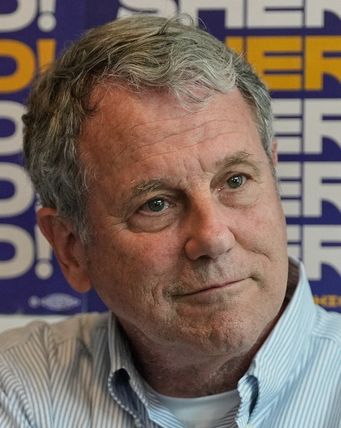
“Chris Pappas voted to raise taxes 68 times. Every tax vote he’s made was to raise taxes.”
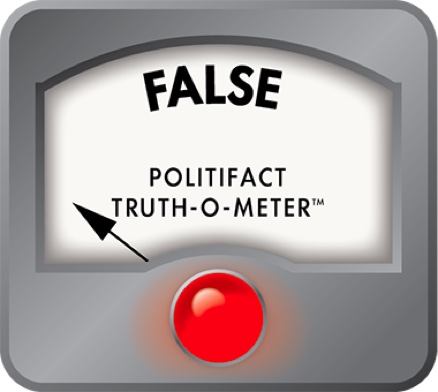


John Sununu said Chris Pappas voted to raise taxes 68 times. That’s False.
If your time is short
- In the House, Democrat Rep. Chris Pappas voted against President Donald Trump’s One Big Beautiful Bill Act in 2025, and he voted for higher taxes or against lower taxes three times as a state legislator more than two decades ago.
- The list of 68 votes cited by Republican John Sununu’s Senate campaign is inflated by counting procedural votes and bills that largely aren’t about taxes. Several bills on the list that Pappas voted for also received overwhelming Republican support.
- Pappas voted on numerous other occasions to lower taxes, and he sponsored additional bills to cut taxes.
In New Hampshire, raising taxes has been a political taboo for generations. In the state’s competitive U.S. Senate race, Republican John E. Sununu is painting his Democratic opponent Rep. Chris Pappas as an aggressive tax raiser.
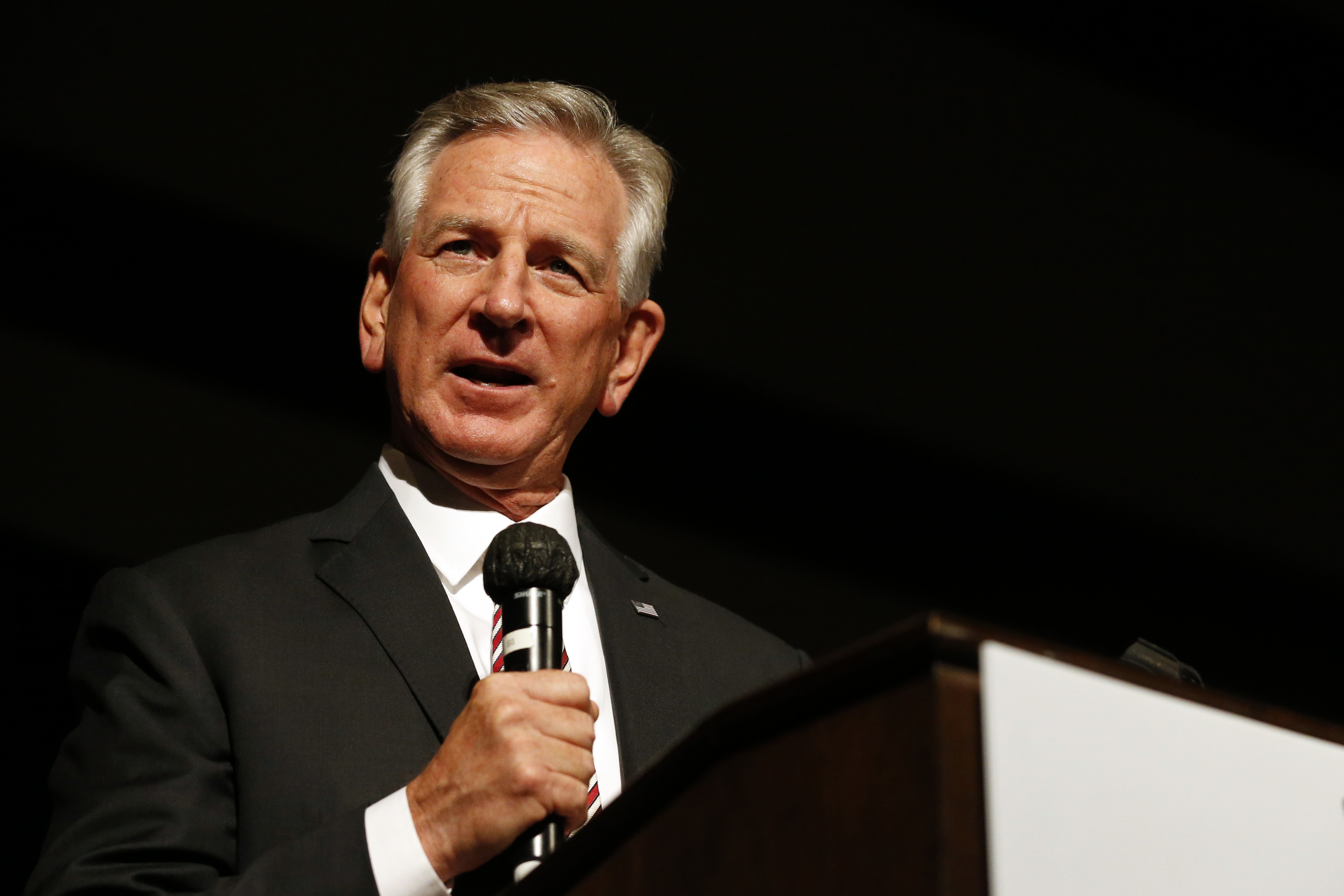
“Chris Pappas voted to raise taxes 68 times,” Sununu, a former U.S. senator, said in his primary night victory speech Sept. 8. “Every tax vote he’s made was to raise taxes.”
When we asked Sununu’s campaign for a list of the 68 tax votes he was referring to, they sent us this document. When we went through it, we found that the 68-vote figure is padded by procedural votes. It also portrays votes misleadingly and includes votes in which Pappas was joined by an overwhelming majority of Republicans.
“Many of these claims go well beyond any reasonable view on what it means to vote to raise taxes,” said Joseph Rosenberg, a senior fellow at the Urban Institute-Brookings Institution Tax Policy Center.
Here are some of the reasons why the 68-vote figure is wildly inflated.
Procedural votes account for most of those on the list
The Sununu campaign’s list included both final votes on passage and a variety of procedural votes. These procedural votes pushed the bill through the legislative process but did not, in a literal sense, “raise taxes.”
The list cites 16 distinct congressional bills but counts an average of more than three procedural votes per bill in its overall tally.
Many of the bills cited are only partly about taxes
Among other votes Sununu’s campaign cited were votes on the HEROES Act, a $3 trillion COVID-19 relief measure proposed in 2020 that Pappas voted for but didn’t become law. It would have included stimulus checks and other pandemic-related spending increases. To the extent that it would have changed tax law, some taxpayers would have benefited from expansions of tax credits and deductions, while others would not have.
Sununu’s campaign also included the Infrastructure Investment and Jobs Act of 2022, known as the Bipartisan Infrastructure Law. This law allocated $1.2 trillion for transportation and infrastructure spending; Pappas voted for it. The Sununu campaign’s list cites a provision repealing a tax credit for businesses designed to help employers offset the costs of keeping employees during the pandemic. (The law covered a lot more than that.)
Another law on the list that Pappas voted for, the Inflation Reduction Act of 2022, can be fairly described as a tax-focused measure. It increased taxes on corporations, especially the biggest corporations, but it also enacted tax breaks for clean energy usage in homes and automobiles. The list cited a provision in the law to increase the number of IRS employees, but this increase — which was aimed at modernizing the IRS and increasing audits — would not have been a tax hike per se.
“These bills were not meant as revenue-raising bills,” said Kyle Pomerleau, a senior fellow at the American Enterprise Institute, a conservative think tank. “Some of them did have tax and revenue provisions in them, but you have to use an expansive definition of ‘tax increase.’”
The Limit, Save, Grow Act of 2023 is among the bills on the Sununu campaign’s list that Pappas voted against. This bill was intended as a vehicle to raise the debt limit, but it included a range of other Republican policy priorities, repealing many of the clean-energy tax credits that were part of the Inflation Reduction Act passed under former President Joe Biden.
In other words, the Sununu campaign is casting Pappas’ vote to lower certain taxes under this act as a vote to “raise taxes” — then labeling his vote against a bill that would repeal them as a separate vote to “raise taxes.”
In another instance, the Tax Relief for American Families and Workers Act of 2024 — which Pappas and a large majority of Democrats and Republicans voted for — “would have cut taxes for many Americans and businesses and was paid for by cutting off employee retention credits, a program ripe with questionable and fraudulent claims,” Rosenberg said. With the bill both cutting taxes and ending a tax break, any vote Pappas could have made — for or against — could have been framed as a vote to raise taxes.
Garrett Watson, vice president of federal tax policy at the Tax Foundation, said the inclusion of certain votes that are “narrow and not really about taxes” make the strongest case that the list portrays a misleading picture of Pappas’ record on taxes. This and other factors “suggest that this claim is overstated, at least,” Watson said.
The list cherry-picks some of Pappas’ votes
The list also dings Pappas for voting for a bill that ended employee retention tax credits, but it doesn’t give him credit for voting for the bill that created those tax credits in the first place, the CARES Act of 2022.
Some of the measures on the list were passed in overwhelmingly bipartisan fashion
The list criticizes Pappas for certain votes without noting that virtually every House Republican also supported the measures.
One action Pappas voted for, the Securing a Strong Retirement Act of 2022, passed the House by a 414-5 margin. Another, the Tax Relief for American Families and Workers Act of 2024, passed by a 357-70 margin. And the Setting Every Community Up for Retirement Enhancement Act of 2019 passed by a 417-3 margin. Each of these bills attracted overwhelming Republican support.
Some of the measures cited didn’t raise taxes
Pappas voted against a measure “expressing the sense of Congress that a carbon tax would be detrimental to the United States economy.” The measure passed with mostly Republican support, but such measures are rhetorical and have no practical effect.
We asked the Sununu campaign for comment on PolitiFact’s findings, but we did not hear back.
Here are the strongest cases of Pappas voting to raise taxes
Pappas voted against President Donald Trump’s signature tax and spending law — the One Big Beautiful Bill Act — in 2025.
This was a bill that included far-reaching provisions on taxation that would affect many American taxpayers, including those who work overtime, collect tips or are 65 and older. The bill also extended tax cuts from Trump’s first term.
The Sununu campaign counts six total votes, including procedural votes, against the bill; one of those is Pappas’ vote against final passage. It also counts five votes involving a required precursor measure for the bill — a congressional budget resolution.
Pappas’ campaign told PolitiFact that his vote was premised on the bill’s cuts to Medicaid and its failure to extend health insurance subsidies, which could affect millions of Americans nationally. He also cited the bill’s rollbacks in the Supplemental Nutrition Assistance Program, or food stamps.
A few other bills on the list were primarily about taxation, but their reach was more limited. For instance, two measures involve the state and local tax deduction. This affects high-earning households, generally in Democratic states with relatively high levels of taxation.
The list also includes votes Pappas cast in the New Hampshire legislature more than two decades ago in favor of a state estate tax and against a property tax cut.
Pappas also voted to cut taxes
Sununu said, “Every tax vote he’s made was to raise taxes.” But that’s not accurate.
In addition to the examples of votes for tax cuts cited above, Pappas’ campaign pointed to a vote to repeal a tax on certain employer-sponsored health plans; an amendment to expand tax credits for small businesses that establish retirements plans; and his vote for the American Rescue Plan Act, which enacted expanded child tax credits.
Pappas also introduced legislation to ban states from taxing a nonresident’s income earned when they were not physically present in that state; sponsored legislation to provide a refundable tax credit for people struggling with high energy costs; and co-sponsored a bill to provide a 10% tax credit for first-time homebuyers.
Our ruling
Sununu said, “Chris Pappas voted to raise taxes 68 times. Every tax vote he’s made was to raise taxes.”
Pappas did vote against Trump’s One Big Beautiful Bill Act, and he voted for higher taxes or against lower taxes on three occasions as a state legislator more than two decades ago.
But the Sununu campaign’s list of congressional votes is inflated by counting procedural votes, and it includes a wide range of bills that aren’t clearly votes to raise taxes, including several measures that were largely about other issues. Several bills Sununu criticized Pappas for supporting also received overwhelming Republican support.
Pappas also voted on numerous other occasions to lower taxes, and he sponsored bills to cut taxes.
We rate the statement False.
Our Sources
John E. Sununu, primary night victory speech, Sept. 8, 2026
Sununu campaign, document listing 68 tax votes, accessed Sept. 29, 2026
Congress.gov, Setting Every Community Up for Retirement Enhancement Act of 2019
Congress.gov, Restoring Tax Fairness for States and Localities Act
Congress.gov, HEROES Act
Congress.gov, CARES Act of 2022
Congress.gov, Infrastructure Investment and Jobs Act of 2022
Congress.gov, Inflation Reduction Act of 2022
Congress.gov, Tax Provisions in the Inflation Reduction Act of 2022
Congress.gov, Securing a Strong Retirement Act of 2022
Congress.gov, Limit, Save, Grow Act of 2023
Congress.gov, Tax Relief for American Families and Workers Act of 2024
Congressional Research Service, “COVID-19: Summary of the Direct Payments Proposed in the HEROES Act (H.R. 6800),” May 19, 2020
Congress.gov, House roll call vote 493, 2019
House roll call vote 86, 2022
Congress.gov, House roll call vote 72, 2021
Congress.gov, Multi-State Worker Tax Fairness Act of 2026
Congress.gov, Energy Burden Tax Credit Act of 2026
Congress.gov, First-Time Homebuyer Tax Credit Act of 2025
Transportation Department, “Bipartisan Infrastructure Law (BIL) / Infrastructure Investment and Jobs Act (IIJA),” Feb. 16, 2023
Internal Revenue Service, “Inflation Reduction Act of 2022,” May 22, 2026
PolitiFact, “Kevin McCarthy’s mostly false claim about an army of 87,000 IRS agents,” Aug. 11, 2022
Email interview with Garrett Watson, vice president of federal tax policy at the Tax Foundation, Sept. 29, 2026
Email interview with Joseph Rosenberg, a senior fellow at the Urban Institute-Brookings Institution Tax Policy Center, Sept. 29, 2026
Email interview with Kyle Pomerleau, senior fellow at the American Enterprise Institute, Sept. 29, 2026
Statement to PolitiFact from the John E. Sununu campaign, Sept. 25, 2026
Statement to PolitiFact from the Chris Pappas campaign, Sept. 29, 2026