FDA’s new warning about GLP-1s and blindness explained

If your time is short
- The Food and Drug Administration will be requiring warnings in all GLP-1 safety information about the risk of an optic nerve condition that can cause partial vision loss.
- Independent research and the FDA’s own review found that patients who take GLP-1s may be at a higher risk for the condition than people who don’t.
- The condition is rare: Among the more than 134,200 patients in the FDA’s clinical trial analysis, only 15 cases were detected, 10 among people on GLP-1s and five among people on a placebo.
About 15% of Americans have taken GLP-1s, so recent headlines linking the diabetes and weight-loss treatment to blindness caused some alarm across the country.
On Nov. 9, the Food and Drug Administration announced it would be requiring GLP-1 manufacturers to include warnings about a rare but serious eye condition that can cause partial blindness.
The warning follows research showing that these medications may increase the risk of an optic nerve condition among people who take the drug compared to those who don’t.
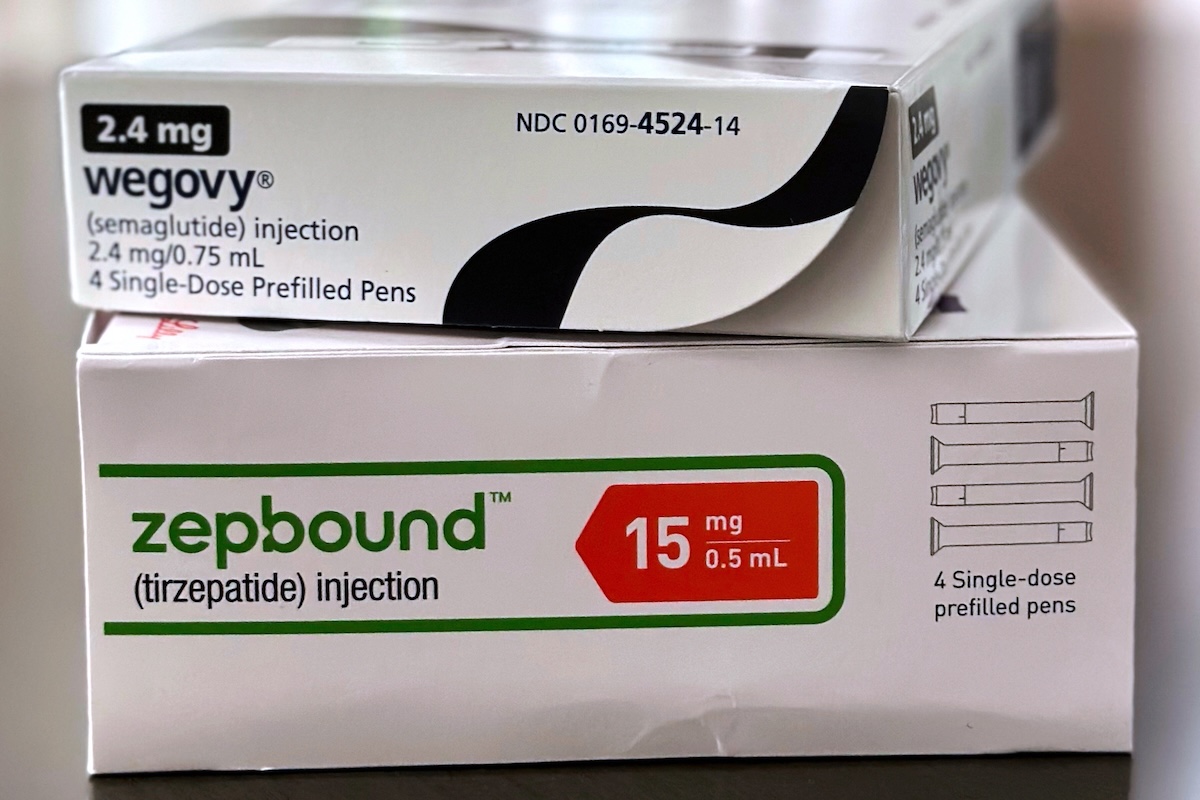
Warning labels will be added to the safety information of all GLP-1s including Ozempic, Wegovy, Zepbound, and Mounjaro.
But scientists have not confirmed that GLP-1s cause the vision loss — they just know that studies have shown an association. Doctors still aren’t sure how these drugs could have this effect on the body.
“The FDA is making this warning out of an abundance of caution,” said Dr. Scott Kahan, a weight-loss medicine specialist.
We looked into the vision condition the FDA is warning about, and the study findings that triggered the label.
What is this condition that causes partial blindness?
Nonarteritic anterior ischemic optic neuropathy, or NAION, happens when blood flow to the optic nerve is blocked or reduced.
It is painless, sudden and typically permanent. It doesn’t usually present as total blindness; it causes blurring or vision loss in part of a person’s field of view.
It generally affects just one eye, but 15% of people who develop it in one eye go on to develop it in the other. There is no known treatment.
Among the general population the condition is rare — 1 out of every 200,000 people are affected. But it becomes more common after age 50, when two to 10 of every 100,000 people develop it.
The link between this condition and GLP-1s is especially hard to tease out because the risk factors for such vision loss already overlap with the conditions that GLP-1s are prescribed to treat, including diabetes, hypertension, high cholesterol and sleep apnea.
That means some people on GLP-1s may have already been at risk for such vision loss prior to the medication.
What research prompted the FDA to look into this?
The study that triggered the FDA’s interest was published in 2024. It analyzed medical records for almost 1,700 patients who were seen at a neuro-ophthalmology clinic in Boston between 2017 and 2023. The analysis included only patients with diabetes, or those who were overweight or had obesity.
Researchers compared the incidence of NAION among patients who had been treated with the GLP-1 semaglutide with those who hadn’t.
Among the 169 diabetic patients who were treated with semaglutide, 17 developed the vision loss condition, a rate four times higher than the cohort that didn’t use GLP-1s. Among 254 patients who took semaglutide to treat obesity, 20 developed the vision condition, seven times higher than those who didn’t take GLP-1s.
Because these records originated at a clinic for people with neuro-ophthalmological issues, the rate of people with NAION was much higher than it would be for the general population. Still, the findings raised concerns about whether GLP-1s may be increasing the risk of this rare eye condition. So the FDA took a closer look.
What did the FDA find?
The FDA conducted a meta-analysis of 126 clinical trials conducted in the development of these drugs. The analysis included 134,253 patients — around 78,200 who were assigned the GLP-1s as treatment and around 56,000 patients who either got a placebo or alternate non-GLP-1 medication for lowering blood sugar.
Among those patients, the FDA identified 10 probable cases of the vision loss condition in the GLP-1 group, and five among patients who received a placebo. That works out to about a 1.7 times higher risk among people taking GLP-1s.
This research, based on more robust randomized clinical trials, reinforced that GLP-1s may be associated with a higher risk of the vision condition but also demonstrated how rare this condition is at the population level.
After reviewing other observational studies in patients with type 2 diabetes and finding similar results, the FDA concluded there was enough of a risk to merit a warning label.
What does this mean for patients?
Kahan said that because GLP-1s are widely prescribed, awareness of even rare risks may become more pronounced.
“The risk appears to be real albeit quite rare,” Kahan said. “There has been a perception that these medications are miracle cures, but it’s important to be mindful of risks, which are inherent with any treatment, including GLP1 medications.”
Kahan said the new warning won’t change how he prescribes these medications, but hopes it will alter the conversation around these medications and lead to smarter prescribing.
Patients should be informed of the risks, and talk with their doctor about preexisting eye conditions. If you are currently taking GLP-1s and are worried, consult your doctor first — and don’t suddenly stop the medication without guidance.
RELATED: Realities of life on GLP-1s for weight loss: What doctors say you can expect
Our Sources
Email interview with Dr. Scott Kahan, obesity medicine specialist, Nov. 10, 2026
Cleveland Clinic, Ischemic Optic Neuropathy: What It Is, Symptoms & Treatment, June 30, 2024
NBC News, FDA orders new warning on GLP-1s over rare eye condition linked to sudden blindness, Nov. 9, 2026
FDA, FDA Requires Safety Labeling Changes for Glucagon-Like Peptide-1 Receptor Agonists (GLP-1 RAs) Due to Potential Increased Risk of Rare But Serious Eye Condition, Nov. 9, 2026
JAMA Ophthalmology. Risk of Nonarteritic Anterior Ischemic Optic Neuropathy in Patients Prescribed Semaglutide, July 3, 2024
American Academy of Ophthalmology. NAION: Diagnosis and Management, 2022
NBC News, Ozempic may be linked to condition that causes blindness, but more research is needed, July 3, 2024
Gallup, In U.S., GLP-1 Usage Reaches New High, Sept. 8, 2026