US-Venezuela oil deal won’t reduce domestic gasoline prices anytime soon


Almost nine months after the United States deposed Venezuelan leader Nicolás Maduro, President Donald Trump struck a deal to give the U.S. a key role in the oil industry of Venezuela — a nation with huge oil reserves but crumbling infrastructure.
In an Aug. 31 Oval Office event, Trump tacitly acknowledged that the agreement to secure billions of barrels of Venezuelan oil at favorable prices would not immediately lower U.S. consumers’ gasoline prices, which have remained high for the past six months.
But Trump said he expects eventual benefits for U.S. consumers: “Ultimately, prices are going to come down. Now, will it happen before the election? I can’t tell you that.”
Oil experts told PolitiFact gains for consumers will not materialize any time soon, and would likely take years — long after November’s midterm elections. And those gains would happen only if a range of conditions are met, including that the agreement survives congressional scrutiny and the next presidential administration.
“While it is certainly possible that Venezuela could get back to producing 3 million to 4 million barrels per day, that will happen over years,” said Severin Borenstein, a University of California-Berkeley business administration and public policy professor. It’s been about a decade since Venezuela produced oil at that volume.
“The impact of such a quantity on the world market would be huge if it were delivered today, but it will be far more muted, coming online over many years,” Borenstein said.
What does the agreement specify, and what could it mean for oil markets?
The White House said the U.S. will establish a joint partnership with North American Blue Energy Partners, headed by Venezuelan businessman Alejandro Betancourt. The new entity will have 100-year rights to 17 Venezuelan oil fields with 65 billion barrels of proven reserves.
The agreement would give the U.S. government — specifically, a Pentagon office — a 35% ownership stake in the company and a guaranteed right to buy 20% of the oil produced without a price markup. Betancourt’s company said it will shoulder $100 billion in infrastructure investments.
Senate Armed Services ranking Democrat Jack Reed of Rhode Island expressed skepticism. “President Trump’s effort to turn the U.S. military into an investor in Venezuelan oil is a blatant abuse of power and taxpayer dollars,” he said in a statement.
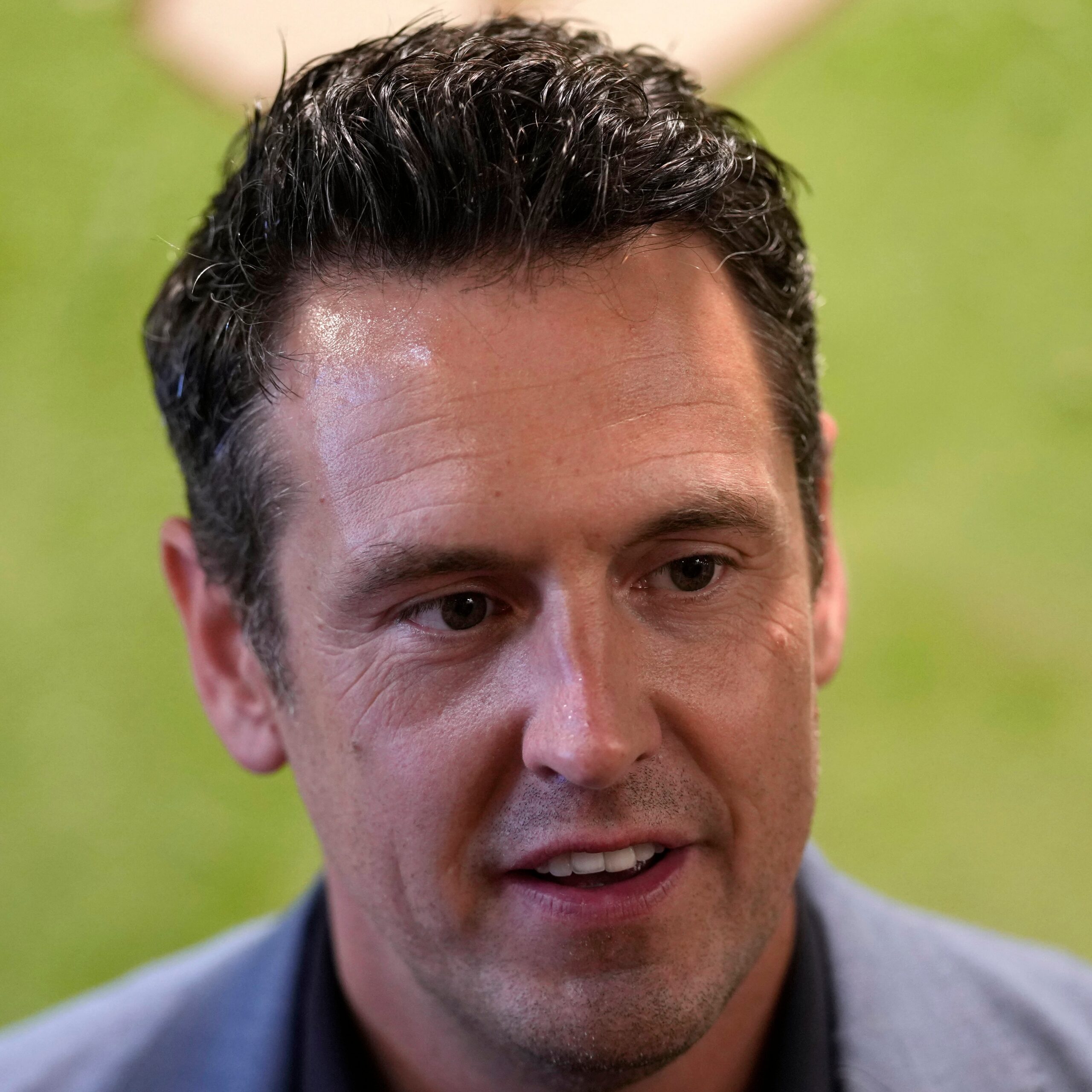
Concerns that a future leader of Venezuela could change course on U.S. cooperation could explain the unusual role of the Pentagon in the agreement, said Patrick De Haan, head of petroleum analysis for GasBuddy, which tracks U.S. gasoline prices. The Pentagon’s involvement in the agreement could ease concerns for oil companies considering investing.
The deal with Venezuela — which has more recoverable oil underground than any other country — could be a “paradigm shift” for the global oil market over the medium- to longer- term, De Haan said.
“If the U.S. takes control over this quantity of proven oil reserves, it could greatly change how other oil producing companies respond to the markets,” De Haan said. The deal could upend longstanding business plans in the U.S. and elsewhere, he said, with private companies forced to respond to a new, large competitor backed by the U.S. government.
Large infrastructure investments that would take years are needed
Experts cautioned not to expect any quick relief at the gas pump.
Expecting immediate results is like “hoping that a superhighway opens overnight,” De Haan said.
Skip York, a fellow at Rice University’s Center for Energy Studies, said Venezuela’s oil industry will need infrastructure investments in several major areas — initially, fixes to get additional oil flowing quickly, plus longer-term expansion of pipelines, tanks, terminals, power supplies, ports, roads and telecommunications capabilities.
Experts told PolitiFact they expect it would take four to 10 years for Venezuelan oil production to expand in a significant way. And that’s assuming that billions of dollars of investment materializes.
“The up-front costs associated with infrastructure will be quite large, and there is a lot of uncertainty in the long-term ability for companies to operate there,” said Hugh Daigle, a professor with the University of Texas at Austin’s petroleum and geosystems engineering department.
Is the oil industry ready to invest in Venezuela?
Experts said the industry’s interest has increased since Maduro’s ouster in January — but many companies remain hesitant.
A big reason is that U.S. companies such as ExxonMobil and ConocoPhillips exited Venezuela after Hugo Chávez, Maduro’s predecessor, nationalized the oil industry in 2007. Chevron is the only major U.S. oil company that has been consistently producing oil in Venezuela in recent years.
Companies are “very wary given the past behavior of Venezuelan governments,” Borenstein said. “They also realize that Trump will not be in office that much longer and that the property rights he is claiming for U.S. oil companies might not be that secure after his departure.”
Nevertheless, there’s been a shift among companies that don’t already have a foothold in the country, York said — they’re now considering the country “potentially investable.
Could Venezuelan oil be used to refill the U.S. Strategic Petroleum Reserve?
The reserve — which dates back to OPEC’s 1973 and 1974 oil embargo and is designed to protect the U.S. from global supply disruptions — has the capacity to store more than 700 million barrels of crude oil in underground geological formations known as salt domes.
After both Trump and former President Joe Biden released oil from the reserve in recent years, it fell to its lowest level since the early 1980s. As a 2024 presidential candidate, Trump promised to refill the reserve, but that pledge has languished as his administration has drawn more oil amid supply shortages during the Iran war. Iran has countered U.S. military attacks by putting the squeeze on oil shipments through the Strait of Hormuz.
In his Aug. 31 remarks, Trump reiterated his goal to refill the reserve “fairly quickly” and said the Venezuelan agreement would help that along. But that is easier said than done, according to experts.
Crude oil is graded by its weight and its “sweetness,” a measure of the oil’s sulfur content. Most U.S.-produced oil is “light” and “sweet,” while Venezuela produces “heavy” and “sour” crude with a thick, tarry viscosity.
“Venezuelan heavy crude is attractive to a lot of U.S. refiners, especially along the Gulf Coast,” York said. “But because of its heavy nature, it isn’t well-suited for storage in the Strategic Petroleum Reserve. It would strain the pumping system.”
It also can’t be mixed with the light, sweet crude already stored in the reserve.
One solution would be to sell Venezuela’s heavy crude on the world market and use the proceeds to purchase lighter crude that can be stored in the reserve, Borenstein said.
Regardless, he said, “The supply from these fields is generally years away, and we probably need to take action to refill the reserve before then.”
Our Sources
White House, “Fact Sheet: President Donald J. Trump Announces Historic Oil Agreement to Secure American Energy Dominance and Drive Venezuela’s Economic Recovery,” Aug. 31, 2026
Donald Trump, remarks in the Oval Office, Aug. 31, 2026
Worldometer, Oil Reserves by Country, accessed Sept. 1, 2026
U.S. Energy Information Administration, “Weekly U.S. Ending Stocks of Crude Oil in SPR,” accessed Sept. 1, 2026
NPR, “Days after Trump announces Venezuela oil deal, White House fills in some of the details,” Sept. 1, 2026
The Guardian, “Dense, sticky and heavy: why Venezuelan crude oil appeals to US refineries,” Jan. 5, 2026
Reuters, “Venezuela’s oil production over time,” accessed Sept. 1, 2026
PolitiFact, “No significant refill yet for Strategic Petroleum Reserve, but new law set to advance Trump’s pledge,” July 7, 2026
PolitiFact, “Fact-checking Donald Trump on promised U.S. oil company investment in Venezuela,” Jan. 5, 2026
Email interview with Clark Williams-Derry, energy finance analyst at the Institute for Energy Economics and Financial Analysis, Sept. 1, 2026
Email interview with Kenneth Gillingham, Yale University economist who specializes in energy and environmental issues, Sept. 1, 2026
Email interview with Severin Borenstein, business administration and public policy professor at the University of California-Berkeley, Aug. 31, 2026
Email interview with Hugh Daigle, professor with the University of Texas at Austin’s petroleum and geosystems engineering department, Sept. 1, 2026
Email interview with Skip York, nonresident fellow at Rice University’s Center for Energy Studies, Aug. 31, 2026
Interview with Patrick De Haan, head of petroleum analysis for GasBuddy, Sept. 1, 2026