How Ukrainian attacks on Russia’s oil facilities affect US diesel prices

During a visit to Ireland, President Donald Trump addressed record-high diesel prices by calling on Ukrainian President Volodymyr Zelenskyy to stop attacking Russian refineries.
“Mr. Zelenskyy has to do one thing: He has to stop knocking out diesel fuel in Russia,” Trump told reporters Sept. 13. “Let him go after targets, but not diesel fuel, because he’s causing a shortage of diesel fuel. This isn’t done by the Middle East. This is done by what’s happening with Russia and Ukraine. … Don’t hit diesel fuel because that’s hurting the world.”
Trump echoed his sentiment in another exchange with reporters that day. On Sept. 14, Trump posted on Truth Social that Ukraine’s attacks on Russia, not Iran’s efforts to close the Strait of Hormuz, are the main driver of diesel price rises.
Critics on social media countered that protecting Russian refineries wouldn’t save American truckers from high diesel prices — and that focusing on Russia ignores Trump’s own war of choice against Iran.
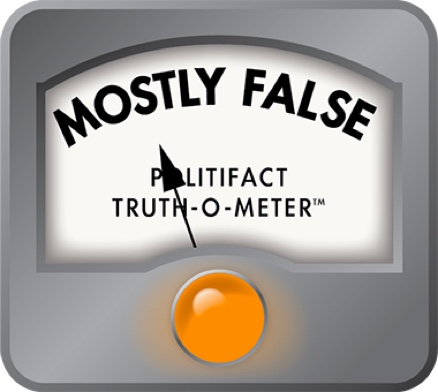
Experts told PolitiFact that although Trump’s point may be self-serving, it’s also valid.
The United States hasn’t imported any oil or petroleum products from Russia since 2022, in protest of Russia’s invasion of Ukraine that year. But declining Russian production has left a hole in the world’s diesel supply. And since the price for U.S. customers depends on the global price, that’s helped push the cost of diesel upwards.
“When diesel fuel becomes scarce elsewhere in the world, it raises prices and leads U.S. companies to export more refined products, including diesel,” said Kenneth Gillingham, a Yale University economist who specializes in energy and environmental issues.
What’s been happening with diesel prices?
In the U.S., diesel prices have soared from $3.81 on the eve of the Iran war to $6.29 today. In other countries, such as the United Kingdom, prices have also climbed to multi-year highs. Although most Americans don’t pay directly for diesel, its costs are embedded in the expense of countless consumer products through trucking costs.
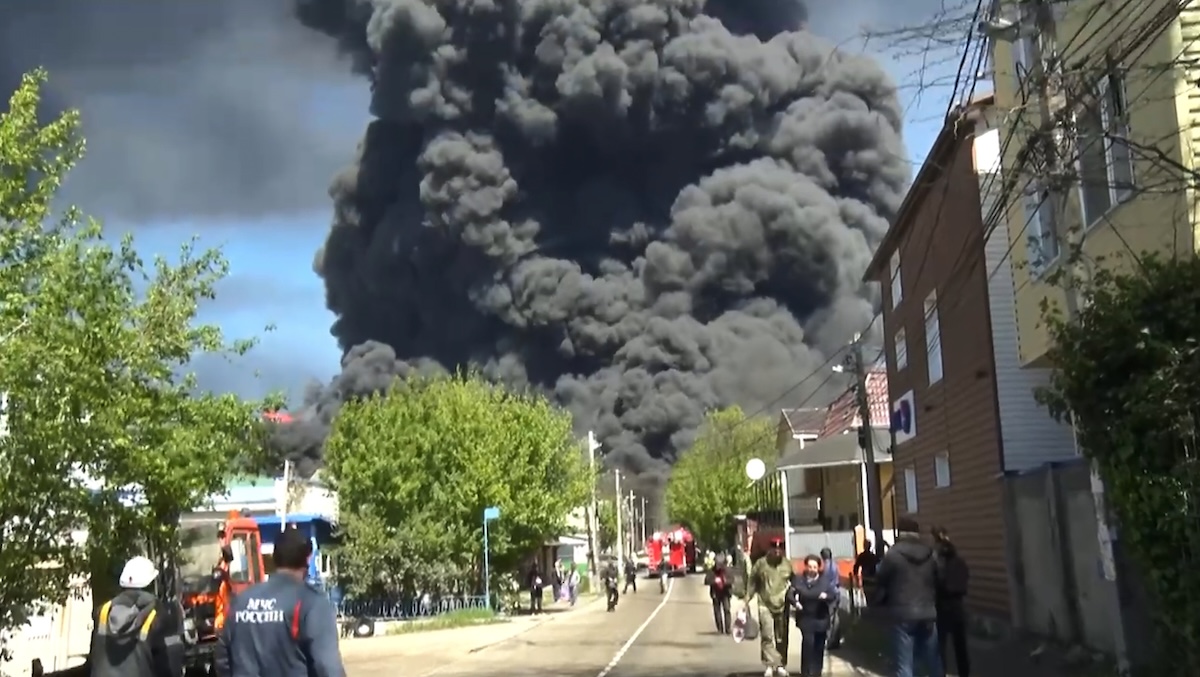
An uptick in successful Ukrainian attacks on Russian industrial infrastructure is a big reason for the price pressure on diesel fuel, analysts say.
Before the Iran war, Russia and the Middle East accounted for 29% of diesel shipped by sea, said Skip York, an energy and global oil fellow at Rice University’s Center for Energy Studies.
But in August alone, Russia’s fossil fuel export revenues fell by 8%, according to the Helsinki-based Centre for Research on Energy and Clean Air. A big reason, the group said, was Ukrainian drone attacks that disrupted a key shipping terminal for nine straight days, the longest shutdown since the war began. Another port did not load any oil cargo for the third consecutive month, because of past drone strikes.
Russia’s oil export economy has deteriorated so much, the group said, that the country needed to import fuel from South Korea and buy back gasoline refined from its own crude in India.
What impact does the Russian diesel shortfall have on the U.S. and the world?
The countries that remain most dependent on Russian oil include Turkey, China, Brazil and Singapore. The U.S. has refrained from purchasing Russian oil since 2022, but consumers here feel the pinch indirectly, for a couple reasons.
First, U.S.-produced oil and oil products such as diesel are not reserved for use domestically; they are sold to buyers internationally.
“The U.S. oil industry exports diesel freely, even when domestic supplies are scarce and domestic prices are spiking,” said Clark Williams-Derry, an energy finance analyst at the Institute for Energy Economics and Financial Analysis. “If American consumers want to buy diesel, they must bid in a global marketplace against the entire world.”
As a result, U.S. diesel exports have spiked amid the Russian shortages, a dynamic that puts “upward pressure on U.S. diesel prices,” York said.
Limited refinery capacity is further exacerbating consumer costs.
“The challenge is running out of places to refine crude oil into consumer products,” York said. “U.S. refineries are running at 97% to 98% utilization.” Patrick De Haan, head of petroleum analysis for GasBuddy, which tracks U.S. gasoline prices, estimated that 60% to 65% of the recent diesel price spike stems from Ukrainian attacks on Russian facilities, with the remainder caused by Iran’s efforts to choke off transit through the Strait of Hormuz and other vital transit points.
“Ukraine is doing what it feels it needs to do to fight back,” De Haan said, “but factually, it is correct to say that less output from Russia is impactful on diesel prices.”
Our Sources
Donald Trump, remarks to reporters, Sept. 13, 2026
Donald Trump, remarks to reporters, Sept. 13, 2026
Donald Trump, Truth Social post, Sept. 14, 2026
U.S. Energy Information Administration, U.S. diesel prices, accessed Sept. 15, 2026
U.S. Energy Information Administration, weekly U.S. exports of total distillate, accessed Sept. 15, 2026
U.S. Energy Information Administration, U.S. crude oil and petroleum product imports from Russia, accessed Sept. 15, 2026
Centre for Research on Energy and Clean Air, “August 2026 — Monthly analysis of Russian fossil fuel exports and sanctions,” Sept. 10, 2026
BBC, “Petrol and diesel prices hit highest since 2022,” Sept. 14, 2026
Kyiv Independent, “Russia shuts down key Black Sea export terminal in Novorossiysk after drone attack, Reuters reports,” August 15, 2026
United24 Media, “Ukrainian Drones Strike Active Oil Transfer Point at Russia’s Taman Port,” May 13, 2026
Email interview with Kenneth Gillingham, Yale University economist who specializes in energy and environmental issues, Sept. 14, 2026
Email interview with Skip York, energy and global oil fellow at Rice University’s Center for Energy Studies, Sept. 14, 2026
Email interview with Clark Williams-Derry, energy finance analyst at the Institute for Energy Economics and Financial Analysis, Sept. 14, 2026
Interview with Patrick De Haan, head of petroleum analysis for GasBuddy, Sept. 15, 2026