$1,000 hurricane tax? Fact-checking claims about Jolly’s proposal for Florida homeowners insurance

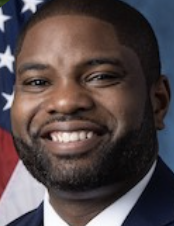
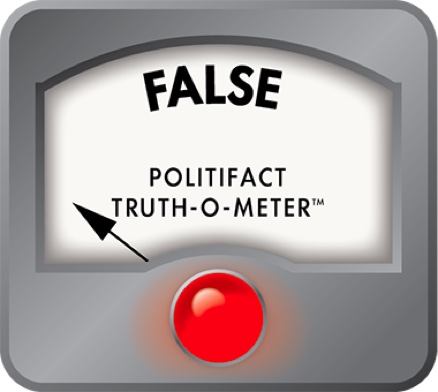
Republican U.S. Rep. Byron Donalds pounded Florida’s airwaves with a TV ad hitting Democratic rival David Jolly for a plan Donalds says would be a $1,000 “hurricane tax.”
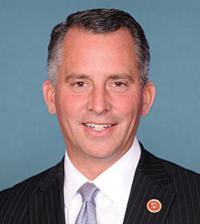
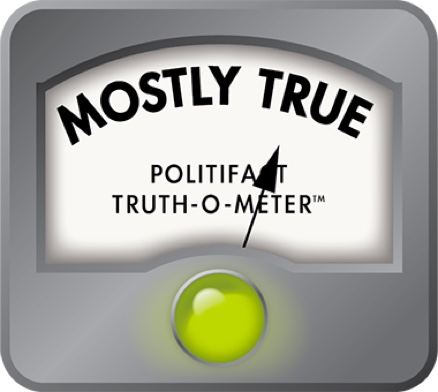
Jolly rejects the ad, saying his plan to move hurricane wind coverage from private insurance to a state fund will cut premiums by 60% to 70%.
Both candidates for governor say they have data backing their predictions. PolitiFact decided to examine the research, talk to experts and try to answer one question: What does their back-and-forth mean for homeowners insurance?
Donalds’ Sept. 8 ad about Jolly’s plan said the proposal would cost “$1,000, per Florida family, every single year,” increasing costs on home, car and renters insurance.
The ad references a recent study but oversimplifies its findings. It didn’t evaluate Jolly’s plan, instead looking at a Florida House proposal from 2024.
Florida State University researchers analyzed what would happen if Citizens Property Insurance Corp., the state-backed insurer, took over wind coverage. The $1,000 figure comes from a specific scenario that would involve Floridians paying emergency fees to Citizens for a limited time if a catastrophic storm wiped out the carrier’s reserve funds.
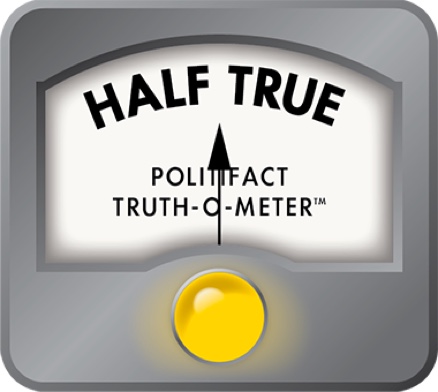
Floridians could have to pay fees under Jolly’s plan if a similar situation occurred and his fund has the same rules as Citizens, but none of that is guaranteed, and the study doesn’t say it’s a definite, yearly outcome.
Insurance industry experts question whether Jolly’s proposal would redistribute — rather than reduce — Floridians’ hurricane insurance costs. They said details remain about how the proposed fund would be initially funded, operated and sustained with the unpredictability of storms.
Here’s how the dueling claims about Jolly’s plan stack up against the facts.
Like fact-focused Florida coverage? Sign up for our Florida midterms newsletter.
How might Floridians’ homeowners insurance drop 60% or 70%?
Jolly says Florida needs a better plan for homeowners insurance; the state has seen the highest prices in the nation for years, mostly because of hurricanes. Donalds’ approach includes building on recent laws aimed at reducing frivolous lawsuits and creating an insurer scorecard.
After Hurricane Andrew battered South Florida in 1992, causing more than $26 billion in damage (over $61 billion in today’s dollars), the state created a hurricane catastrophe fund to stabilize the insurance market.
The fund acts as a backup insurer to reimburse insurance companies for a portion of catastrophic hurricane losses. It is primarily funded through investment income and premiums paid by insurance companies doing business in Florida.
The fund had a $9.6 billion balance as of December 2025, with a $12 billion projected balance by the end of 2026 if this hurricane season remains quiet.
Jolly’s plan would convert the fund into a primary insurer for wind coverage. He says it would need to have a minimum of $32 billion. (Flood insurance is typically a separate policy through the federal government and wouldn’t be part of this fund.)
Jolly has not released detailed plans for how his fund would work. He told PolitiFact that Floridians would not need to purchase a separate wind policy, and the state fund could potentially use private insurance carriers to underwrite and service claims.
His campaign calculated that removing wind insurance coverage on a $300,000 home where owners are paying an average of $7,136 a year in insurance would decrease the bill to around $2,556 a year — a 64% savings.
Experts said removing private wind coverage would initially decrease bills, but it’s unlikely to be as much as Jolly says.
One way a new fund would bring savings is by removing private profit, which is baked into insurance premiums, said Gabriel Carrillo, program director at the University of Central Florida’s Center for Risk Management and Insurance Education.
But a revamped fund would also require operating expenses to process claims, he said, and if private wind coverage is completely removed, “The risk would then be borne by all consumers, not just homeowners.”
Karen Clark, a catastrophe risk modeler, said Florida “accounts for 60% of U.S. hurricane risk due to its location and trillions of dollars of coastal property exposure,” and no new funding mechanism would change that.
No state operates a fund that covers 100% of primary wind claims; the National Flood Insurance Program is the closest comparison. It started with a government commitment to cover high catastrophic risk to help save consumers money, but over time, the losses that needed to be covered outpaced the program funding. It still owes the U.S. Treasury over $22 billion, even after Congress canceled about $16 billion of its debt.
Programs run by state or federal governments are vulnerable to underpricing, or charging too little compared with the risk, Carrillo said. Keeping a fund solvent means adding funding after big losses are paid out, which runs against political pressure to soften consumer impact.
How might Jolly’s plan raise costs for all Floridians?
The Aug. 26 study Donalds’ ad references was completed for the Florida Legislature’s Office of Program Policy Analysis and Government Accountability. The study isn’t publicly available; OPPAGA and Donalds’ campaign shared it with PolitiFact.
Researchers evaluated possible outcomes if all residential wind coverage was moved to Citizens, while private companies sold policies covering only non-wind risks, such as fire. (Again, they didn’t study Jolly’s plan.)
The study found removing wind risk from the private market has some advantages, including greater uniformity in coverage and pricing, and eliminating the main driver of insurer bankruptcies. That could entice more carriers to offer non-wind policies.
Downsides could include reduced competition and political pressures on funding and rate-setting decisions. The possibility of a state-backed fund raising taxpayer costs, researchers noted, comes from concentrating all the state’s wind risk into one entity, creating a large, single point of financial failure.
Having one state-backed insurer would create “significant geographic redistribution of costs” and effectively levy a “hurricane tax” on nearly all Florida policyholders, the study said.
This “tax” refers to emergency assessments that Florida law says public insurance entities, including Citizens and the current catastrophe fund, can issue if reserves are wiped out and they’re forced into deficit — similar to the scenario outlined in the study in which Floridians could have to temporarily pay $1,000 a year after a catastrophic storm.
The fees can be added to almost every type of insurance policy, including home, auto, renters and business. Because people are legally required to pay the additional charge, it functions as a statewide tax to bail out the public insurer.
How strong could the fund be?
Jolly said the FSU analysis uses one scenario and relies on rules under existing state law, which he is proposing to change. He pointed to reinsurance — known as “insurance for insurance companies” — as a safety net.
Reinsurance allows primary insurers to transfer a portion of their risk to larger, global reinsurers. This helps give companies financial backing to write policies in high-risk coastal areas and ensures they have enough money to pay out massive disaster claims without going bankrupt.
“The state fund buys reinsurance, just like any capital fund would do that would absorb risk, which is another fail point when Donalds says the state’s exposed,” Jolly said.
Some experts questioned whether reinsurers would agree to back so much risk for an entire state, saying it would be enormously expensive.
“I just don’t know how a government fund will do this cheaper and more efficiently than a widely diversified industry,” Carrillo said.
Jeff Brandes, a former Republican state senator and founder of the Florida Policy Project, said even if the state could make the fund solvent from the sources Jolly has suggested — tourist development taxes, real estate fees or taxes on insurance companies — the fund would face issues of size and sustainability.
“We are talking about billions of dollars every year that you would have to set aside. We could have a hurricane next year that costs $100 billion, we don’t know, and we are trying to diversify that risk, not put it in one place,” Brandes said.
Experts said private insurers draw on a resilient global funding network that spreads the risk across global investors, private reinsurance markets and catastrophe bonds.
Jolly said if the final plan is determined to reduce consumers’ costs, he likely would pursue it as a ballot initiative that Floridians would vote on.
Our Sources
YouTube, “Disaster,” Sept. 8, 2026
X.com, David Jolly post, Sept. 14, 2026
David Jolly campaign website, Affordability, Does David Jolly want a $1,000 hurricane tax? Accessed Sept. 12, 2026
CBS News Miami, Jolly on governor run, the Hope Florida scandal and data centers | Facing South Florida, Sept. 13, 2026
Byron Donalds campaign website, Insurer Scorecard, Accessed Sept. 12, 2026
Florida Hurricane Catastrophe Fund, Accessed Sept. 12, 202
Florida Hurricane Catastrophe Fund, Annual Report of Aggregate Net Probable Maximum Losses, Financing Options, and Potential Assessments, Updated March 2026
The Miami Herald, Fact Check: Where candidates Donalds and Jolly stand on property insurance, Sept. 11, 2026
Florida Politics, Jeff Brandes: Jurassic Florida — David Jolly’s hurricane plan comes with a hurricane tax, Sept. 8, 2026
Insurify, Average Annual Cost by State, Accessed Sept. 13, 2026
Insurance Information Institute, Insurance Affordability Index: Florida, Accessed Sept. 13, 2026
Insure.com, Florida homeowners insurance calculator, Accessed Sept. 16, 2026
Expertnet.org, Expanded Windstorm Coverage Feasibility Study, study ended Aug. 31, 2026
Institute for Legal Reform, Tort Reform Lowers Cost of Living for Floridians, Aug. 18, 2025
FEMA, Flood Insurance, Accessed Sept. 15, 2026
Congress.gov, National Flood Insurance Program Borrowing Authority, Accessed Sept. 15, 2026
Government Accountability Office, National Flood Insurance Program: Fiscal Exposure Persists Despite Property Acquisitions, June 25, 2020
Florida Statutes, Chapter 627 INSURANCE RATES AND CONTRACTS, Accessed Sept. 15, 2026
Email interview, Skylar Swanson, Byron Donalds’ campaign spokesperson, Sept. 14, 2026
Email interview, Devon Hesano, David Jolly campaign spokesperson, Sept. 15, 2026
Email and phone interview, Gabriel Carrillo, program director at the University of Central Florida’s Center for Risk Management and Insurance Education, Sept. 14-17, 2026
Email interview, Mark Friedlander, senior director of media relations at the Insurance Information Institute, Sept. 12, 2026
Phone interview, Jeff Brandes, former state senator and founder of the Florida Policy Project, Sept. 15, 202
Email interview, Karen Clark, catastrophe risk modeler and CEO of Karen Clarke & Company, Sept. 15, 2026
Phone interview, David Jolly, Florida Democratic gubernatorial nominee, Sept. 16, 2026