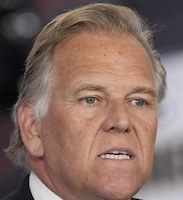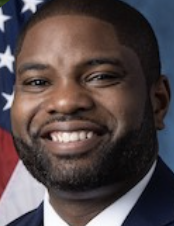
Former U.S. Rep. Mike Rogers “helped to architect the legislation that kicked off the opioid epidemic.”
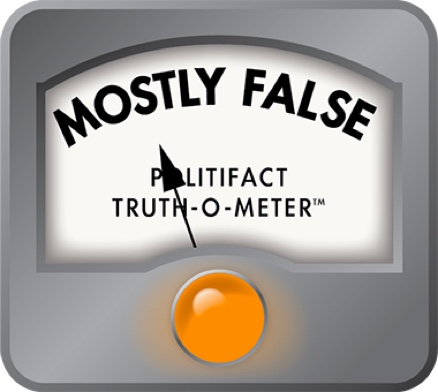


El-Sayed wrong that Rogers’ legislation ‘kicked off’ opioid epidemic
If your time is short
- While in Congress, former Rep. Mike Rogers, R-Mich., pushed for legislation to elevate federal focus on chronic pain as a public health issue and expand access to treatments, including opioid medications.
- The policy didn’t become law until 2010, more than a decade into the opioid crisis.
- Experts say there’s no clear link between the policy and increased opioid prescription rates, though the opioid industry supported and lobbied for the legislation.
Abdul El-Sayed, the Democratic candidate for Senate in Michigan, has accused his Republican opponent of playing a major role in the opioid crisis.
Former U.S. Rep. Mike Rogers “helped to architect the legislation that kicked off the opioid epidemic,” El-Sayed said in an Aug. 5 interview with CNN’s Kaitlan Collins.
El-Sayed, a former public health official, and Rogers are in a high-profile campaign for the open U.S. Senate seat in Michigan, a key battleground state that could determine control of the chamber in the November election. Rogers ran for Senate in 2024, narrowly losing to Democrat Elissa Slotkin. He represented Michigan in the U.S. House of Representatives from 2001 to 2015.
Asked for evidence that Rogers sparked the opioid crisis, El-Sayed’s campaign pointed PolitiFact to a bill Rogers proposed multiple times in Congress to increase attention on chronic pain care, parts of which ultimately were signed into law as part of the 2010 Affordable Care Act.
“Mike Rogers was a ‘leading advocate’ in Congress for ‘boost(ing) opioid prescriptions,’” spokesperson Sophie Pollock said, quoting from a 2024 Bridge Michigan article about Rogers’ proposals.
But there’s a timeline problem with El-Sayed’s telling. Opioid prescription and overdose death rates began rising at the end of the 1990s. Rogers didn’t start introducing legislation related to pain care until 2003 and his proposals didn’t become law until 2010. So the legislation couldn’t have “kicked off” the opioid addiction crisis.
Policy experts generally point to a moment in 1996 as marking the beginning of the U.S. opioid epidemic: when Purdue Pharma introduced the pain medication OxyContin and aggressively and deceptively marketed it for long-term use, downplaying its addiction risks.
“You have this multifaceted campaign that gets launched to convince the medical community that we’ve been underprescribing opioids — that the risk of addiction had been overblown, that millions of people are suffering because we’re too stingy with these drugs,” said Andrew Kolodny, an opioid policy researcher at Brandeis University.
In the 2010s, addiction and opioid-related deaths further drove the epidemic as people turned to illegal substances such as heroin and synthetic opioids containing fentanyl.
Rogers proposed legislation to study and broaden pain management
Rogers introduced or cosponsored four versions of the National Pain Care Policy Act, beginning in 2003. The legislation called for greater attention on chronic pain as a public health problem, increased treatment access and more clinician training, including what it described as the “medically appropriate use of controlled substances.”
Rogers said in 2003 that the legislation was intended to “stimulate improvement in pain research and extend accessibility of care to more and more Americans suffering with chronic pain.”
Opioid manufacturers lobbied for and promoted the legislation, Kolodny said, saying that opioids were underprescribed and the addiction risk was low.
“It was about both increasing sales of opioids, the idea that people who need them are not getting it, but it was also about preventing policymakers from taking actions that would have reduced prescribing,” Kolodny said.
Internal industry documents show opioid manufacturers promoted Rogers’ legislation, often through groups like the American Pain Foundation. A 2004 American Pain Foundation presentation said it “piloted mobilization strategies” and contributed to “strategic planning” for Rogers’ bill. The foundation also held a forum on pain treatment in 2006 “in cooperation with” Rogers, according to a flyer for the event.
Alyssa Brouillet, Rogers’ spokesperson, said in a statement that Rogers worked on the legislation because chronic pain research was fragmented and there was little clinical training or standardized systems for pain treatment. She said Rogers’ experience with bladder cancer and watching his brother suffer from chronic pain informed his perspective.
“He understands the struggle and was in a unique position to fix these problems so that Michiganders could live normal lives, rather than suffering through debilitating pain. And that’s exactly what he did,” Brouillet said.
Rogers’ campaign also pointed to his co-sponsorship of the National All Schedules Prescription Electronic Reporting Act of 2005, which set up an interstate prescription monitoring system for controlled substances to prevent abuse. Rogers was one of 34 bipartisan cosponsors on the bill, which became law in 2005.
By the time the National Pain Care Policy Act passed in the House in 2008, Democrat Lois Capps of California was the lead sponsor and Rogers was the original Republican cosponsor, and it passed with broad bipartisan support. That bill stalled in the Senate, but portions of it were written into the 2010 Affordable Care Act.
Here’s what that section did:
- Called for federal health regulators to convene a Conference on Pain to increase recognition of chronic pain as a public health problem and produce a report on the state of pain treatment in the U.S.
- Directed the National Institutes of Health to expand pain research and created a committee to coordinate and advance federal pain research.
- Authorized grants to educate healthcare providers about pain assessment and treatment.
What were the bill’s effects?
The legislation didn’t lead to a surge in opioid prescription rates, experts said. Prescription rates that had already been climbing peaked between 2010 and 2012. But they soon began to fall as addiction awareness and scrutiny on prescription practices increased, even as the ACA’s provisions that Rogers advocated for continued. The American Pain Foundation disbanded in 2012 after a Senate investigation into opioid makers and their deceptive marketing and prescribing recommendations.
Opioid overdose deaths continued to rise over the next decade, but that was driven primarily by illicit drugs like heroin and fentanyl, not prescriptions. Deaths from common prescription opioids rose slightly between 2010 and 2017, then declined. Deaths from heroin spiked after 2010, and fentanyl overdoses became the major driver starting in 2013.
Kolodny said Rogers’ pain care legislation was in line with the industry’s efforts to avoid regulations on prescribing practices.
“Even though I do think it’s not an accurate statement to say the legislation kicked off the opioid epidemic, I would say the legislation was an aspect of a campaign that fueled the epidemic and impeded its response,” Kolodny said.
Harry Nelson, a healthcare industry attorney and policy expert, said it’s “absurd” to say the legislation kicked off the opioid crisis and pointed to the origins in aggressive industry marketing in the late 90s.
“If the argument is that Rogers participated in this early-2000s political movement to treat pain more aggressively and reduce barriers to pain treatment, that’s a true statement,” he said. “To suggest that that was kicking off the opioid crisis is irresponsible.”
El-Sayed’s campaign also pointed PolitiFact to two other bills Rogers cosponsored — a veterans pain care bill and a 1995 Michigan law that shielded pharmaceutical companies from legal liability.
Rogers was one of 30 cosponsors on the veterans’ pain bill, and parts of it calling for pain care research and standardization were signed into law in a broad veterans health bill. The Michigan law, passed in 1995 when Rogers was a state senator, covered more than drug companies, but it provided broad legal protections for pharmaceutical manufacturers. The law made it harder for Michigan residents and the state to sue drug manufacturers for their role in the opioid epidemic, Bridge Michigan reported in 2023.
Our ruling
El-Sayed said Rogers “helped to architect the legislation that kicked off the opioid epidemic.”
Health policy researchers point to deceptive marketing of the new painkiller OxyContin in the mid-1990s as the epidemic’s launch point, driving addiction and overdose deaths. As scrutiny led to tighter prescription protocol, around 2014, illicit drugs became the major driver of opioid overdose deaths in the U.S.
Rogers authored drug-manufacturer-backed legislation to study pain treatment and access years after opioid prescription and overdose rates began to climb. It didn’t become law until 2010, when opioid prescription rates were near their peak.
There’s a small element of truth, because Rogers authored and pushed for legislation to research and expand access to pain treatment, including prescription medications. But the legislation didn’t launch the crisis, experts said. We rate the statement Mostly False.
Our Sources
Email exchange with Alyssa Brouillet, Mike Rogers spokesperson, Aug. 13, 2026
Email exchange with Sophie Pollock, Abdul El-Sayed spokesperson, Aug. 13, 2026
Phone interview with Andrew Kolodny, Medical Director for the Opioid Policy Research Collaborative at Brandeis University, Aug. 13, 2026
Phone interview with Harry Nelson, healthcare industry lawyer and policy expert, Aug. 13, 2026
CNN, Abdul El-Sayed talks to Kaitlan Collins after his Michigan primary win, Aug. 5, 2026
Centers for Disease Control and Prevention, Understanding the Opioid Overdose Epidemic, June 9, 2025
Congress.gov, H.R. 3590 — Patient Protection and Affordable Care Act, accessed Aug. 13, 2026
Bridge Michigan, Mike Rogers vows to fight drug war, but urged opioid access in Congress, Aug. 29, 2024
Congress.gov, H.R. 1863 — National Pain Care Policy Act of 2003, introduced April 29, 2003
Congress.gov, H.R. 1020 — National Pain Care Policy Act of 2005, introduced March 1, 2005
Congress.gov, H.R. 2994 — National Pain Care Policy Act of 2008, introduced July 11, 2007
Congress.gov, H.R. 756 — National Pain Care Policy Act of 2009, introduced Jan. 28, 2009
American Pain Society, Press release detailing Rogers’ pain care legislation, Sept. 24, 2003
Associated Press and Center for Public Integrity, Pro-painkiller echo chamber shaped policy amid drug epidemic, Sept. 19, 2016
American Pain Foundation, Purdue 2004, presentation, Sept. 17, 2004
American Pain Foundation and Pain Care Forum, The Epidemic of Pain in America flyer (page 113), June 13, 2006
Institute of Medicine, Relieving Pain in America: A Blueprint for Transforming Prevention, Care, Education, and Research, June 2011
CDC National Center for Injury Prevention and Control, Annual Surveillance Report of Drug-Related Risks and Outcomes (page 115), Oct. 31, 2019
CDC National Center for Health Statistics, Drug Overdose Deaths in the United States, 2003–2023, December 2024
Congress.gov, H.R. 6122 — Veterans Pain Care Act of 2008, introduced May 21, 2008
Congress.gov, S. 2162 — Veterans’ Mental Health and Other Care Improvements Act of 2008, signed into law Oct. 10, 2008
Michigan Legislature, Senate Bill 344 of 1995 — Public Act 249 of 1995, signed Dec. 29, 1995
Bridge Michigan, Pharma giants nearly impossible to sue in Michigan. Democrats seek a change, Oct. 11, 2023
CDC, Vital Signs: Changes in Opioid Prescribing in the United States, 2006–2015, July 7, 2017
ProPublica, American Pain Foundation Shuts Down as Senators Launch Investigation of Prescription Narcotics, May 8, 2012
Congress.gov, H.R.1132 – National All Schedules Prescription Electronic Reporting Act of 2005, introduced March 3, 2005