Q&A: What does it mean to be an organ donor and can family members override the decision?

If your time is short
- Registering as an organ donor is typically legally binding. It means that if you die in a hospital or hospice setting, your organs can be considered for donation.
- A person must be legally declared dead before their organs can be collected for transplantation. Federal authorities recently decertified a Kentucky organization following an investigation that found persistent safety failures; the organization disagrees and is appealing.
- Families that have concerns about the donation process should raise them with the medical teams responsible for taking care of their loved ones or contact the federal Health Resources and Services Administration.
If you’ve thought about organ donation, it may be because of a question on your state’s license or identification card application asking if you want to be a donor.
Even if you check yes, your prospects of becoming a donor are small. Though the federal government counts 170 million registered donors, only about 16,000 people who die each year meet the Association of Organ Procurement Organizations’ donor criteria. A government-funded 2016 study found that more than twice that many people could be potential donors each year. Either way, that’s still a fraction of the number of people who die annually. That’s in part because donors must have died in a hospital or hospice setting, where medical personnel can sustain organ life after brain or cardiac death.
Donated organs save lives, but recent national news has cast the donation process in an unfavorable light
In early August, federal authorities moved to decertify Network for Hope, an organization managing organ donations in the Kentucky region, after a federal investigation found it repeatedly continued to pursue organ retrieval when some donors still showed signs of life. Network for Hope told The Associated Press it disagrees with the government’s decision and plans to appeal.
In the case of one man, Anthony Thomas Hoover II, the effort to recover his organs was only called off once he cried out and a hospital doctor refused to withdraw life support. The New York Times reported the doctor continued to face pressure from the organization coordinating organ recovery. But the headlines are fueling online chatter about the donation industry’s ethics and oversight.
After I register as a donor, what organs and tissues are eligible for donation?
One person’s donated organs can save up to eight lives and donated tissues can help 75 people, according to Donate Life America. But not all organs can be donated.
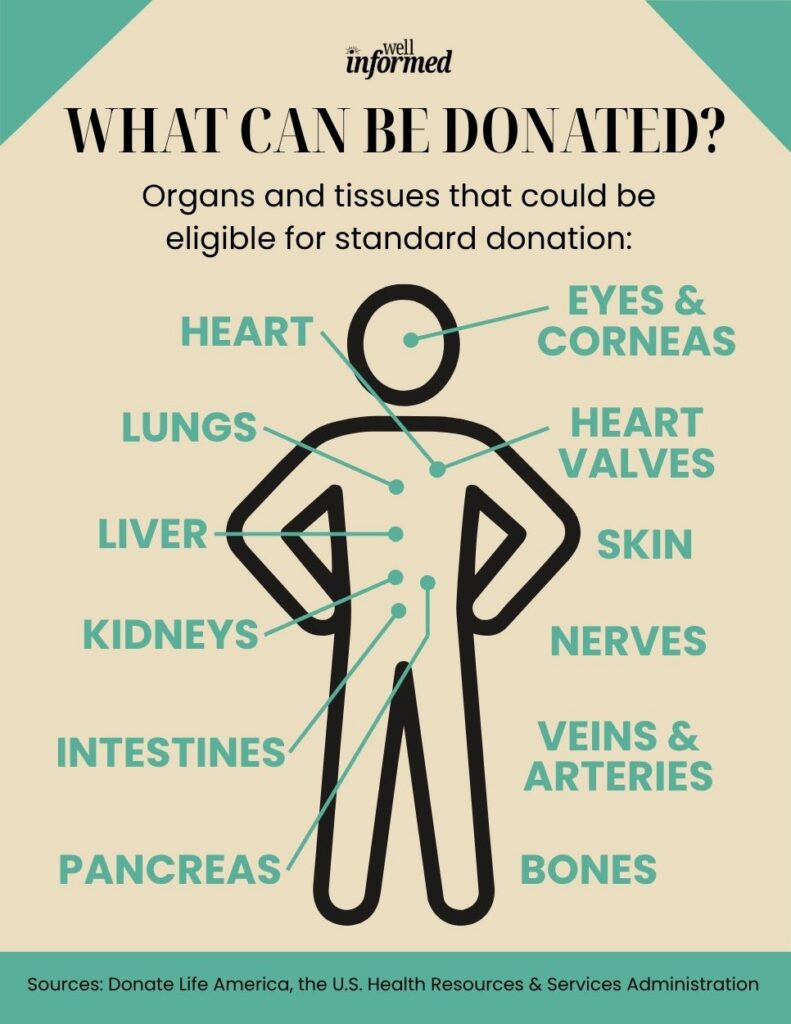
Transplantable organs could include the heart, kidneys, liver, lungs, pancreas and intestines. Donation agreements also generally grant organizations access to tissues including skin, nerves, heart valves, veins and arteries, eyes and corneas, and bone and associated tissues.
An organ procurement organization representative helps figure out if a donor candidate who is near death or has died remains eligible to give. They do this by reviewing the person’s medical history and working with medical teams to check each organ’s condition.
Who meets the criteria for organ donation?
People can donate at any age, including under 18 with parental permission. Some of the oldest donors in the U.S. have been in their 90s.
Patients with active cancer or severe infections such as sepsis, tuberculosis or viral meningitis are generally prevented from becoming organ donors. But other conditions such as diabetes, hepatitis and HIV are no barrier; research has found that at least some organs from people with those conditions can be safe for recipients.
Still, of the thousands of people each year who agree to be donors, few will end up qualifying because they don’t die in a hospital or hospice setting. Only about three in every 1,000 people die in a manner that allows for organ donation.
What is the process for organ donation and when does it come into play?
First, a donor must be declared dead. Most U.S. states have adopted laws permitting medical professionals to declare people legally dead after all brain and brain stem function or circulatory and respiratory function irreversibly stops.
If brain death is suspected, doctors run tests to evaluate if the person has brainstem reflexes or is able to breathe independently.
Anne Zimmerman, a lawyer and bioethics expert, said that hospital testing protocols vary. Some require the absence of sedatives and paralytics and or specific reflex testing.
If tests show no signs of brain function, medical professionals declare the person dead.
“While there are a few high-profile cases, there is no reason to think it is common to declare a living person dead,” Zimmerman said. “Yet it takes just a few for trust to plummet. And even one error is a very significant, newsworthy, and legitimate problem.”
When someone is near death or has died, a hospital alerts a nonprofit organization called an organ procurement organization, which coordinates and facilitates the collection of organs for transplants. Someone from the organization reviews a patient’s medical history and current status and determines if the patient might be a possible donor.
Even after a patient has been declared brain dead, his or her medical care team might continue providing organ support until the donor organs can be collected. A transplant surgical team ultimately removes donated organs and tissues.
A second, lesser known pathway to donate organs is becoming more common: donation after circulatory or cardiac death. In this situation, a patient might have some brain function, but they are often in a coma, receiving ventilated support and are not expected to recover. Once a doctor has determined that the person will not recover with further treatment, a family might choose to end life-sustaining measures.
A recent JAMA study found that in 2025 about 49% of people donating organs were donating after circulatory death — an increase compared to 2% of donors in 2002.
Before a donor patient is removed from the ventilator, the hospital will continue to provide care while medical and organ procurement organization staff test the organs and the procurement organization works to find transplant matches.
With a transplant surgical team on standby, doctors remove the patient’s ventilator support. If the person dies within one to two hours of life support being removed, their organs are viable for transplant. If the person’s heart and breathing stops, doctors wait two to five minutes before declaring death in order to be sure their heart doesn’t resume beating. (A new Organ Procurement & Transplantation Network policy approved Aug. 20 established a five-minute standard waiting period before organ recovery begins.)

Are organ procurement organizations involved in death declarations?
When things work the way they should, the medical team providing a patient’s care makes decisions about prognosis and declares a person dead.
Organ procurement organizations are not supposed to be involved in those decisions and their representatives are not supposed to approach family members until the family has made the decision to withdraw life support. A 2025 New York Times investigation found, however, that some procurement organizations overreach, influencing treatment decisions.
Lawmakers and federal investigators have intensified scrutiny of the country’s organ transplant system in recent years. In 2024, the Justice Department began a sweeping investigation of nonprofit organizations collecting organs for transplant in at least five states. News outlets have reported on high-profile incidents where potential donors experienced rushed or premature efforts to remove their organs.
If it’s finalized, Network for Hope in Kentucky would become the second such organization to be decertified, following a Miami group’s 2025 decertification for what federal officials described as “years of unsafe practices.”
The House Ways and Means Committee is also investigating the New Jersey region’s organ procurement organization following whistleblower reports of wrongdoing, including an allegation that the organization’s president and CEO advised staff to continue with organ recovery even after a donor patient shows signs of life.
What can you do if you think something illegal, unethical or dangerous is happening with a loved one who is a potential organ donor?
Your first line of defense is alerting the team of doctors and nurses who are caring for your loved one, said Renée M. Landers, a Suffolk University law professor who has served on the boards of hospitals and an organ procurement organization.
Then, Landers said, “go up the chain to the hospital administration to call attention to the situation.”
To document a concern after the fact, families or hospital staff can report allegations of misconduct within the organ donation or transplant process to the Health Resources and Services Administration, a federal agency responsible for oversight. You can file a complaint by sending an email to OPTNcomplaints@hrsa.gov.
People can also contact news organizations for press coverage, or law enforcement if they believe someone broke the law. The Organ Procurement & Transplantation Network policy approved Aug. 20 also requires organ procurement organizations to create a formal process by which medical staff and families can call for a pause in the donation process.

Can your family override your choice to be an organ donor?
No. Registering to be a donor is similar to creating a legally binding will or an advance directive — a written document that tells health care providers your wishes if you’re unable to advocate for yourself.
Still, Zimmerman said many hospitals try to accommodate family members’ wishes without overruling the donation.
“They can slow down the process or keep the ventilator on while they let the family get used to the idea,” she said.
If you haven’t documented your wishes, then your loved ones could be asked to make the decision. All U.S. states and D.C. have enacted some version of a law called the Uniform Anatomical Gift Act, which is the framework for organ and tissue donation. It establishes the priority order for who can authorize donation on your behalf.
Can you remove yourself from the organ donor registry?
Yes, but it might take time because the registries aren’t centralized.
In most states if you signed up at the DMV, you’re in your state’s registry. When checking to see if you’re an organ donor, donation staff check both the state registry and National Donate Life Registry.
If you’ve changed your mind about being an organ donor, think about the states you’ve lived in and whether you signed up as an organ donor there. If you registered on the state and national registry or you’re not sure where you registered, you should remove yourself from each of those registries, according to Donate Life America.
PolitiFact Staff Researcher Caryn Baird contributed to this report.
UPDATE, Sept. 8, 2026: This story has been updated to clarify that the Association of Organ Procurement Organizations said that about 16,000 people who die each year meet donor requirements. Others have estimated higher numbers of potential donors annually.
Our Sources
Nursekate’s archived X post, Aug. 5, 2026
Cjnlegalnurse’s Instagram post, Aug. 6, 2026 (archived)
CNN, HHS shutting down Kentucky organ procurement group over safety concerns, Aug. 5, 2026
U.S. Department of Health and Human Services, HHS Decertifies Kentucky Organ Procurement Organization to Protect Patients, Restore Trust, Aug. 5, 2026
Interview with Renée M. Landers, law professor at Suffolk University and faculty director of Suffolk University Law School’s health and biomedical law concentration, Aug. 18, 2026
Email interview with Anne Zimmerman, a lawyer and bioethics expert and editor-in-chief of Columbia University’s Voices in Bioethics, Aug. 19, 2026
Interview with Greg Segal, founder of the patient advocacy group Organize, Aug. 20, 2026
Emailed statements from Hilary Kleine, spokesperson for Donate Life America, Aug. 18-20, 2026
Emailed statement from the Association of Organ Procurement Organizations, Aug. 20, 2026
U.S. Government Accountability Office, Systemic Issues Plague Life-Saving Organ Transplant Program, Jan. 22, 2026
The Associated Press, US moves to shut a Kentucky organ donation group, citing safety failures, Aug. 5, 2026
The Washington Post, U.S. decertifies transplant group that tried to collect organs from living patients, Aug. 5, 2026
RegisterMe.org, National Donate Life Registry, accessed Aug. 17, 2026
Donate Life America, Frequently Asked Questions, accessed Aug. 17, 2026
Donate Life California, Learn About What Tissues Can Be Donated, accessed Aug. 17, 2026
National Institute on Aging, Frequently Asked Questions About Organ Donation for Older Adults, Aug. 17, 2026
U.S. Department of Health and Human Services Health Resources and Services Administration, 2025 National Survey of Organ Donation Attitudes and Practices: Report of Findings, July 2025
Health Resources and Services Administration, Organ Donation Statistics | organdonor.gov, accessed Aug. 18, 2026
NYU Langone Health, More Organ Donations Now Come from People Who Die After Their Heart Stops Beating, Feb. 26, 2026
Uniform Law Commission, Anatomical Gift Act – Uniform Law Commission, accessed Aug. 18, 2026
Donate Life America, Organs and Tissues for Transplant, accessed Aug. 18, 2026
The Associated Press, More organs are being donated after the heart stops, not brain death. Policies are changing too, Feb. 26, 2026
Texas Department of Public Safety, Texas Department of Public Safety, accessed Aug. 19, 2026
Michigan.gov, License and ID information, accessed Aug. 19, 2026
Donate Life American, National Donate Life Registry, accessed Aug. 19, 2026
DC Department of Motor Vehicles, DC DMV REAL ID Driver License, accessed Aug. 19, 2026
Health Resources and Services Administration, Sign Up To Be An Organ Donor, accessed Aug. 19, 2026
Health Resources and Services Administration, A Record-Breaking Organ Donor Proves Age Is No Limit, accessed Aug. 19, 2026
Health Resources and Services Administration, Is There an Age Limit for Organ Donation, accessed Aug. 19, 2026
Association of Organ Procurement Organizations, Can I Be an Organ Donor? accessed Aug. 19, 2026
Donor Alliance, Who Can’t Be an Organ, Eye and Tissue Donor? May 15, 2026
LifeSource, Would Certain Conditions or Diseases Make You Ineligible to Donate? Dec. 11, 2022
HIVinfo.gov, Living With HIV: HIV and Transplant, April 9, 2025
Scientific American, In world first, a man living with HIV received a lung transplant from an HIV-positive donor, June 19, 2026
Cleveland Clinic, Want To Be an Organ Donor? Here’s How To Register, April 10, 2026
Association of Organ Procurement Organizations’ YouTube channel, Organ Donation Process, Dec. 6, 2021
Penn State University, The Medical Minute: Six organ donation facts knock down six myths, April 10, 2024
Donate Life Kentucky, Understanding the Organ Donation Process: Donation After Brain Death (DBD) and Circulatory Death (DCD), July 22, 2025
UNOS, Understanding Donation after Circulatory Death (DCD), July 11, 2025
Health Resources and Services Administration, Organ Donation FAQ, accessed Aug. 19, 2026
Donate Life America, National Donate Life Registry and State Removal, accessed Aug. 19, 2026
Johns Hopkins Medicine, Advance Directives, accessed Aug. 19, 2026
Health Resources and Services Administration, Organ Donation and Children, accessed Aug. 19, 2026
Cornell Law School, Uniform Anatomical Gift Act | Wex | US Law | LII / Legal Information Institute, accessed Aug. 19, 2026
JAMA, Changes in Organ Donation After Circulatory Death in the United States, Feb. 26, 2026
Mount Sinai, Donation after Neurological Death, accessed Aug. 19, 2026
Uniform Law Commission, Determination of Death Act, accessed Aug. 19, 2026
The Journal of Medicine and Philosophy via PubMed Central, Determination of Death and the Dead Donor Rule: A Survey of the Current Law on Brain Death, April 20, 2016
JAMA, Brain Death | Critical Care Medicine, Sept. 15, 2020
Association of Organ Procurement Organizations, Organ Procurement Organizations Services, accessed Aug. 19, 2026
Donate Life America, Vascularized Composite Allografts (VCAs), accessed Aug. 19, 2026
Current Transplantation Reports via Springer Nature Link, Vascularized Composite Allografts: Procurement, Allocation, and Implementation, July 3, 2014
Health Resources and Services Administration, Establish Membership Requirements for Uterus Transplant Programs, accessed Aug. 19, 2026
Donate Life America, Deceased Donation, accessed Aug. 19, 2026
Neurology via PubMed Central, Revise the Uniform Determination of Death Act to Align the Law With Practice Through Neurorespiratory Criteria, March 29, 2022
Health Resources and Services Administration, Donation After Life, accessed Aug. 19, 2026
Health Resources and Services Administration, Donation & Transplantation History, accessed Aug. 19, 2026
NPR, A new proposal for organ donation sparks concern, July 9, 2026
The New England Journal of Medicine, The Dead Donor Rule and Organ Transplantation, Aug. 14, 2008
The Organ Donation and Transplantation Alliance, The Uniform Anatomical Gift Act (UAGA) Explained, Winter 2018
The New York Times, Doctors Were Preparing to Remove Their Organs. Then They Woke Up, June 6, 2025
Association of Organ Procurement Organizations, Facts About Organ Donation, accessed Aug. 20, 2026
Association of Organ Procurement Organizations, AOPO Pathways Infographic, accessed Aug. 20, 2026
The New York Times, A Push for More Organ Transplants Is Putting Donors at Risk, July 20, 2025
NPR, Debate simmers over when doctors should declare brain death, Feb. 11, 2024
The Washington Post, U.S. launches probe into possible fraud by organ collection groups, Feb. 26, 2024
The Washington Post, House panel examines organ retrieval missteps ‘fit for a horror movie’, July 22, 2025
U.S. Department of Health and Human Services, HHS to Close University of Miami’s Failing Organ Agency, Sept. 18, 2025
Donate Life America, Organ, Eye and Tissue Donation Statistics, accessed Aug. 20, 2026
Health Resources and Services Administration, Reporting Allegations of Misconduct, accessed Aug. 20, 2026
The Associated Press, People opt out of organ donation programs after reports of a man mistakenly declared dead, Oct. 28, 2024
Healthcare Dive, HHS moves to decertify organ procurement group over patient safety failures, Aug. 7, 2026
Gift of Life Michigan, Organ & Tissue Donation Facts, accessed Aug. 20, 2026
Gift of Life Michigan, The Facts: Brain Death vs. Coma vs. Circulatory Death, Nov. 4, 2024
Yale Law School, Experts Discuss Organ Transplant System Reform With Focus on Racial Equity, Feb. 7, 2024
Association of Organ Procurement Organizations, Protecting the Gift of Donation: Why AOPO Spoke Out on CMS’s Proposed Reimbursement Changes, June 11, 2026
The Washington Post, RFK Jr. announces sanctions against organ transplant agency in Florida, Sept. 18, 2025
American Society of Transplantation, The Truth About Organ Donation: Facts Behind the Headlines, Sept. 24, 2025
Health Resources and Services Administration, OPTN Board Approves Policy Changes for Donation after Circulatory Death, Aug. 20, 2026
U.S. Department of Veterans Affairs, Hep C-positive organs, safe and effective for most transplant recipients, Aug. 12, 2021
NPR, ‘Horrifying’ mistake to take organs from a living person was averted, witnesses say, Oct. 17, 2024
The Washington Post, Patient showed signs of life during organ harvest in N.J., House members allege, Nov. 19, 2025
CNN, New Jersey organ procurement organization under congressional investigation after ‘alarming’ whistleblower claims, Nov. 19, 2025