Do zinc lozenges actually work as a cold treatment?

If your time is short
- Results are mixed, but there is some evidence that taking zinc after you become sick may shorten the length of a cold by a day or two. Taking a zinc supplement regularly doesn’t prevent colds though.
- The zinc must be taken as a lozenge, which can have negative side effects like nausea.
- The doses of zinc sold over the counter may not be large enough or formulated as needed to achieve the cold-relieving benefits that have been found in experimental trials.
It’s sniffle season. If you have a cold that you can’t kick, you may be researching tips to overcome your infection. After looking into whether vitamin C can stop cold symptoms, we wondered about another commonly promoted cure: zinc.
Zinc is one of the body’s essential minerals. It’s important for immune system function, wound healing, bone growth, hormone production and our senses of taste and smell. People generally get all the zinc they need from their diet — zinc deficiency is uncommon in the U.S. — but over-the-counter zinc lozenges and nasal sprays are often sold as cold-quashing treatments.
Does it really work?
A 2024 paper published by the Cochrane Database of Systematic reviews looked at the results of 34 studies on zinc to prevent or treat the common cold. The review’s authors found that when it comes to preventing a cold, there is little to no benefit of regularly taking zinc supplements.
But zinc shows promise in treating colds.
The Cochrane review found that zinc may reduce the average duration of a cold by around 2.4 days when compared to a placebo. But the authors didn’t give a full-throated endorsement of zinc as a cold cure: They wrote they had “little confidence” in the evidence.
Study results aren’t always consistent. Several experimental studies and meta-analyses have found similar results supporting zinc’s cold-shortening benefits while others haven’t found a significant effect.
In order for zinc to be even a little effective as a cold treatment, it must be taken as a lozenge or a nasal spray so it can directly affect the nose and throat where respiratory infections take root. But beware — zinc nasal sprays have been linked to permanent loss of smell, leading to FDA warnings about several products.
Dr. Harri Hemilä, a Finnish researcher who has studied how zinc affects colds, told Well Informed that part of the reason study results differ may be because doses and ingredient formulations vary.
Of the 34 studies in the Cochrane review, dosages ranged from 0.044 milligrams to 296 milligrams of zinc per day, and included several types of zinc — zinc acetate, zinc gluconate, and zinc orotate — administered in different forms, such as nasal spray, lozenge, and syrup.
In a 2011 systematic review of 13 studies, Hemilä found that trials using daily doses of less than 75 milligrams lozenges had no effect on cold duration, but those with over 75 milligrams did show a benefit.
“The greatest problem with using zinc lozenges to treat colds is the difficulty in finding proper lozenges,” Hemilä said, noting the ones on the market may be too low of a dose or include ingredients like citric acid that bind to zinc and make a lozenge less effective.
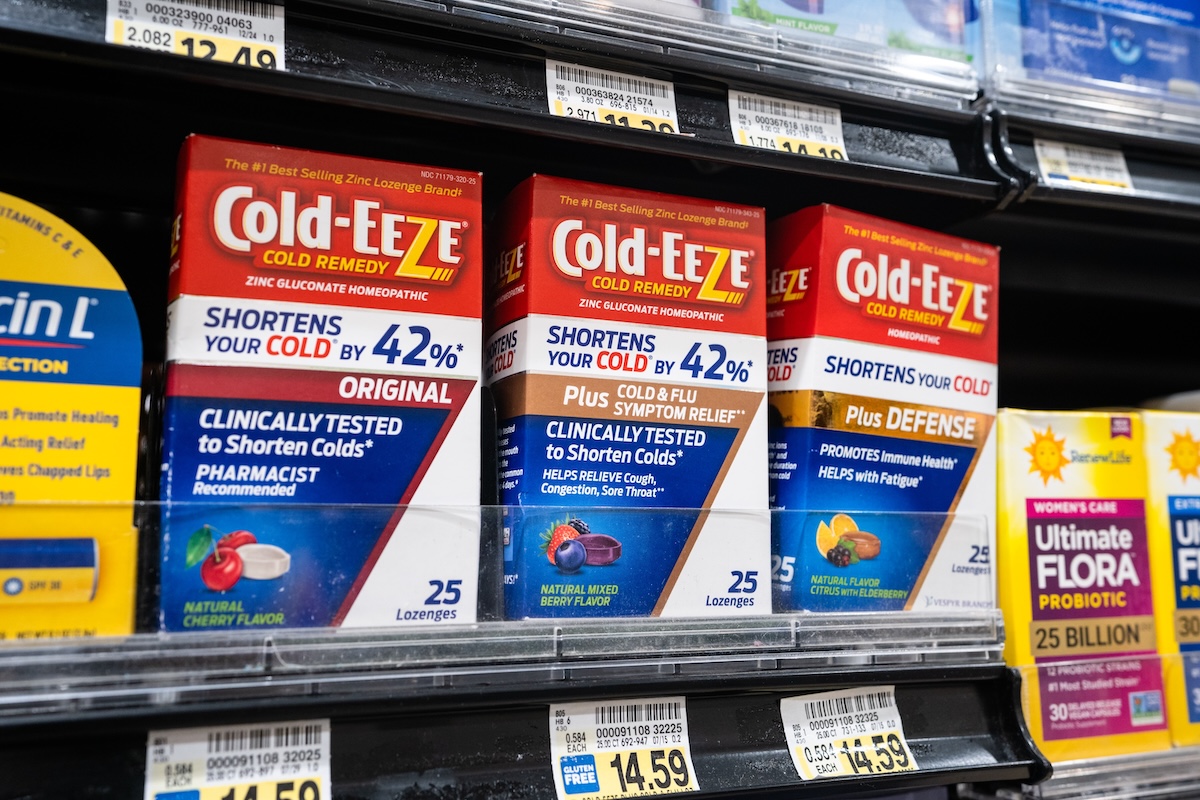
Common lozenge brands like Cold-EEZE contain around 11-13 milligrams each, meaning a person would need to consume six to seven lozenges a day to surpass that 75 milligram threshold. That may be more than what the package instructs you to take.
These zinc cold products can cause side effects, most commonly bad taste, nausea, and diarrhea — which people may decide isn’t worth it just to shave a few days off a cold. But in terms of safety, for a short cold treatment, these higher doses of zinc are unlikely to cause dangerous zinc toxicity.
“As far as we know, there are no serious risks to taking the lozenges for a few days,” said Dr. Mark H. Ebell, a family medicine professor at Michigan State University.
That doesn’t mean you should be taking this much zinc regularly. The recommended daily intake for adults is 8-11 milligrams, and you shouldn’t take more than 40 milligrams regularly as it can cause dangerous health effects like copper deficiency.
For someone with a bad cold, it may be worth a try, but don’t expect a miracle. And always talk to your doctor before adding a new supplement to your routine.
Our Sources
Email interview with Dr. Harri Hemilä, Department of Public Health at the University of Helsinki, Oct. 20, 2026
Email interview with Dr. Mark H. Ebell, Professor of Family Medicine at Michigan State University, Oct. 20, 2026
PolitiFact Vitamin C if you’re feeling sick: Evidence-based life hack? Or dated superstition?, Oct. 16, 2026
Harvard Health, Zinc: What it does for the body, and the best food sources, April 7, 2025
Cochrane Library, Zinc for prevention and treatment of the common cold – Nault, D, 2024
ABC News, Zicam Zinc Nasal Sprays May Damage Sense of Smell, FDA Says, June 16, 2009
NPR, FDA: Avoid Zicam Nasal Gels : The Two-Way, June 16, 2009
NPR, Lozenges With Zinc May Shorten A Cold’s Duration, Feb. 10, 2020
Keck Medicine, The Pros and Cons of Taking Zinc for a Cold, June 29, 2025
National Institute of Health, Zinc – Health Professional Fact Sheet, Jan 6, 2026
Fry’s Food, Cold-EEZE wild cherry zinc, accessed Oct. 20, 2026
Walgreens, Zinc cold therapy chewable tablets, accessed Oct. 20, 2026
The American Journal of Tropical Medicine and Hygiene, Zinc Supplementation Reduces Common Cold Duration among Healthy Adults: A Systematic Review of Randomized Controlled Trials with Micronutrients Supplementation, 2020
Cleveland Clinic, How Zinc Benefits Your Body — and How Much You Need Each Day, Oct. 20, 2025
Frontiers In Infectious Diseases, Shortcomings in the Cochrane review on zinc for the common cold, 2024
CIDRAP, Cochrane: Zinc may help shorten common cold, but more evidence needed | CIDRAP, May 9, 2024
BMC Family Practice, The effectiveness of high dose zinc acetate lozenges on various common cold symptoms: a meta-analysis, Feb. 2015
Annals of Internal Medicine, Zinc gluconate lozenges for treating the common cold. A randomized, double-blind, placebo-controlled study, 1996
The Open Respiratory Medicine Journal, Zinc Lozenges May Shorten the Duration of Colds: A Systematic Review, 2011
JRSM Open, Zinc lozenges and the common cold: a meta-analysis comparing zinc acetate and zinc gluconate, and the role of zinc dosage, 2017
Medical Hypotheses, Zinc lozenges as cure for the common cold–a review and hypothesis, 2010
Mayo Clinic, Zinc for colds: The final word?, April 30, 2025
Open forum infectious diseases, Zinc Acetate Lozenges May Improve the Recovery Rate of Common Cold Patients: An Individual Patient Data Meta-Analysis, 2017
BMJ Open, Zinc acetate lozenges for the treatment of the common cold: a randomised controlled trial, 2020
Danish Medical Bulletin, Zinc gluconate lozenges for common cold. A double-blind clinical trial, June 1990
Cleveland Clinic, Should You Try Vitamin C or Zinc for Colds?, Sept. 29, 2025
Mayo Clinic, Zinc, March 26, 2025