Why you shouldn’t stress about xylitol yet: News about the sweetener’s links to heart health lack important details

If your time is short
- Xylitol is a low-calorie sweetener added to products like chewing gum, toothpaste and candies. It also occurs naturally in fruits and vegetables and is produced by the human body.
- A not-yet published research paper found that higher levels of xylitol in blood samples was associated with increased heart attack and stroke risk six and 30 years later.
- It is not clear that the varying levels of xylitol in the samples were due to food consumption. Previous research linking xylitol levels to heart risk have been based on the human body’s natural levels, not food.
The low-calorie sweetener xylitol, found in chewing gum, jams, and cough drops, is making headlines as a potential heart risk.
Sounds alarming, but don’t clear out your pantry just yet. The findings come from research that hasn’t been peer-reviewed or published, and the xylitol levels the study detected could be from what human bodies naturally produce, not food.
Here’s what we know — and what we don’t — about this common sugar substitute.
What is xylitol?
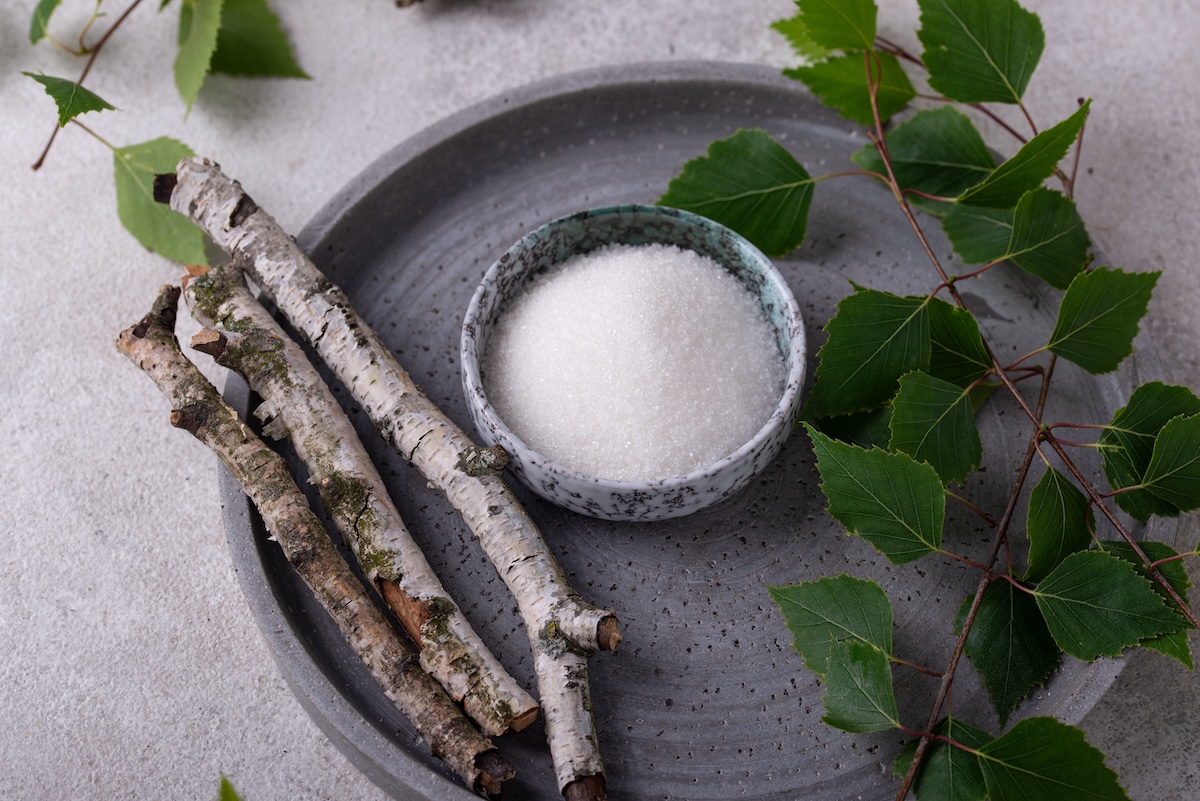
Xylitol is a naturally-occuring sugar alcohol compound. It is present in some fruits and vegetables and can be extracted from certain plant fibers.
Human bodies also produce xylitol during the normal processes of metabolizing glucose. A healthy person produces about 5 to 15 grams of xylitol a day.
In recent decades, xylitol has become a popular low-caloric sweetener — around 2.4 calories per gram compared to sugar’s 4 calories per gram.
What foods is it added to?
Xylitol is common in lots of sugar-free oral products because of its documented dental health benefits. You’ll find it in chewing gum, toothpaste, mouthwash, chewable vitamins, mints and cough drops.
Sugar-free syrups, jams, baked goods, and nut butters also commonly use xylitol, which can be bought in bulk for baking.
RELATED: The mixed science on diet sodas, and how to kick your habit
What did the study find?
Broadly, the study analyzed xylitol levels in people’s blood samples and compared them to how many of those people experienced a major cardiac event like a heart attack, stroke, or death in the years that followed.
The actual research paper has not yet been published, so there is a lot we don’t know about how the study was conducted, including: How many blood samples were taken? In what year? And was any dietary information collected?
Here’s what we do know. The study involved 17,710 participants from two cohorts. Researchers followed up with participants in one of the cohorts six years later, and they followed up with participants in the other cohort 30 years later.
In the six-year follow-up group, the people with the highest blood levels of xylitol had a 57% higher risk of a cardiac event than people with the lowest levels. In the 30-year follow-up group the risk was 18% higher. The study controlled for factors like age, sex, smoking status, lipid levels, diabetes, and hypertension.
The study’s author, Dr. Marco Witkowski, at the Charité University Hospital in Berlin, found similar results in a previous 2024 study with a three-year follow-up period: higher xylitol correlated with higher heart risk.
In that study, researchers also did some lab experiments with platelet samples and mice that showed xylitol may increase the risk of blood clotting. They also fed 30 grams of xylitol to people, but the sample size was small — 10 people.
This new study is observational, so it doesn’t prove that xylitol caused these negative heart effects. Rather, it raises questions for further research about whether xylitol levels in the blood can be a predictor of future heart risk.
What this new study doesn’t show
It doesn’t show this heightened heart attack and stroke risk is related to xylitol in food.
Human-produced and ingested xylitol molecules look identical, “and a blood concentration alone does not identify their source,” said Dr. Bettina Wölnerhanssen a professor at the University of Basel in Switzerland who has researched the sweetener.
Experiments show that xylitol from food isn’t detectable in blood levels for long. Witkowski’s own research found that xylitol levels returned to baseline within 4 to 6 hours after consumption.
If a patient doesn’t fast before giving the blood sample, their xylitol levels are just a snapshot of what they ate in the preceding hours — if they chose to chew gum, or have sugar-free jam on toast that morning — but not long-term dietary habits.
“There is currently no evidence that xylitol progressively accumulates in plasma with chronic consumption,” Wölnerhanssen said.
If a patient does fast before the sample, the detected xylitol levels would reflect what a person naturally produces.
That was the case in Witkowski’s 2024 study with a three-year follow up. Patients fasted before the blood sample, so the positive association with cardiac risk was with naturally occurring levels of xylitol, not from food.
Without reading the latest paper, we can’t confirm whether patients fasted before the blood sample, but the data collection protocol the two cohorts use indicates patients did not fast.
Scientists know how xylitol is produced in the body, but less about why one person may produce more than another. “Altered glucose metabolism, insulin resistance, oxidative stress, renal function, and other metabolic or disease-related processes have been proposed as possible influences,” Wölnerhanssen said.
It’s possible that higher natural xylitol production is related to negative cardiac outcomes — either as a cause or side effect of other dysfunction — but current research doesn’t prove that xylitol from food is the culprit.
Research would need to be replicated in larger controlled human trials before scientists make conclusions about xylitol’s cardiovascular risk, Wölnerhanssen said.
Should I throw out all my food with xylitol in it?
Close the cupboard. This research has yet to be peer-reviewed and published, so there is still a lot we don’t know. The older data we do have links cardiac risk to naturally elevated xylitol, not from food consumption.
If you have underlying heart issues or are already at risk for blood clots, it’s understandable if you’d rather err on the side of caution, but experts like Professor Kimber Stanhope, a nutritional biologist at University of California Davis, say this isn’t an excuse to switch to sugar.
“I have never seen anything in any non- or low-caloric sweetener that is as strong as the negative data I get with sucrose, high fructose corn syrup, and fructose,” Stanhope said, “and their effects on risk factors.”
Our Sources
Interview with Professor Kimber Stanhope, nutritional biologist at University of California Davis, Sept. 1, 2026
Interview with Dr. Bettina Wölnerhanssen, professor at the University of Basel in Switzerland, Sept 2, 2026
European Society of Cardiology, Xylitol may increase the risk of cardiovascular events, Aug. 26, 2026
Cardiovascular Research, Sweeteners: erythritol, xylitol and cardiovascular risk—friend or foe? | Cardiovascular Research, May 30, 2025
Harvard Health, Xylitol: What to know about this popular sugar substitute, Sept. 4, 2024
University of Colorado Anschutz, Fact or Fad? A Dentist Explains Whether Xylitol Really Prevents Tooth Decay, April 5, 2024
Nature Medicine, https://pubmed.ncbi.nlm.nih.gov/36849732/, March 2023
European Heart Journal, Xylitol is prothrombotic and associated with cardiovascular risk, July 2024
European Heart Journal, Xylitol exposure and cardiovascular risk, Nov. 2024
National Institutes of Health, Xylitol may affect cardiovascular health, June 25, 2024
The Guardian, Sweetener used in chewing gum and jam linked to strokes and heart attacks, Aug. 28, 2026
International Journal of Epidemiology, Cohort Profile: The Canadian Longitudinal Study on Aging (CLSA), 2019
University of Cambridge, EPIC-Norfolk: study design and characteristics of the cohort, 1999
Cleveland Clinic, Cleveland Clinic Study Links Xylitol to Heart Attack, Stroke, June 6, 2024
UCLA Health, Xylitol’s effect on the heart, March 13, 2026