We crunched the numbers: Trump devoted 45,000 words to construction like Reflecting Pool, ballroom
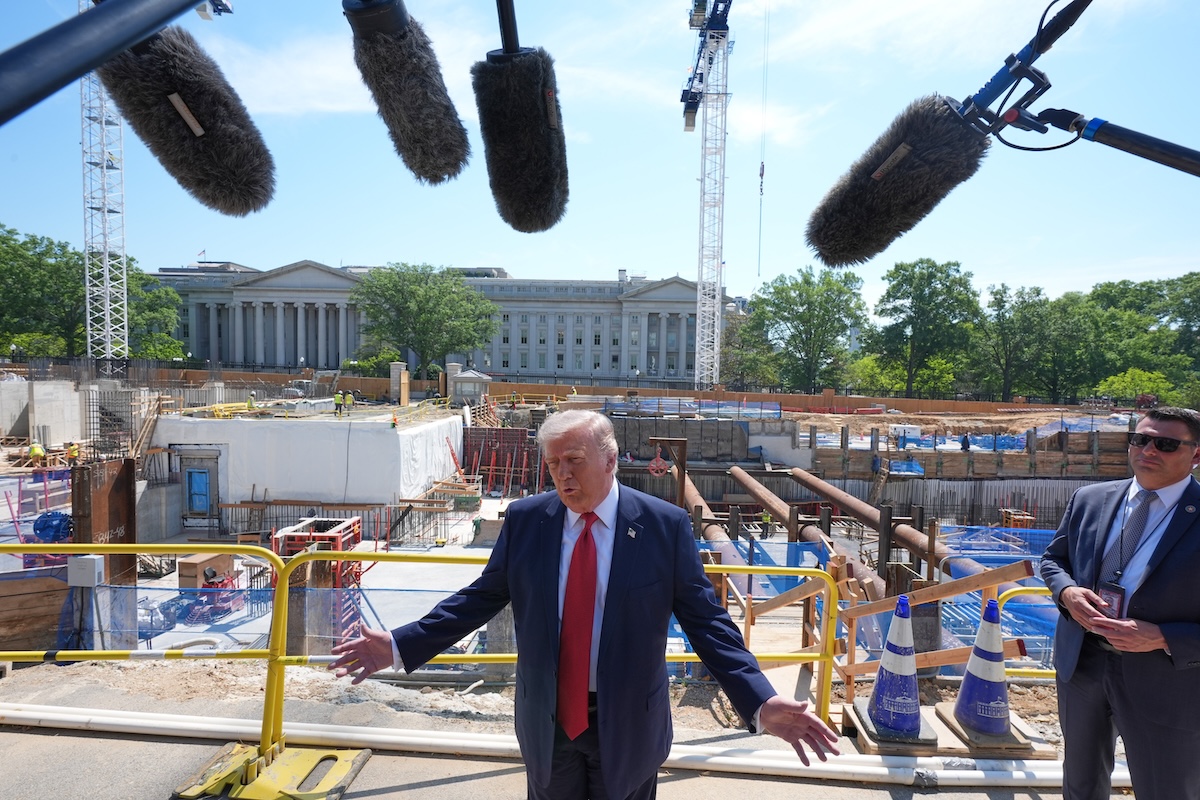


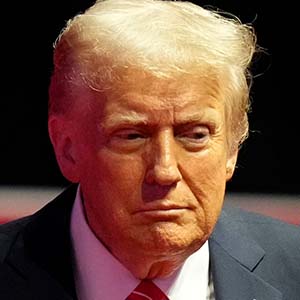
On a cool May evening, President Donald Trump stood at the under-construction Lincoln Memorial Reflecting Pool and spoke with reporters about the project, which would become a major focus of his public remarks over the next month.
Trump detailed the new “American flag blue” color and criticized former President Barack Obama’s efforts to improve the monument. A reporter asked Trump why he was focusing on construction projects during the Iran war.
“Because I want to keep our country beautiful, and safe,” Trump said. He berated the reporter for asking a “stupid question” and said crews had removed truckloads of garbage from the pool. “That’s not what our country is about. Our country’s about beauty, cleanliness, safety, great people. Not a filthy capital.”
The exchange captured a common theme in Trump’s public appearances since March. As the war in Iran continued and Trump navigated rising U.S. gasoline prices and low approval ratings, he zeroed in on his efforts to physically reshape the White House and Washington, D.C.
PolitiFact analyzed all of Trump’s public events and speeches over the first seven months of 2026 in which he mentioned his construction projects — including the White House ballroom and Reflecting Pool — and beautifying the nation’s capital. The records include official events, signing ceremonies, press conferences and prerecorded messages, covering Trump’s recorded, spoken words. They don’t include print interviews or posts from his Truth Social account, where he also frequently discusses the projects. (See how PolitiFact journalists used artificial intelligence, standard software and human analysis to compile this report.)
Trump’s remarks on the construction projects added up to nearly 45,000 words since January. He mentioned them at 84 events across 66 days, more than a quarter of all his public events during that period. In events where the construction projects came up, he’s talked more about the projects than topics such as the economy and immigration.
The only topic he talked about more during the events where he talked about construction was Iran and the Iran war, which took up nearly 56,000 words and came up in 73 of the 84 events.
But Trump returned to the construction projects repeatedly when he was the one choosing what to talk about. In the events where he mentioned construction, they were the No. 1 topic when he was making unprompted remarks, such as speaking before a bill or executive order signing. The Iran War led the list when he was responding to reporters’ questions.
The construction projects got only a few mentions from Trump in January and February. By May, though, he discussed them in nearly half of his public events and devoted increasing time to detailing the progress.
The fixation on the Reflecting Pool recently reached the courtroom after Trump said, without evidence, that vandals caused damage to the pool’s lining. On Aug. 6, a judge agreed to prosecutors’ request to drop felony charges against Olympic canoeist David Hearn. Earlier, prosecutors dropped misdemeanor charges against three others over alleged vandalism. In their request to withdraw charges against Hearn, prosecutors, led by U.S. Attorney Jeanine Pirro, said a “flawed installation by the contractor” caused the damage.
When contacted for comment, a White House spokesperson tied Trump’s projects to beautifying the United States and preparing for the 250th anniversary of the Declaration of Independence on July 4.
“No other president has done more to beautify our Nation’s interior than President Trump,” White House spokesperson Davis Ingle said in an email. “From restoring our treasured landmarks, which had suffered years of abuse and vandalism, to cleaning our parks and the Reflecting Pool, President Trump’s bold vision ensured that America rang in its 250th birthday celebration with glory and pride.”
It’s a window into how Trump views the presidency and the signs of effective government, political rhetoric professors say.
“The building and renovating reinforce a view of presidential power that I think has characterized Trump’s public rhetoric from the beginning,” said Sam Martin, a Boise State University associate professor and expert on political communication. “That effective government depends primarily on the judgment, instincts, and abilities of one exceptional individual rather than on constitutional processes or institutional collaboration.”
Despite Trump’s focus on the construction projects, Americans broadly disapprove of the ballroom and his other construction projects, according to a July Washington Post/Ipsos poll. The poll found that nearly 2 in 3 Americans are “dissatisfied” or “upset” with Trump’s projects, and about 1 in 3 are enthusiastic or satisfied. The split is largely along party lines: 90% of Democrats are upset or dissatisfied, while 68% of Republicans — and 86% of self-identified MAGA Republicans — are enthusiastic or satisfied.
‘We need the ballroom’: Trump focuses on space and security
By Trump’s telling, presidents have wanted a White House ballroom for 150 years.
His aspirations to build one have deep roots, going back as far as a 2011 conversation with David Axelrod, then a senior Obama adviser, when Trump offered to build a ballroom “free of charge.” He lamented in a 2015 speech that the White House had no large event space to host foreign dignitaries.
By February 2025, Trump was reviving the idea. He said visitors hosted on the White House lawn would get their feet wet when it rained.
“It would be, you know, a little embarrassing when you’re sitting down with the king of Saudi Arabia and he’s sitting in a puddle with four inches of water over his shoes,” Trump said at a Feb. 21 governors’ dinner.
By October 2025, demolition of the White House’s East Wing was underway, despite Trump’s assurances that the new ballroom wouldn’t interfere with the current building.
His comments shifted after the White House Correspondents’ Association dinner shooting in April. Although he had previously emphasized bullet-proofing and the military’s desire for the ballroom before the attempted assassination, he invoked the ballroom’s security aspects more often afterward. “This is why we have to have all of the attributes of what we’re planning at the White House,” he said, two minutes into his press briefing the night of the attack. He said the ballroom would have drone-proof and bullet-proof glass.
Trump often said the project was “under budget” and “ahead of schedule.”
The White House initially said in 2025 that the ballroom would cost $200 million when announcing the project. Later, Trump said he had doubled the ballroom’s size “at the request of the military” and it would cost $400 million, paid for by him and wealthy donors, including Apple and Microsoft.
He repeatedly said no taxpayer money would be used. The Washington Post obtained a contractor estimate in March that showed more than half of the $600 million projected cost could come from taxpayers.
Trump’s background as a real estate developer informs his emphasis on the projects, said University of Kansas rhetoric and political communication professor Robert Rowland.
His focus “reflects a sense that projects that gleam (sometimes literally) will be viewed very favorably by the public,” Rowland wrote in an email.
Martin said the comments also reflect a broader theme in Trump’s communication, emphasizing a leader who makes decisions based on his own judgment and perceived capability, rather than as part of an institutional effort.
On Aug. 7, a federal appeals court ruled that Trump cannot continue building the ballroom without approval from Congress. Trump said he would appeal the ruling to the Supreme Court.
Trump compared his Reflecting Pool costs with his predecessors, citing inconsistent amounts
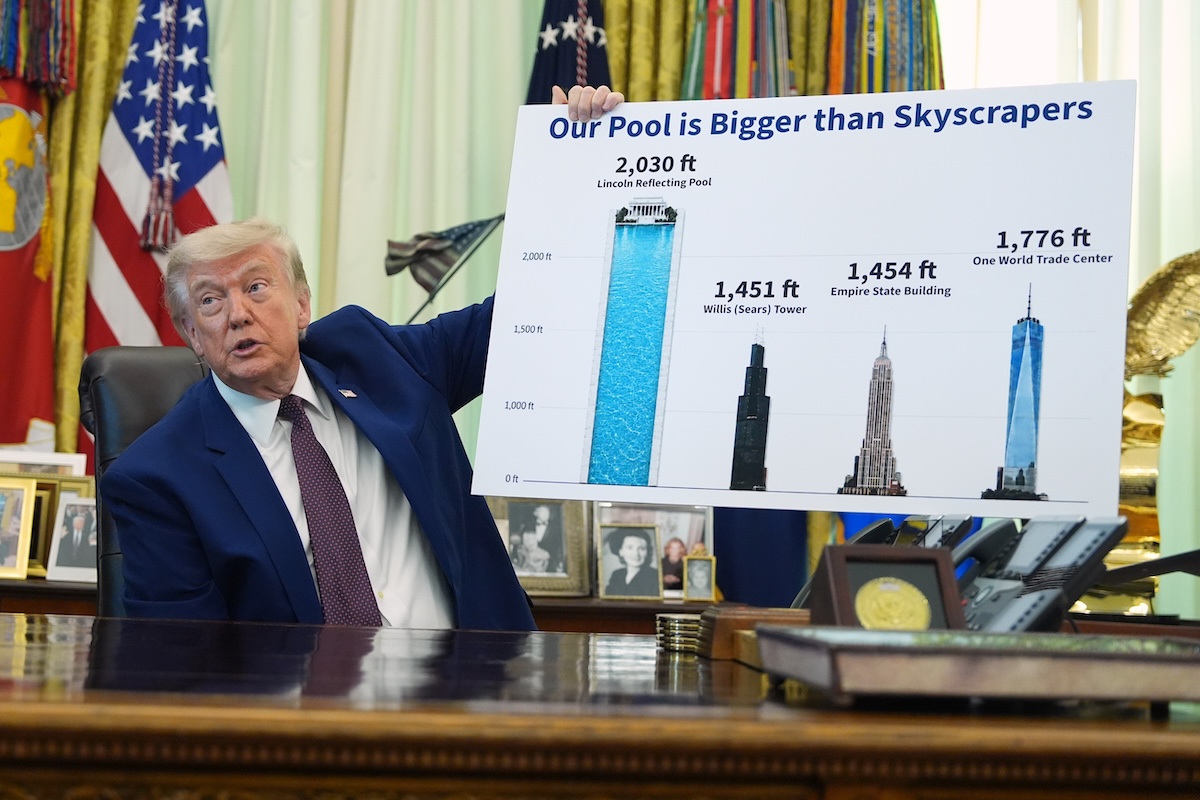
As the 250th anniversary of the Declaration of Independence neared, Trump turned his attention to the Reflecting Pool. In a prerecorded video posted April 23, he talked about the pool’s disrepair and how he planned to fix it. Trump mentioned the pool again that same day, at an event on healthcare affordability.
His focus on the Reflecting Pool picked up in May, when he mentioned it in 10 of 37 events and devoted close to 6,600 words to the project. In the events where he mentioned it, it took, on average, about 10% of his speaking time.
While some repair estimates amounted to $300 million, he said, he could do a better job for much cheaper.
In April, Trump’s initial projected cost for the Reflecting Pool was between $1.5 million to $2 million. By June, the range increased to $10 million to $16 million.
He cited inconsistent or incorrect figures about how much repairs cost under his predecessors. For example, on May 7 he said repairs cost $38 million under Obama, but on May 30, he said repairs cost $100 million under Obama. And despite the fact that the Biden administration did no major repairs to the Reflecting Pool, Trump said Obama and Biden spent $200 million on it.
Records show the Obama administration spent $35 million on the pool.
In June, when the new liner started peeling off the bottom of the Reflecting Pool, the administration blamed it on vandals. A lack of evidence and other investigations cast doubt on that explanation even before prosecutors dropped the vandalism theory and dismissed charges.
Trump was not convinced by the Justice Department’s conclusion that shoddy contractor work caused the damage. In an Aug. 3 event, Trump told a reporter that Pirro “made a mistake” and said he had video evidence of vandalism.
On Aug. 9, Trump said in a Truth Social post that there was “some contractor error” because the job was rushed for the July 4 celebrations. He continued to maintain that vandals damaged the pool, pointing to a National Park Service employee’s testimony, but said “there is no video or proof, other than the damage, itself.”
Trump calls real estate instinct ‘second nature’
The ballroom and Reflecting Pool accounted for about 65% of Trump’s spoken words about construction projects, but he added a growing list of projects throughout the year.
After Trump’s appointed board voted to attach his name to the John F. Kennedy Center for the Performing Arts, he critiqued the building’s condition and detailed plans to update and rebuild it. He often mentioned his remodeling of the White House — replacing marble floors, fixing cracking paint, installing a granite walkway and planning an “Upper West Wing.”
“I love doing it,” he told reporters in January of updating the White House. “I do it second nature. That’s why I was good at real estate.”
Other projects included the proposed 250-foot Triumphal Arch and the National Garden of American Heroes.
Trump isn’t the first president to prioritize preservation, maintenance and national beautification.
Harry Truman undertook a renovation of the White House in 1948, when the deteriorated building was at risk of collapsing. First lady Jacqueline Kennedy worked on a major historical restoration effort at the White House, consulting historians and curators to source antique furniture and display the White House as a symbol of American history. Ronald Reagan, Bill Clinton and Obama all dedicated new national memorials during their tenures.
“Trump’s rhetoric is different because the projects become extensions of his own identity,” Martin said. “Rather than emphasizing preservation or stewardship, he often speaks about construction as evidence of his own judgment, taste, and effectiveness.”
Allison Prasch, University of Wisconsin-Madison associate professor of rhetoric, politics and culture, said Trump was willing to disregard what subject matter experts, historical preservationists and government officials recommended.
“The nation’s capital city was built to be seen and to display stories and symbols of what this nation has been, is, and will be,” she said. “Trump wants to shape this national narrative, and do so in a way that his influence and eminence will outlast himself.”
PolitiFact Staff Writers Alex Min, Gracey Abernethy and Maria Briceño contributed to this report.
Our Sources
PolitiFact’s disclosure of AI use in compiling this report
YouTube video by DRM News, LIVE: President Donald Trump Speaks to Reporters at Lincoln Memorial Reflecting Pool | AC1G, May 7, 2026
The Washington Post, Trump approval stuck in the 30s amid pessimism on Iran and economy, poll finds, July 16, 2026
PolitiFact, U.S. Attorney Jeanine Pirro fact-checks Trump on Reflecting Pool ‘vandalism’, Aug. 4, 2026
Emailed statement from White House spokesperson Davis Ingle, July 10, 2026
Email interview with Sam Martin, associate professor, Boise State University, July 13, 2026
Email interview with Robert Rowland, rhetoric and political communication professor, University of Kansas, July 10, 2026
Interview with Allison Prasch, associate professor of rhetoric, politics and culture, University of Wisconsin-Madison, July 12, 2026
Washington Post, From gulf spills to White House frills, Trump has it covered, April 26, 2011
Roll Call/Factbase, Remarks: Donald Trump Addresses the FITN Republican Leadership Summit – April 18, 2015
Roll Call/Factbase, Remarks: Donald Trump Signs an Executive Order on Gender and Sports – February 5, 2025, Feb. 5, 2025
YouTube video by The White House, The President and First Lady Participate in a Governors Dinner, Feb. 21, 2026
PolitiFact, President Donald Trump said his new ballroom ‘won’t interfere with the current building.’ Full Flop!, Oct. 22, 2025
YouTube video by the Associated Press, LIVE: Trump speaks after incident at White House correspondents dinner, April 25, 2026
Associated Press, White House announces new $200M ballroom as part of Trump’s latest makeover of ‘The People’s House’, Oct. 22, 2025
The Washington Post, Trump said no taxpayer money would be spent on the ballroom. A contractor’s invoices show otherwise., June 16, 2026
Politico, Appeals court blocks Trump’s White House ballroom renovation, Aug. 7, 2026
Donald Trump, Truth Social Post, Aug. 7, 2026
YouTube video by The White House, President Trump Visits White House Ballroom Construction, May 19, 2026
NPR, Republicans want to add $1 billion for Trump’s ballroom security to ICE funding plan, May 6, 2026
YouTube video by The White House, President Trump Participates in an Executive Order Signing, April 30, 2026
YouTube video by The White House, President Trump is Making the Reflecting Pool Beautiful Again, April 23, 2026
PolitiFact, Looking into the Reflecting Pool: We examined Trump’s vandalism claims, June 26, 2026
The Washington Post, Reflecting Pool peeling probably caused by application flaws, experts say, July 16, 2026
YouTube video by The White House, President Trump Signs an Executive Order, Aug. 3, 2026
Donald Trump, Truth Social post, Aug. 9, 2026
YouTube video by The White House, President Trump Participates in a Meeting with the Secretary General of NATO, June 24, 2026
YouTube video by Roll Call Factbase Videos, Press Gaggle: Donald Trump Speaks to Reporters at a Movie Premiere – January 29, 2026
White House Historical Association, The White House is Falling Down, accessed July 19, 2026
JFK Presidential Library, The White House Restoration, Nov. 25, 2025
Washington Post, We asked 2,600 Americans about Trump’s ballroom, pool and arch projects. Here’s what they said., July 23, 2026
PolitiFact, U.S. Attorney Jeanine Pirro fact-checks Trump on Reflecting Pool ‘vandalism’, Aug. 4, 2026