North Carolina “processed 1,031,350 duplicate (voter) registrations.”

Did North Carolina ‘process’ more than 1 million duplicate voter registrations?
If your time is short
- More than 1 million North Carolinians filed duplicate voter registrations prior to the 2024 elections, according to the U.S. Election Assistance Commission.
- The state elections board says those voters weren’t added to its rolls a second time.
- The board says the duplicate registrations had “absolutely no relationship” to the 2024 election results.
A social media post viewed by more than 100,000 accounts claims that North Carolina “processed” more than a million voter registrations.
“Governor Josh Stein won North Carolina by 828,187 votes. North Carolina processed 1,031,350 duplicate registrations,” Shiloh Marx, president of the Integrity First Alliance, said in a July 20 X post.
Integrity First Alliance advocates for state elections leaders to update and clean voter rolls. Marx’s post referenced North Carolina Gov. Josh Stein’s margin of victory over Republican Mark Robinson in the state’s 2024 gubernatorial election.
In response to the post, some social media accounts questioned whether people voted twice.
The post raised two key questions: Did North Carolina election officials really “process” a million duplicate registrations? And, if so, did it have any bearing on the state’s 2024 elections?
Not exactly.
The figure in the post — 1,031,350 — comes from a recent report published by the U.S. Election Assistance Commission, an independent government agency that provides election administration guidance. The report described how the 2024 federal general election was administered and how voters cast their ballots.
The statistic represents the number of registered North Carolina voters who submitted new registration applications that contained no changes to their personal information, said Kristen Muthig, a spokesperson for the commission.
“These can be registrations submitted by people who did not realize they were already registered to vote or who submitted multiple registration transactions through different modes (e.g., submitted a registration with the exact same information through the mail and online),” Muthig said in an email. She referred specific questions about North Carolina to the state’s elections board.
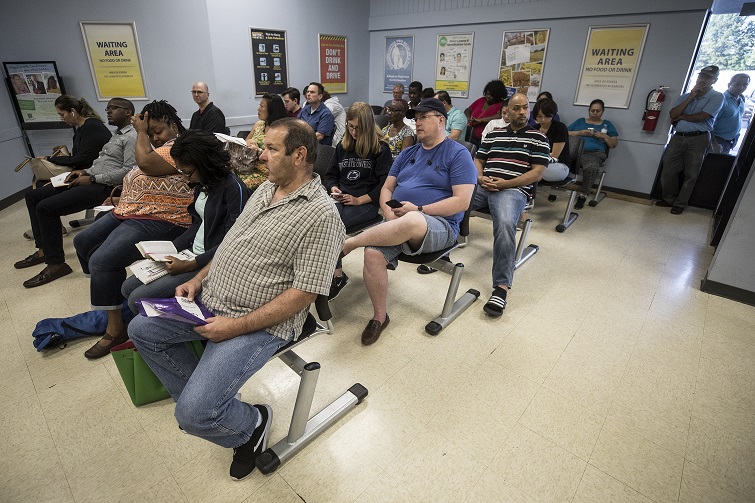
Patrick Gannon, a spokesperson for the state board, said North Carolina often receives duplicate registrations when someone who is already registered fills out a new form at the Division of Motor Vehicles, or as part of a voter registration drive.
North Carolina isn’t alone; the commission found duplicate registrations in other states too: California had nearly 2.2 million; Michigan had nearly 1.9 million; and Virginia had about 1 million. The report notes: Some of the registration transactions processed by states do not result in the creation or the update of a registration record.
Between 2023 and August 2024, county elections boards in North Carolina removed more than 747,000 ineligible registration records from the state’s voter rolls. The state board noted in September 2024 that, although election officials regularly check voter rolls for accuracy, some ineligible registrations take longer to identify. Official death records may not reach election officials until weeks after a voter dies, for example.
Eventually, though, list maintenance processes catch up and those ineligible voters are removed from the rolls, the board said. It also noted that the mere presence of ineligible individuals on the rolls doesn’t mean voter fraud will occur.
While North Carolina’s DMV might “process” duplicate voter registrations, Gannon said the duplicate registrations in North Carolina were never added to the state’s rolls. That means the duplicate registrations Marx referenced had no bearing on the 2024 elections, Gannon said.
Here’s how it works:
- When a county elections board receives registration forms from the DMV, local election officials log them into a statewide voter registration database.
- The state’s database scans the person’s information — their name, date of birth, address, and driver’s license number or the last four digits of their Social Security number — to see if they are already registered.
- If the system finds two records that might belong to the same person, election officials investigate the records to determine whether they actually are the same person. If an application comes from someone who is already registered, the old registration is removed.
- In the unlikely event that a voter is registered twice, the state has numerous checks to prevent someone from voting twice. Electronic pollbooks with information about who has already voted are used at every early voting site. If a voter who has already voted tries to check in again, they will be prevented from casting a regular ballot and would instead be offered a provisional ballot. County election workers would then research the voter’s registration status on Election Day to determine whether the ballot should count.
The bipartisan state elections board certified the 2024 contest results unanimously, and post-election audits across the state haven’t found evidence of widespread fraud.
“These duplicate numbers have absolutely no relationship to the difference in vote totals for candidates in a contest,” Gannon said in an email. “Unfortunately, this post will serve only to mislead unsuspecting readers who don’t understand the process and hurt voter confidence in elections.”
Marx didn’t respond to requests for comment.
Our ruling
Marx said North Carolina “processed 1,031,350 duplicate registrations,” noting that Stein won the 2024 gubernatorial election by fewer votes. The comments left some people with the impression that some voters had the ability to vote twice — and that Stein may have benefitted from duplicate registrations.
More than 1 million North Carolinians who were already registered to vote filled out a second registration application prior to the 2024 elections, according to the U.S. Election Assistance Commission.
Those applications were technically “processed” but that doesn’t mean voters were added to the voter rolls a second time. They were not. State election officials say their applications had “absolutely no relationship” to the gubernatorial race, or any other of the state’s 2024 elections. And, to date, election audits haven’t found evidence of widespread fraud.
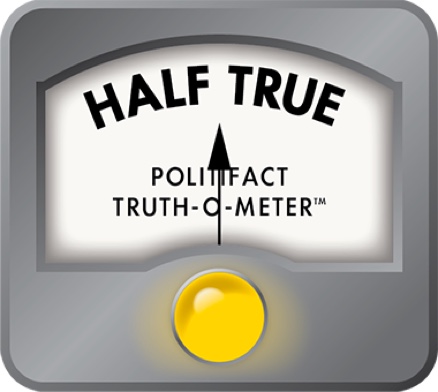
The post is partially accurate, but it leaves out important details. We rate it Half True.
Our Sources
X post by Shiloh Marx, president of the Integrity First Alliance, July 20, 2026.
Report published by the U.S. Election Assistance Commission, June 2025.
Email correspondence with Kristen Muthig, spokesperson for the U.S. Election Assistance Commission.
Email correspondence with North Carolina State Board of Elections spokespeople Patrick Gannon and Jason Tyson.
Press release by the N.C. State Board of Elections, “NC Election Officials Removed Nearly 750,000 Ineligible Registrants Since Start of 2023,” Sept. 26, 2024.