U.S. Sen. Jon Ossoff “voted against the Laken Riley Act.”

Mike Collins falsely says Jon Ossoff voted against the Laken Riley Act
If your time is short
- U.S. Sen. Jon Ossoff voted for the 2025 Laken Riley Act, named after a 22-year-old Georgia nursing student killed by an immigrant in the U.S. illegally.
- U.S. Rep. Mike Collins has criticized Ossoff for previously voting against a procedural issue related to immigration.
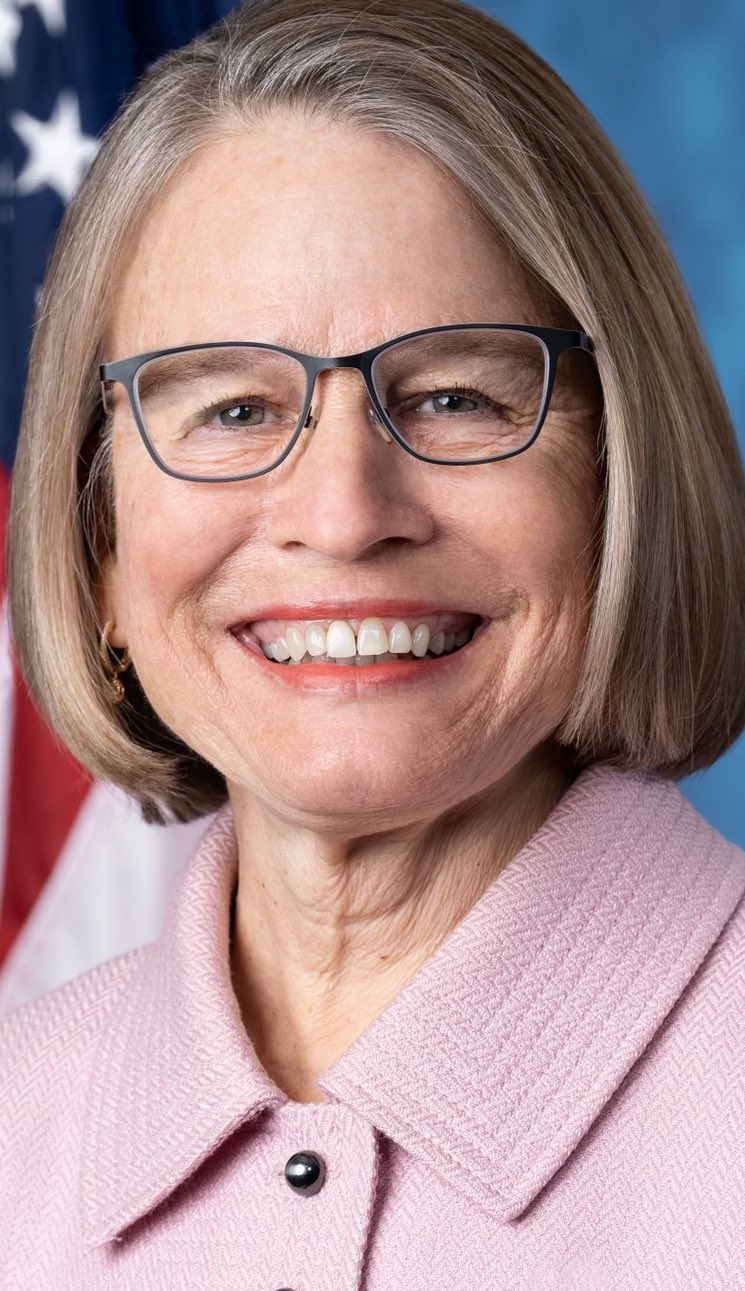
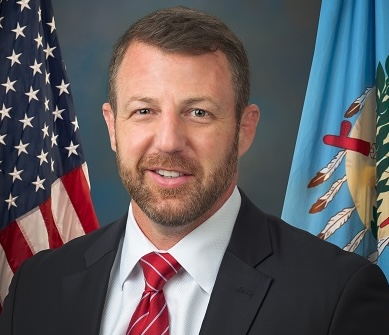
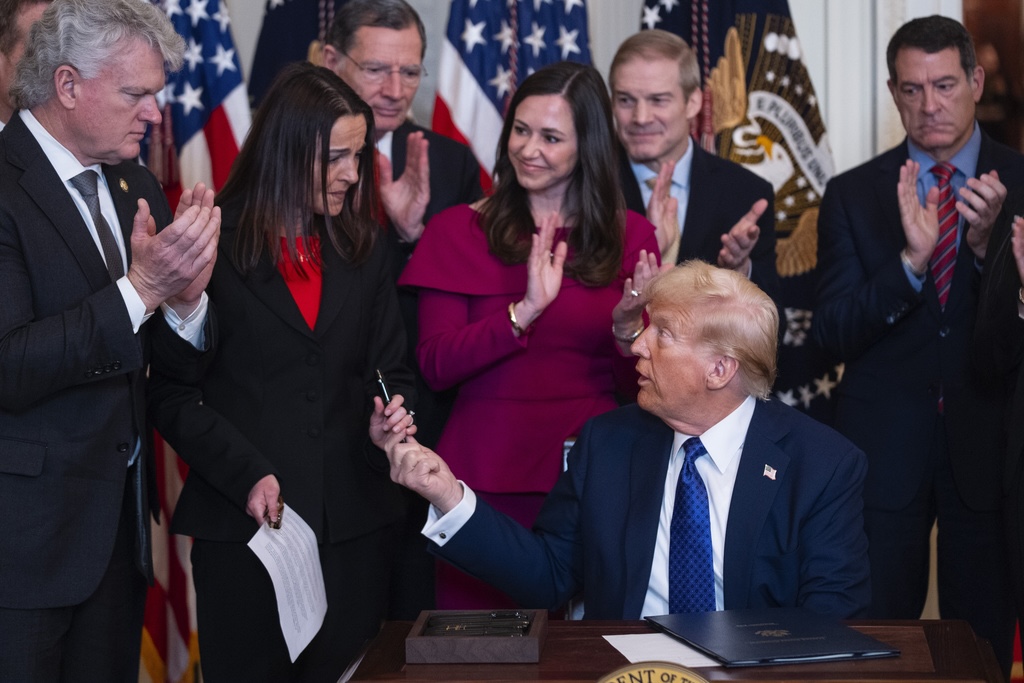
The first bill President Donald Trump signed in his second term was the Laken Riley Act, named after a 22-year-old Georgia nursing student killed by an immigrant in the country illegally. Standing nearby wearing a black suit and a gray mullet was the bill’s author, U.S. Rep. Mike Collins, R-Ga.
Collins, the Senate hopeful running against Democratic U.S. Sen. Jon Ossoff, often talks about the law as he travels the state to gather support, framing it as another area where he and Ossoff are different.
“The socialist wing of the Democrat Party has taken over, and Jon Ossoff is leading the charge. He voted against the Laken Riley Act when he had the chance to save lives,” Collins posted July 21 on X.
Collins’ post drew a correction from X users in the form of a community note that read, “Jon Ossoff voted Yes on the Laken Riley Act,” with a link to the Jan. 20, 2025, vote record.
The socialist wing of the Democrat Party has taken over, and Jon Ossoff is leading the charge.
He voted against the Laken Riley Act when he had the chance to save lives.
He voted to let men compete against women in sports…three separate times.
He was the deciding vote on…
— Mike Collins (@MikeCollinsGA) July 21, 2026
PolitiFact checked the record, and the community note is right.
Collins has not offered clarification, though he later shared a post from another X user who said Ossoff changed his support once it became clear the bill would pass.
Collins has sometimes said Ossoff eventually supported, or “came around,” on the bill. But in the July 21 post, he skipped that context.
The Collins campaign declined to comment.
What was the Laken Riley Act?
The law requires Immigration and Customs Enforcement to issue detainers and take into custody people in the country illegally who are suspected of committing theft-related crimes, including shoplifting, as well as more violent offenses, such as causing death or serious bodily injury to another person and assaulting a law enforcement officer.
Riley, an Augusta University nursing student, was found dead Feb. 22, 2024, on the University of Georgia campus. Her death, the first on-campus killing in decades, rocked the college town. José Antonio Ibarra, a Venezuelan man whom authorities said had entered the U.S. illegally in 2022, was sentenced to life without parole after being convicted of 10 charges, including murder and aggravated assault with intent to rape.
Before Riley’s death, in October 2023, law enforcement issued Ibarra a citation after allegedly shoplifting. He failed to appear in court, triggering a bench warrant. He killed Riley about four months later.
Republicans, including President Donald Trump during the 2024 campaign, referenced Riley’s death as an example of why the country needed a more punitive immigration process.
Ossoff’s approach on the bill
On March 1, 2024 — a week after Riley’s killing — Collins introduced the House version of the Laken Riley Act, and the Republican-led chamber approved the bill 251-170 about a week later.
The Republican-sponsored version lacked support in the Senate, which was controlled by Democrats, so the GOP tried other ways to force a vote on the issue.
Ossoff, along with 50 other Democratic and independent senators, voted down a March 23, 2024, procedural measure to the federal appropriations package that would have offered a GOP-led amendment prohibiting immigrants in the country illegally who were charged or accused of certain theft-related crimes from obtaining legal status.
Collins has pointed to this vote as evidence of Ossoff’s opposition to the Laken Riley Act, but the vote was not directly on that bill, and the GOP amendment was also different from the bill.
“Collins is not making that distinction,” The Atlanta Journal-Constitution wrote July 24, 2026, in its analysis of Collins’ attack.
After the 2024 election gave Republicans a trifecta of political power, Republicans, led by Collins in the House, reintroduced the Laken Riley Act. Ossoff, along with 11 other Senate Democrats, joined Republicans in passing it 64-35 on Jan. 20, 2025.
PolitiFact searched news archives and social media for public comments from Ossoff about his vote for the bill and did not find much. Ossoff addressed the Georgia State Senate in February 2024, expressing “our shock and outrage at this horrific murder of a young woman Laken Riley in Athens, a nursing student with a bright future.”
When asked for comment, the Ossoff campaign pointed PolitiFact to his comments from a Jan. 22, 2025, interview with Georgia radio station 95.5 WSB:
“Laken Riley was my constituent, and her family are my constituents. And she never should have been killed. It was preventable. And I think that Georgians and the American public are rightly fed up and frustrated with the non-enforcement of immigration law. Now, there were some changes I would have liked to have seen made. We’re going to have to be vigilant as we move forward, that we defend our borders and enforce our immigration laws, and also be mindful of the human and civil rights of all human beings in our country. That’s a balance we’ll have to strike moving forward.”
Our ruling
Collins said Ossoff “voted against the Laken Riley Act.”
Republicans including Collins have pointed to Ossoff’s March 2024 vote against a procedural measure that would have offered a GOP-led amendment to another bill. But that was not a vote on the act itself. When the bill came up in the Republican-controlled Senate on Trump’s first day back in office, Ossoff voted for it.
Collins has described Ossoff’s votes more precisely on other occasions, but his July 21 X message sent the wrong impression to Georgia voters on a high-profile crime in their state.
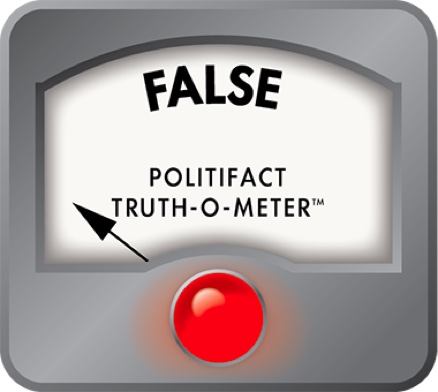
The statement is not accurate. We rate it False.
Our Sources
Mike Collins personal X account, post, July 21, 2026
X help center, “About Community Notes on X,” accessed July 25, 2026
X, community note, July 21, 2026
Congressional record, vote, Jan. 20, 2025
Greg Price X account, post, July 21, 2026
Mike Collins campaign X account, post, June 17, 2026
Mike Collins personal X account, post, July 7, 2026
Mike Collins campaign X account, post, June 26, 2026
U.S. Government Publishing Office, Laken Riley Act, accessed July 28, 2026
U.S. Immigration and Customs Enforcement, “Immigration Detainers,” accessed July 28, 2026
The Red & Black, “One year later: A look at the legacy of Laken Riley’s murder,” Feb. 22, 2025
The Atlanta Journal-Constitution, “Trump signs the Laken Riley Act into law,” Jan. 29, 2025
The Red & Black, “Jose Ibarra sentenced to life without parole for Laken Riley murder,” Nov. 20, 2024
Oklahoma Republican Sen. James Lankford (R-Okla.) news release, “Lankford Demands Information on Illegal Immigrant Charged with Murder of Laken Hope Riley,” March 13, 2024
Congressional record, H.R. 7511 co-sponsors, accessed July 25, 2026
Congressional record, vote, March 7, 2024
Congressional record, vote, March 23, 2024
The Atlanta Journal-Constitution, “New Georgia poll shows Ossoff leading, governor’s race deadlocked,” July 24, 2026
The Associated Press, “Republicans win 218 US House seats, giving Donald Trump and the party control of government,” Nov. 14, 2024
Roll Call, “These 12 Democrats voted for the GOP immigration bill dubbed the Laken Riley Act,” Jan. 20, 2025
Congressional record, vote, Jan. 20, 2025
Georgia State Senate YouTube account, video, Feb. 26, 2024
95.5 WSB, “Catching up with Georgia Sen. Jon Ossoff,” Jan. 22, 2025