Did you know most of your daily online activities rely on data centers? Here’s how it works
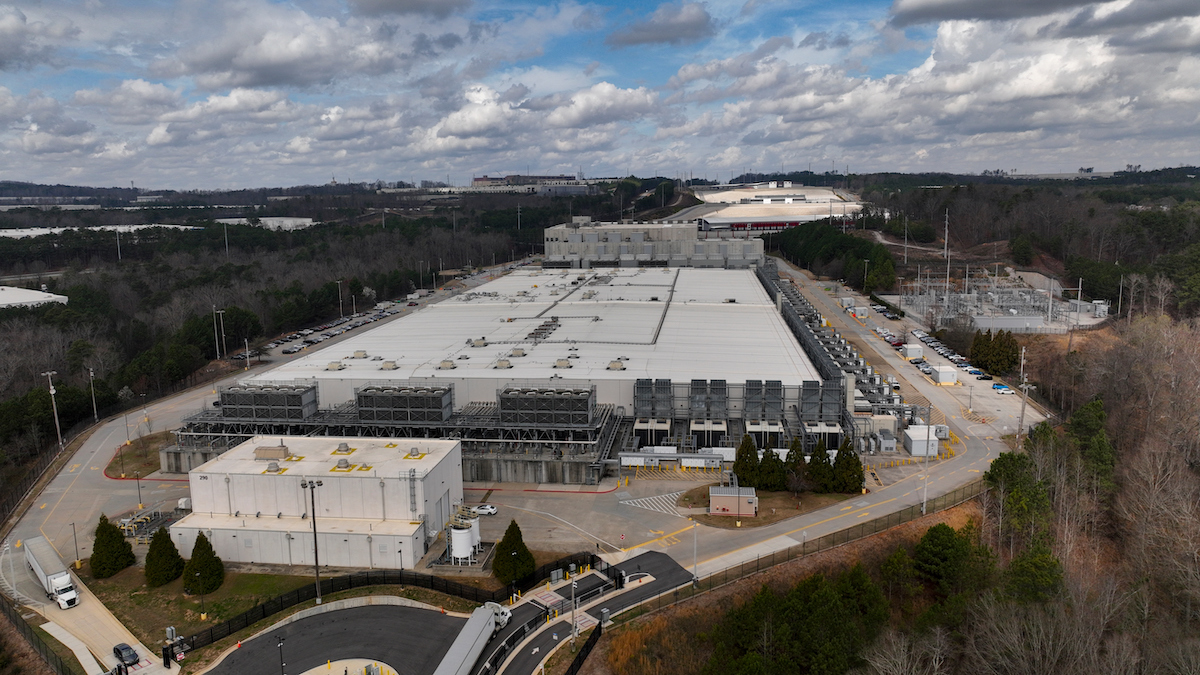

Whether on social media or in real life, you might have heard someone — perhaps even political candidates this midterm cycle — talk about data centers. Some welcome them, others shun them.
So, what are these facilities?
They help power everyday tasks such as streaming shows, using Apple Pay, social media or asking a chatbot questions. These activities rely on computers and networks housed in data centers.
While data centers are not new, growing numbers of them have been built around the country in the last few years, increasing locals’ concerns about the sites raising electric bills and depleting water sources. Some hopefuls for elected office have called for regulations while others have boasted about the potential economic boon.
President Donald Trump said he wants the U.S. to have more data centers, including by leasing federally-owned land. His administration is easing federal regulations to accelerate approval processes and the construction of new infrastructure to power those facilities.
Here, we’ll explain: what are data centers, how do they operate, what is artificial intelligence’s role and what it could mean for communities when a data center opens nearby.
Data centers: An overview
The term “data center” generally refers to the physical building that houses powerful computers (usually thousands of them), data storage systems and networking equipment. These facilities are active 24/7 storing and managing the data associated with different web applications and services.
“The machines stay on and stay busy,” said Dimitrios Nikolopoulos, a Virginia Tech engineering professor.
The average data center is about 100,000 square feet, comparable to the average Walmart Supercenter or Costco warehouse.
Data centers have been around for decades; the first one in 1945 housed the world’s first programmable computer designed to calculate U.S. Army artillery fire during World War II.
Early data centers ran databases, email, and web hosting, using a modest amount of power that varied throughout the day, Nikolopoulos said. Today’s data centers use considerably more electricity because of the larger amount of information they process, he said.
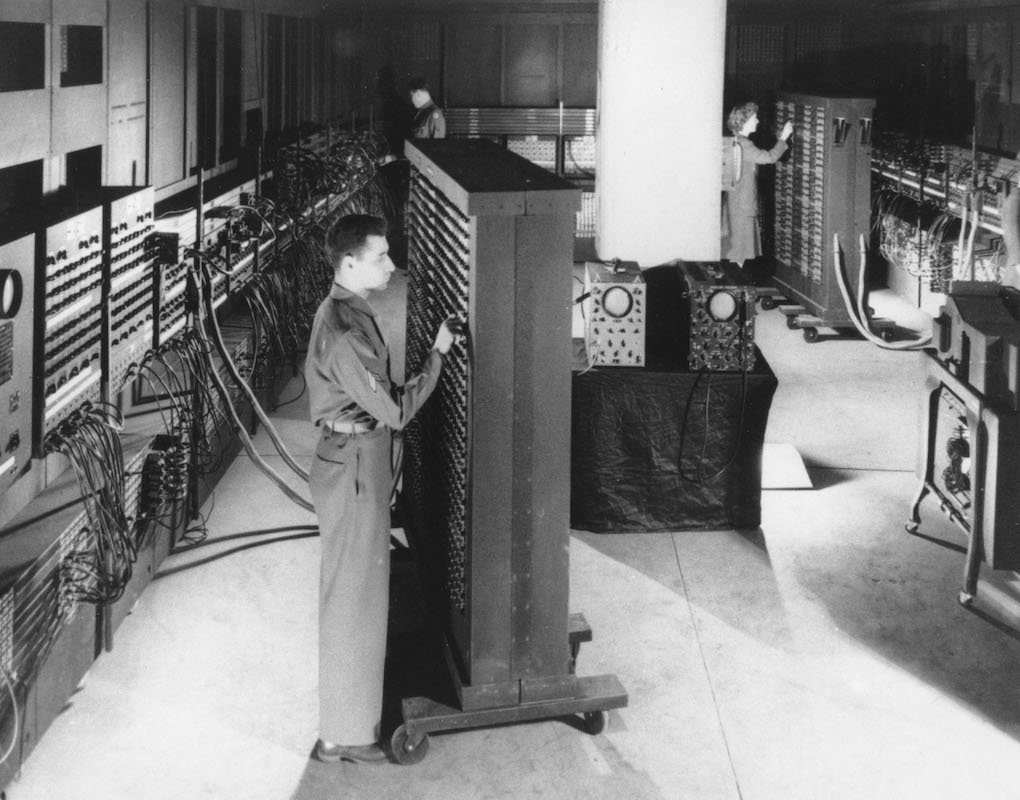
This 1946 photograph shows ENIAC, a 30-ton electronic machine at the University of Pennsylvania. In the 1980s the National Society of Professional Engineers named ENIAC as one of the 10 most outstanding engineering achievements of the past 50 years. (AP)
What do data centers need to function?
At their most basic, the computers in these centers need electricity to operate and cooling systems that use water to keep the equipment from overheating.
A typical AI data center can consume as much electricity annually as 100,000 households; the largest data centers under construction will demand 20 times that amount, the International Energy Agency estimated in 2025.
In 2024, data centers worldwide consumed about 415 terawatt hours, or about 1.5% of the world’s total electricity use, according to the International Energy Agency.
The Lawrence Berkeley National Laboratory, a federal research center, in a June report said that by 2030, the total power demand for data centers would account for 9.5% to 15.3% of that year’s total U.S. electricity consumption.
The facilities use freshwater, usually from local municipal water systems, to cool the computers. (Other types of water, such as saltwater, could clog and damage equipment as the water evaporates and leaves behind salt and other mineral deposits).
The centers have large air conditioning units, fans and chilled water pipes that cool the computers, which generate a lot of heat while continuously running.
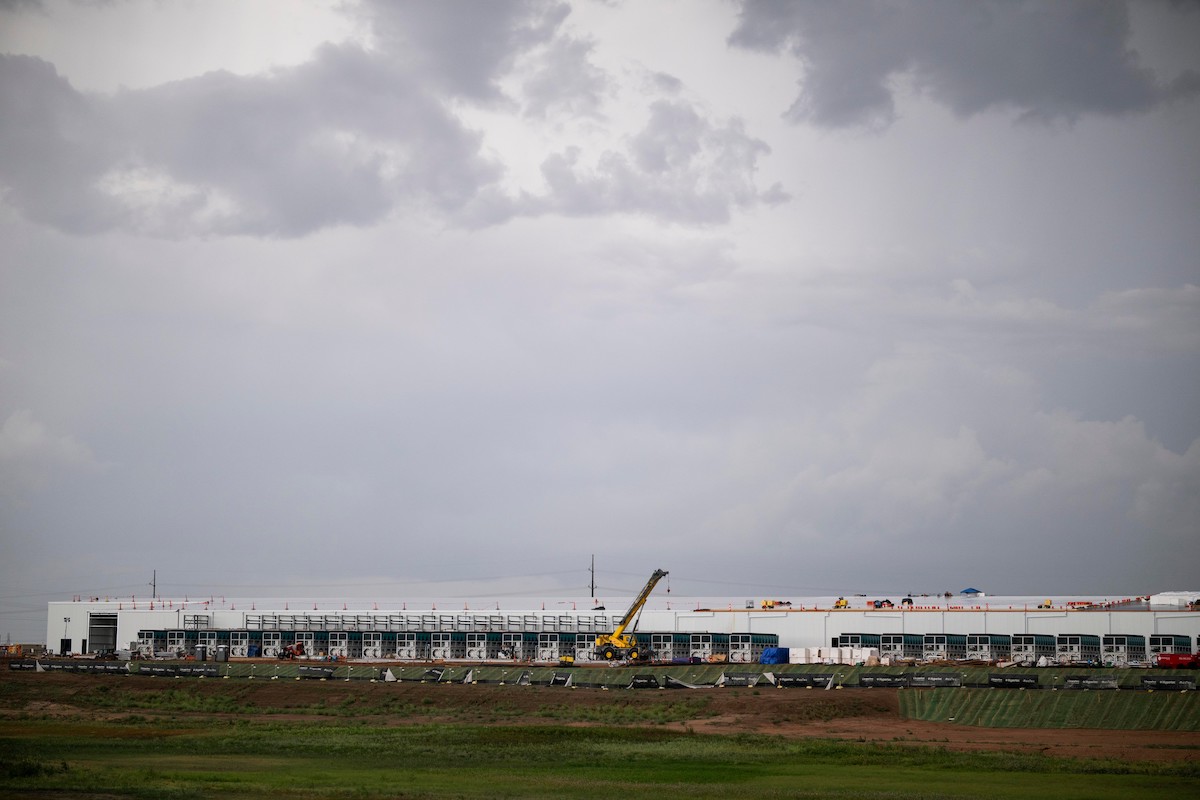
The site of a future data center being built near Abernathy, Texas, July 18, 2026, in Hale County, Texas. (AP)
The link between data centers and our increasing use of artificial intelligence
Artificial intelligence allows computers to perform human-like tasks, including perceiving, reasoning, learning and problem solving. An AI system trains on enormous amounts of data.
“Every day digital communications like the internet, banking, healthcare systems, cloud computing/gaming, and websites all use remote servers and therefore data centers,” said via email Ke Xu, a Rochester Institute of Technology professor who develops energy efficient AI hardware. “AI changed the scale and type of computing, and the intensity normal people use them.”
Xu said a shopping website may require relatively little computer power for each request it gets, but training a large AI model can involve thousands of specialized processors operating together for an extended period. He also said that when large numbers of people send requests to an AI system and expect immediate responses, it requires substantial computing power.
How can a new data center affect a community?
Data center supporters say the facilities can create temporary jobs for construction workers and electricians and full-time employment for technicians, security staff and facility managers. The facilities also generate revenue for local or state governments through property, sales and use taxes.
A July national poll commissioned by Americans for Responsible Innovation, a nonprofit that advocates for AI policy that protects consumers, found that registered voters were most concerned about the centers’ water use, potentially subsidizing them with tax dollars and paying higher electric bills.
Residential electricity prices have risen in the last five years, and data center demand is a big driver in some areas.
Multiple news outlets have reported that people who live near data centers hear constant noises from the facilities. Residents in Virginia, Michigan and Wisconsin have complained about a persistent hum in their communities. The New York Times reported that some of the noises are ultralow frequency sound waves not audible by humans, but vibrations can still be felt. The Times said some residents reported chronic sleep deprivation, insomnia and other health issues.
Where are data centers now and where are they opening?
There are currently more than 3,000 data centers in the U.S., most in urban areas, according to the Pew Research Center. More than half of planned data centers will be built in rural areas, Pew reported in April.
More than 1,900 data centers are expected to open nationwide from now to 2034, hundreds of them in Virginia and Texas.
As of mid-August, some of the largest operating data centers are in Texas, Arizona, Wisconsin and Tennessee, according to Cleanview, a market intelligence company that tracks data center development. The largest ones are more than one million square feet, about the size of 17 football fields.
Amazon, Microsoft, Google, and Meta own data centers across the country, as do data center real estate investment companies that lease the space to other organizations.
Companies are choosing places such as Virginia and Texas in part because the states offered incentives to build or already had infrastructure that made construction easier or more attractive.
Nikolopoulos said Virginia was one of the first states where MAE-EAST, the first commercial internet exchange point, physically connected, leaving Northern Virginia with an established higher internet bandwidth. This means that every new building constructed there gets inexpensive short-distance connection to hundreds of networks, he said.
“Texas competed on different terms,” Nikolopoulos said. “It offered land, tax breaks, plenty of generation and a faster grid connection.”
On Aug. 3, Texas Republican Gov. Greg Abbott announced a pause on data center approvals until state agencies audit how much power and water they will use, whether they are receiving tax breaks and what cooling system they will use.
Our Sources
PolitiFact, Data centers need a lot of energy, but President Donald Trump’s estimate is far too high, July 14, 2026
PolitiFact, How much have data centers increased electricity prices?, June 12, 2026
Forbes, What Is A Data Center And Why Are They Suddenly Everywhere?, July 9, 2026
Microsoft, Microsoft Datacenters: Powering Our Daily Lives, accessed July 29, 2026
IBM, What Is a Data Center?, accessed July 29, 2026
IBM, What are large language models (LLMs)?, accessed Aug. 14, 2026
Enconnex, The History of Data Centers: An Exponential Evolution, March 22, 2024
White House, ACCELERATING FEDERAL PERMITTING OF DATA CENTER INFRASTRUCTURE, July 23, 2025
Roll Call, Donald Trump speech ratepayer protection pledge EPA, July 23, 2026
Americans for Responsible Innovation, DATA CENTER NATIONAL POLLING, July 2026
The Associated Press, How data centers work and why AI is driving their growth, Jan. 25, 2025
U.S. Energy Information Administration, 2024 Average Monthly Bill- Residential, accessed July 29, 2026
World Economic Forum, 3 ways data centres can avoid doubling their energy use by 2030, Dec. 2, 2025
Environmental and Energy Study Institute, Data Centers and Water Consumption, June 25, 2025
Friends of the Earth, Why Do Data Centers Need Fresh Water?, June 10, 2026
ARI, New Poll: On Data Centers, Voters Prefer Guardrails and Transparency Over Moratoriums, July 28, 2026
The Texas Tribune, Hundreds of data centers are coming to Texas. Here’s what you need to know., June 26, 2026
Email interview with Peter Benzoni, senior research manager at the Institute for Strategic Dialogue, July 31, 2026
Email interview with Ke Xu, assistant professor in the School of Physics and Astronomy at Rochester Institute of Technology, July 30, 2026
Email interview with Dimitrios Nikolopoulos, professor of Engineering at Virginia Tech, July 30, 2026
Brookings, Global energy demands within the AI regulatory landscape, April 10, 2026
PolitiFact, What is generative AI and why is it suddenly everywhere? Here’s how it works, June 19, 2023
Cleanview, Data Centers in the United States, July 2026
Cleanview, Colossus 2, accessed July 31, 2026
Cleanview, AWS Scioto Darby Creek Road Building 4, accessed July 31, 2026
Date Center Map, Coravel Fort Worth – Building B, accessed July 31, 2026
Lawrence Berkeley National Laboratory, United States Data Center Energy Usage Report: 2025 Update, accessed July 31, 2026
Lawrence Berkeley National Laboratory, 2024 United States Data Center Energy Usage Report, accessed July 31, 2026
RPA Lab, The Rise of Data Centers in the Grid, June 30, 2025
Tasting Table, America’s Biggest Walmart Is Over 45% Larger Than A Normal Supercenter, Oct. 29, 2025
Britannica Money, Costco, accessed July 31, 2026
NPR, Data centers are booming. But there are big energy and environmental risks, Oct. 14, 2026
VEDP, Commercial and Industrial Sales & Use Tax Exemption, accessed July 31, 2026
JLARC, Data Centers in Virginia, accessed July 31, 2026
The Texas Tribune, Hundreds of data centers are coming to Texas. Here’s what you need to know., June 26, 2026
The Texas Tribune, Data center approvals in Texas halted until audits completed, Gov. Greg Abbott says, Aug. 3, 2026
PolitiFact, Donalds says FL law will prevent electric bill hikes from data centers. That’s not guaranteed, Aug. 7, 2026
Stanford University, 2026 technology focus area Artificial Intelligence, accessed Aug. 14, 2026
World Resources Institute, From Energy Use to Air Quality, the Many Ways Data Centers Affect US Communities, Feb. 17, 2026
Newsweek, What It’s Really Like to Live Next to a Data Center, June 13, 2026
The New York Times, The Cloud Has Sound: The Unrelenting and Unseen Cost of A.I. Data Centers, June 17, 2026
Brookings, Turning the data center boom into long-term, local prosperity, Feb. 5, 2026
NPR, Data centers are booming. But there are big energy and environmental risks, Oct. 14, 2025
The Center for Land Use Interpretation, 8100 Boone Blvd. Data Center, Virginia, accessed Aug. 14, 2026
WXYZ-TV Detroit Channel 7, Neighbors say noise from Michigan data center is 24/7 and upending their lives, July 23, 2026
WUSA9, Debilitating white noise: Data center neighbors complain about high-pitched sounds ‘all the time, April 6, 2026
WISN 12 News, What’s that sound? It’s Mount Pleasant’s new AI data center, March 25, 2026