Methylene blue: What to know about this textile dye being used as a wellness supplement

If your time is short
- Methylene blue is a synthetic textile dye with wide-ranging medical uses. It is approved to treat a rare blood disorder but has been used off-label for other conditions.
- Proponents of using methylene blue as a health supplement say it has cognition and anti-aging benefits. Animal and laboratory studies show it may improve cellular health, but there hasn’t been much research in humans.
- Taking methylene blue without medical supervision can be dangerous, as it can interact with certain drugs, foods and a common genetic disorder.
Name a substance that can disinfect your aquarium tank, dye fabric and treat a rare blood disorder. Here’s a hint: Social media users went bonkers last year when they surmised U.S. Health Secretary Robert F. Kennedy Jr. was stirring it into his drinking water.
The answer is methylene blue. This synthetic textile dye, created in 1876, has shown promise in treating and diagnosing a variety of medical conditions, but it’s also being misleadingly promoted and sold by wellness influencers as a cutting edge anti-aging supplement.
It’s hard to find anyone who would not want to ward off Alzheimer’s disease and sharpen the mind, but only sparse data backs claims that methylene blue will help. Taking this substance without medical supervision is risky.
Here are the facts.
A textile dye used in medicine
Medical researchers began using methylene blue to stain microorganisms and in 1891 discovered it could treat malaria.
Over the years, the medical uses for methylene blue grew. In the early 1930s, it was discovered as an antidote to cyanide poisoning and it also was used as an early psychiatric medication.
Currently the only Federal Drug Administration approved use for methylene blue is to treat methemoglobinemia, a rare blood condition that restricts blood cells from delivering oxygen throughout the body. The condition can be genetic, or caused by specific chemicals, recreational drugs or pain medications. Patients with this condition receive methylene blue through an IV.
Doctors sometimes use methylene blue off-label to treat vasodilatory shock, neurotoxicity from the chemotherapy drug ifosfamide or to enhance light-therapy for skin conditions or cancers. It’s also used in diagnostics, for highlighting polyps during colonoscopies, staining tissue samples or detecting if cancer has spread to a nearby lymph node.
What all of these uses have in common is that they happen under medical supervision and a doctor’s care.
Evidence of brain benefits is mostly from lab and animal studies
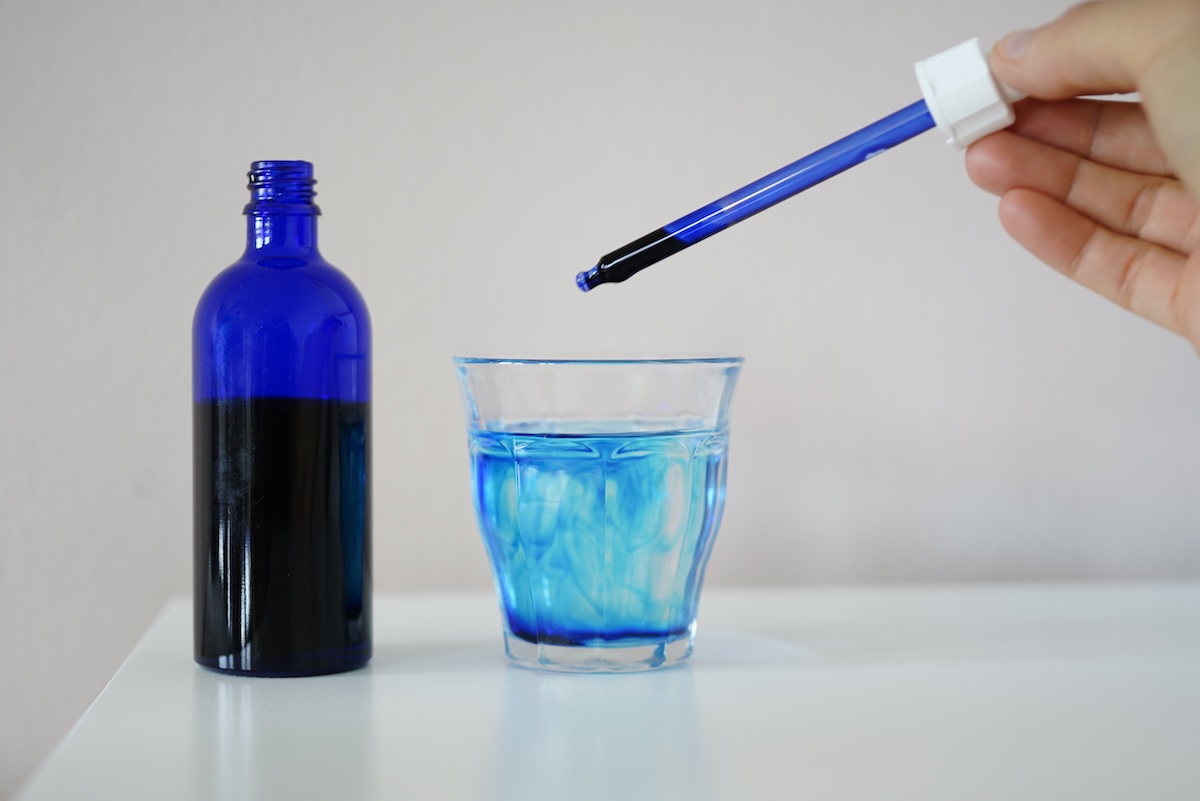
On TikTok, you’ll find countless videos of people putting drops of methylene blue on their tongues or in their water and attesting it boosted their energy and sharpened their thinking.
The purported benefits are numerous: improved cognitive function, slowed aging, Alzheimer’s prevention, cancer prevention and more.
These claims lack solid evidence. Some research shows it offers cellular benefits by assisting cells’ energy powerhouse — mitochondria. It’s unclear, however, how those benefits apply to humans.
That’s because most of the supportive evidence we have so far comes from laboratory or animal studies. One study in humans found that methylene blue reduced, rather than increased, blood flow and oxygen metabolism in the brain.
Raphael E. Cuomo, University of California San Diego professor of medicine, said methylene blue has the potential to support cellular energy production and, in some cases, reduce oxidative stress — an imbalance in the body’s antioxidants that can cause problems for cells and tissue.
“Small studies in healthy adults have explored memory and brain activity, but lasting cognitive benefits remain unproven,” Cuomo said.
A study of 26 people found that one dose of methylene blue improved accuracy on a memory retrieval task. Lorne J. Hofseth, a University of South Carolina pharmacy professor, said that finding gave researchers “preliminary support” to keep studying it, but didn’t establish that it would lead to sustained mental sharpness when used routinely.
Laboratory studies show that methylene blue or related compounds may affect certain proteins tied to Alzheimer’s but research is still needed before it can be a recommended treatment.
Based on current data, the claims that taking methylene blue will slow aging, or prevent cancer and Alzheimer’s “go beyond the clinical evidence,” Cuomo said.
Taking methylene blue without medical supervision can be dangerous
Methylene blue is not just a fun way to turn your tongue (and urine) blue.
It can dangerously interact with other medications including common anti-depressants that increase serotonin levels. Methylene blue has a similar effect as the medications, so when they are taken together it can cause serotonin syndrome, a medical emergency in which the body gets overloaded with serotonin.
Methylene blue is also dangerous for people with glucose-6-phosphate dehydrogenase (G6PD) deficiency, a common genetic disorder that can have no symptoms, which means people may not know they have it.
When someone with G6PD takes methylene blue it can cause hemolytic anemia, a life-threatening condition that can cause your body to destroy red blood cells faster than they can be created.
It should also not be taken while pregnant.
Other worrisome interactions are more mundane. People taking methylene blue may want to avoid foods and drinks rich in tyramine including red wine, beer, and aged cheeses and meats or otherwise risk uncontrolled high blood pressure.
And taking too much methylene blue can trigger methemoglobinemia — the condition it is FDA-approved to treat.
For these reasons, “methylene blue should be monitored in a medical setting by someone who understands the risks associated with the drug,” said Dr. Mazie Tsang a hematologist at the Mayo Clinic. “If taken without medical supervision, people could be exposed to life-threatening events. The harms outweigh any potential benefits.”
Unlike a prescribed medication, methylene blue purchased online may vary in dosage, purity, and contain unknown ingredients.
Plus it is easy to buy the wrong version. Methylene blue is still sold online as aquarium treatment or dye, so someone may order methylene blue not safe for human consumption.
“Given the unproven benefits and established risks, I would not recommend routine use as a wellness supplement,” Cuomo said.
Our Sources
Email interview with Raphael E. Cuomo, professor of medicine at University of California San Diego, Oct. 23, 2026
Email interview with Lorne J. Hofseth, professor of pharmacy at the University of South Carolina, Oct. 27, 2026
Email interview with Dr. Mazie Tsang, hematologist at the Mayo Clinic, Oct. 27, 2026
Email interview with Joe Schwarcz, chemistry professor at McGill University, Oct. 23, 2026
Health Harvard, What to know about methylene blue, April 24, 2025
American Cancer Society, What to Know About Methylene Blue, Oct. 15, 2026
The Independent, What was RFK Jr putting in his drink mid-flight?, Feb. 6, 2025
Journal of Cerebral Blood Flow & Metabolism, The effects of acute Methylene Blue administration on cerebral blood flow and metabolism in humans and rats, Feb. 21, 2023
Cleveland Clinic, Methylene Blue (Provayblue): Uses & Side Effects, accessed Oct. 27, 2026
University of South Carolina, Is methylene blue really a brain booster?” June 10, 2025
Cureus, Exploring Methylene Blue and Its Derivatives in Alzheimer’s Treatment: A Comprehensive Review of Randomized Control Trials, Oct. 9, 2023
StatPearls, Methylene Blue, Jan. 2, 2026
MD Anderson, Methylene blue: Should you take it?, March 3, 2026
JAMA, Methylene blue as antidote for cyanide and carbon monoxide poisoning, Jan. 7, 1933
Cleveland Clinic, Methemoglobinemia (MetHb): Symptoms, Causes & Treatment, April 10, 2026
Food and Drug Administration, PROVAYBLUE (methylene blue) injection, 2017
British Journal of Cancer, Methylene blue in the treatment and prevention of ifosfamide-induced encephalopathy: report of 12 cases and a review of the literature, Jan. 2000
TikTok video, June 9, 2026
Tiktok video, accessed Oct. 29, 2026
Tiktok video, Sept. 27, 2026
American Association of Naturopathic Physicians, What Is Oxidative Stress? Causes And How To Reduce It, According To Experts, April 22, 2025
Radiology, Multimodal Randomized Functional MR Imaging of the Effects of Methylene Blue in the Human Brain, Nov. 2016
Cleveland Clinic, G6PD Deficiency: Symptoms, Causes & Treatment, April 18, 2025
The Journal of ExtraCorporeal Technology, Methylene Blue-induced Methemoglobinemia during Cardiopulmonary Bypass? A Case Report and Literature Review, Sept. 2008
Amazon, Kordon Methylene Blue Disease Preventative, accessed Oct. 29, 2026
Amazon, Amazon.com: ALDON Innovating Science Methylene Blue 1% Aqueous Solution, 1 fl oz (30mL) Dropper Bottle – Methyl Blue Microscope Stain – The Curated Chemical Collection, accessed Oct. 29, 2026
The Spruce Pets, Comprehensive Guide to Methylene Blue for Aquarium Fish, accessed Oct. 29, 2026
Instagram post, Dec. 5, 2025
Instagram post, June 21, 2023
Instagram post, Aug. 8, 2025
Instagram post, April 11, 2026