After Supreme Court loss, Trump tariffs have bounced back
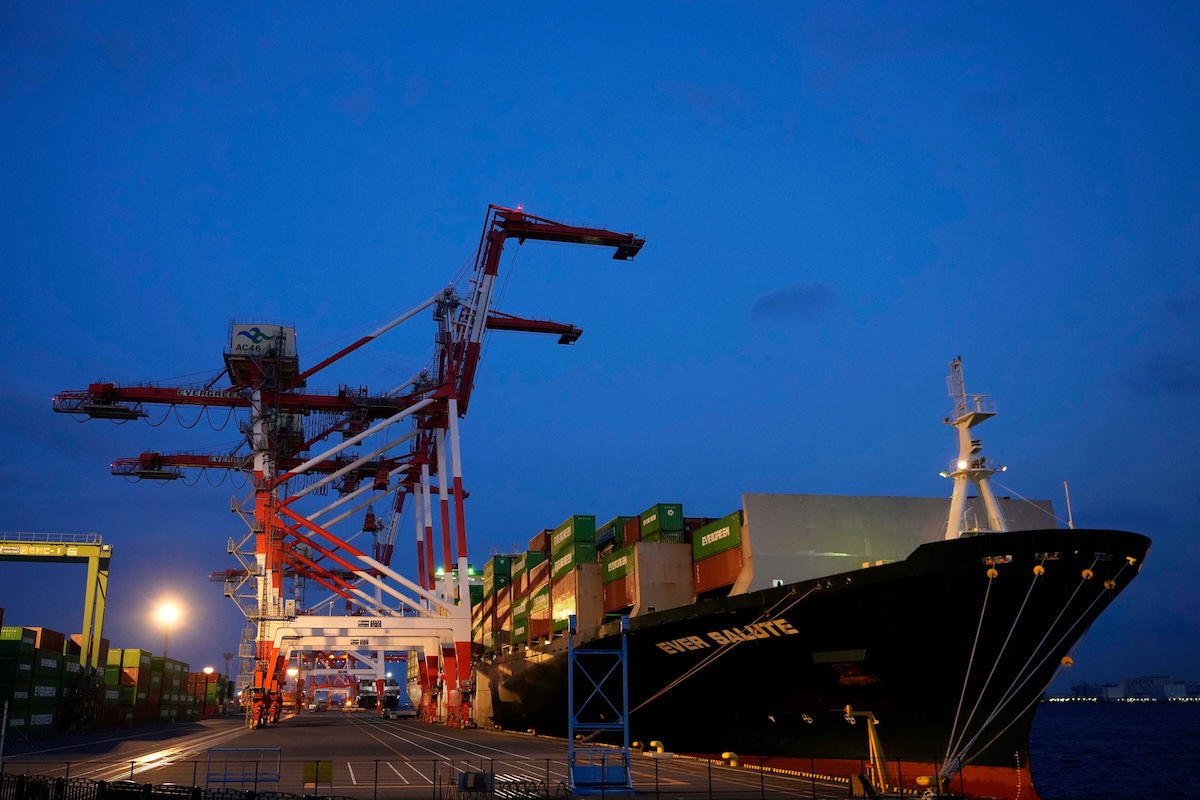

After a lull, international trade policy leapt back into the news as the U.S. and Canada, long the closest of allies, faced off in a tariff war.
President Donald Trump is employing a number of legal tactics to justify tariffs after the Supreme Court invalidated the legal authority he cited soon after taking office and announcing tariffs on nearly every nation.
The resulting levies are not as high or as broad as the president had initially sought when he announced his “Liberation Day” a few months into office. But trade experts say Trump has nonetheless made significant strides toward his original policy aims.
Tariffs are today roughly between where they were when Trump took office and their peak in early 2025 after Liberation Day. “But they have slowly been climbing their way back up, and they may not be done climbing yet,” Tax Foundation senior economist Erica York said.
Here’s the state of play on Trump’s second term tariff policy.
How high are tariffs now?
The average U.S. tariff rate is currently 7.2%, according to the Tax Foundation. Except for a spike in early 2025, before the Supreme Court’s ruling, that’s higher than at any time since 1967, when Trump was still in college.
A related metric — the average tariff rate adjusted for the total value of shipped goods — has risen from 2.8% when Trump took office for the second time to 12.5% today. In between, the average peaked at 21% before falling after the court’s ruling.
All told, a majority of imports to the U.S. now have a tariff, though the administration has made exceptions for some agricultural products, generic pharmaceuticals and other items. Sometimes these exceptions came under pressure from companies or lawmakers.
The number of countries subjected to tariffs is down from about 180 on Liberation Day to about one-third of that now, said Ross Burkhart, a Boise State University political scientist who specializes in trade policy. But for many of the United States’ biggest trade partners, the basic tariff rate has generally settled in at 10% to 12.5%, including the European Union, Taiwan, Japan, South Korea, and the United Kingdom.
How did Trump get tariffs back in place?
Trump replaced the legal justification that was invalidated by the Supreme Court with alternative legal powers.
In some cases, he’s used Section 122 of the 1974 Trade Act, which enables the president to add a 15% tariff on imports for 150 days given “large and serious” deficits in the U.S. balance of payments with other nations or to prevent “an imminent and significant depreciation of the dollar” in foreign exchange markets.
In other cases, he’s used Section 301 of the 1974 Trade Act, which allows tariffs when the president determines that a foreign country “is unjustifiable and burdens or restricts United States commerce” through violations of trade agreements. These are generally targeted at specific industries or products.
He’s also used Section 232 of the 1962 Trade Expansion Act, which lets the president impose tariffs if national security is threatened.
To impose the recent Canadian tariffs, Trump used Section 338 of the 1930 Tariff Act, which allows the president to place up to a 50% tariff on foreign goods if the U.S. International Trade Commission finds that the foreign country has used unfair trade practices against the U.S. In levying the new tariffs, the White House said Canada had engaged in “discriminatory treatment of American products” including automobiles, dairy products and alcoholic beverages.
None of these powers is quite as unfettered as those the Supreme Court struck down; many of the legal authorities above require formal trade investigations before tariffs are enacted, and some have limits, either on how high tariff rates can go or how long the levies can be imposed.
Some — especially the Section 338 tariffs used against Canada — may be open to legal challenge. If Democrats win control of the House and Senate in the midterm elections, they could try to curb Trump’s efforts, something the president’s fellow Republicans have generally been unwilling to do.
What is happening with refunds from the tariffs the Supreme Court struck down?
By invalidating Trump’s initial round of tariffs, the Supreme Court required refunds of the tariffs already collected. This process has been underway for several months, as can be plainly seen from the data on federal tariff revenue collected.
From April 2025 to April 2026, tariff revenue surged to about $20 billion to $30 billion a month, up from roughly $7 billion a month in the year before Trump’s second term began. Then, in May 2026, it fell almost to zero, and in June and July, tariff revenue turned negative, meaning the refunds were outpacing tariff revenues collected. This period of negative revenue is likely to be temporary, lasting as long as refunds are being paid out.
Although the refund process has been relatively smooth, experts said, it may be easier for some companies than others.
“Smaller businesses have a harder time receiving these refunds, while the Walmarts and Amazons of the world do just fine,” Burkhart said.
Companies that imported the wrongly tariffed goods get the refunds and are under no obligation to share the proceeds of those refunds with their customers — the folks who often paid higher prices in the interim.
The refunds “may not match up with who ultimately bore the burden of the tariff,” York said.
What has been the tariffs’ economic impact?
York said the tariffs haven’t been as damaging as critics initially warned. That’s partly because the overall rates are lower now than they were early in Trump’s second term. But they aren’t the economic panacea Trump promised.
Anecdotal evidence from companies surveyed show that tariffs have complicated businesses’ decision-making — especially when levies have been imposed and reversed in short order.
Companies have “paused on hiring decisions, or paused on expansions, or had to forego other investments,” York said. “So it certainly was disruptive.”
This friction may be showing up in the nation’s economic growth numbers. Although Trump said during the 2024 campaign that if he’s elected “we’re going to grow like nobody’s ever grown before,” quarter-over-quarter growth in gross domestic product has not exceeded 2.1% for the past three quarters. That’s a rate well below the long-term average and one that Burkhart called “not particularly encouraging for the reindustrialization of the United States.”
Another sign Trump’s aim of reindustrializing the nation is stalling: Manufacturing jobs have declined during Trump’s second term, falling by 62,000 from January 2025 to July 2026.
The trade deficit also didn’t narrow during the first year of Trump’s second term; for goods, it actually increased slightly.
Inflation-adjusted wages, meanwhile, have risen modestly — by about 1.3% over the past five quarters, and those gains will be tested by continuing high inflation exacerbated by the Iran war’s cutbacks on the oil supply.
Our Sources
U.S. Supreme Court, “Learning Resources, Inc., et al., Petitioners v.Donald J. Trump, President of the United States, et al,” accessed Aug. 24, 2026
Section 122 of the 1974 Trade Act
Section 301 of the 1974 Trade Act
Section 232 of the 1962 Trade Expansion Act
Section 338 of the 1930 Tariff Act
White House, “Fact Sheet: President Donald J. Trump Imposes Additional Tariffs on Canada,” July 20, 2026
Tax Foundation, “Tracking the Impact of the Trump Tariffs & Trade War,” accessed Aug. 24, 2026
Bureau of Economic Analysis, “Percent Change From Preceding Period in Real Gross Domestic Product,” accessed Aug. 24, 2026
Federal Reserve Bank of St. Louis, “All Employees, Manufacturing,” accessed Aug. 24, 2026
CNBC, “‘They asked too much’: Canadian dollar slides as Ottawa and Washington head for all-out trade war,” Aug. 24, 2026
PolitiFact, “The US-Canada trade war: What happened? What’s next?” Aug. 24, 2026
Interview with Ross Burkhart, Boise State University political scientist, Aug, 21, 2026
Interview with Erica York, senior economist with Tax Foundation, Aug, 21, 2026