Fact check: Abdul El-Sayed, Mike Rogers debate NAFTA, Medicare for All, Social Security
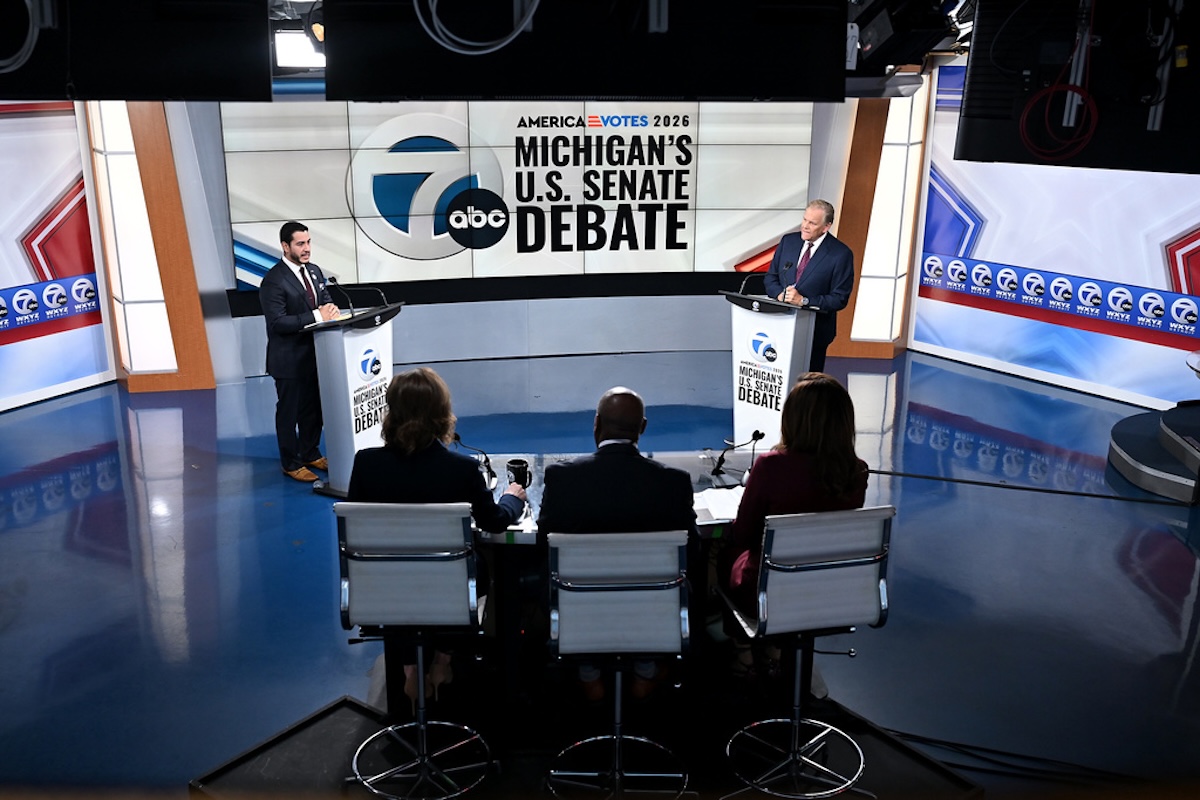



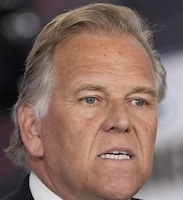
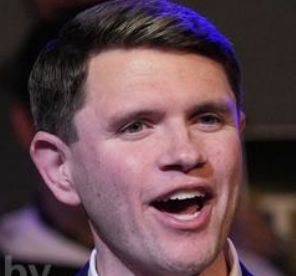
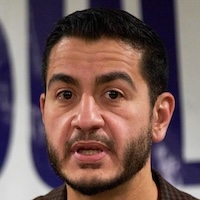
Democrat Abdul El-Sayed and Republican former U.S. Rep. Mike Rogers met in their second and final debate in the campaign for U.S. Senate in Michigan, casting each other as extreme and offering competing solutions for rising prices.
El-Sayed sought to tie Rogers to President Donald Trump’s unpopular decisions like the war in Iran and tariffs. He described Rogers’ responses as “MAGA bingo” and said Rogers wouldn’t stand up to Trump.
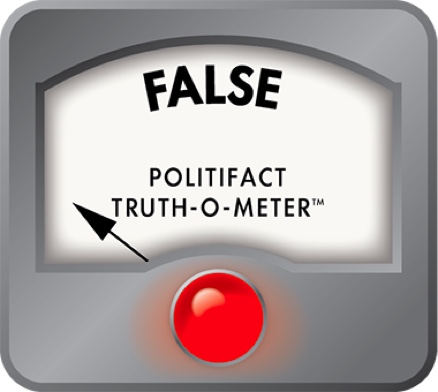
Rogers painted El-Sayed as dishonest, saying he “lied about being a physician” and his citizenship. (El-Sayed has a doctor of medicine degree, but not a medical license.) Rogers accused him of sympathizing with extremist groups and said El-Sayed’s signature Medicare for All proposal would raise taxes on Michiganders.
Still, they focused more on policy this time than in their first meeting. Here’s our fact-checks of the Oct. 21 debate hosted by WXYZ-TV in Detroit.
Read our live fact-checking blog of the debate between El-Sayed and Rogers
‘Hot mic’ and ‘he lied’
El-Sayed: “Mike Rogers was just caught on a hot mic talking about how he wanted to make sure that there were retired cops who could intimidate voters in the city of Detroit.”
El-Sayed is referring to audio of Rogers speaking to a local Republican group in April. The Detroit News reported the remarks in May, but the recorded audio surfaced the week before the Oct. 21 debate. In the clip, Rogers speculated about a “van full of ballots” showing up in Detroit to swing his 2024 election against him, despite no evidence of fraud affecting the 2024 Michigan Senate race, which he lost to Democrat Elissa Slotkin.
Rogers then suggested using off-duty police officers as his poll watchers in the upcoming election because he said election officials in 2024 had intimidated Republican poll watchers.
View this post on Instagram
“Let’s put retired or off-duty police officers as our poll watchers in Detroit,” he said. “Go ahead, try to intimidate them.”
Rogers told ABC News in an Oct. 20 interview after the audio surfaced that his point was not about discouraging people from voting. He said he wanted to make it “easy to vote, hard to cheat.”
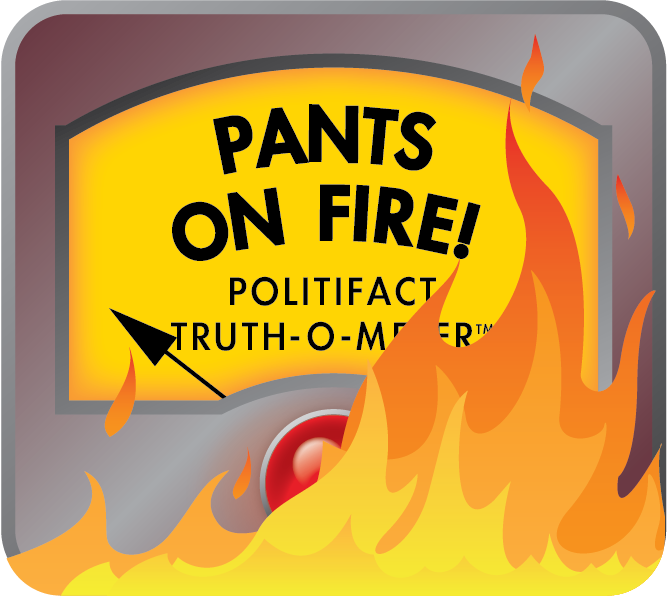
Rogers: El-Sayed “lied about being an Egyptian dual citizen.”
El-Sayed previously wrote that he had dual citizenship, but his campaign said that was a mistake.
In January, The Washington Free Beacon reported that around 2014 El-Sayed published a resume on an academic networking site and described his citizenship as “USA, Egypt.” After the outlet sent the resume to the campaign for comment, the resume was removed from the site.
“Abdul is not a dual citizen by any verifiable metric and never has been,” El-Sayed’s campaign spokesperson Roxie Richner told The Washington Free Beacon. She said El-Sayed was “told as a child that his grandfather had pursued Egyptian citizenship on his behalf, for which he was eligible due to his parents being born in Egypt.”
Economy: NAFTA, carbon tax
El-Sayed: Rogers supported NAFTA, said it would be good for U.S. workers.
El-Sayed said Rogers supported the North American Free Trade Agreement, or NAFTA, which Rogers denied. Former President George H. W. Bush signed NAFTA into law in 1992.
“By the way, NAFTA was passed about 10 years before I got into Congress,” said Rogers, who entered Congress in 2001. “This is really kind of a ridiculous argument.”
El-Sayed then said that Rogers quipped NAFTA “would be good for the American worker” in the long term.
Rogers did say that in a 2000 congressional debate, but he has spoken about free trade differently in his Senate campaign. (The Rogers campaign referred us to his debate response.)
“I think in the long run NAFTA is going to be good for America, but with any kind of big idea there is sometimes some big problems,” Rogers said in September 2000, when he was running for Michigan’s 8th Congressional District.
During his 14 years in the House, Rogers voted in favor of multiple free trade agreements between the U.S. and countries such as Panama, Peru and the Dominican Republic. These agreements between two or more countries reduce barriers to U.S. exports by, for example, reducing tariffs.
As a U.S. Senate candidate in 2024 and 2026, Rogers has changed his position on free trade agreements. During an October forum hosted by the Detroit Economic Club, Rogers said “bad trade policy” has affected the car manufacturing industry in Michigan but tariffs were fixing the problem. Rogers has supported most of Trump’s second-term tariffs but recently called for an end to the “tariff war” with Canada.
Trump’s 2020 U.S.-Mexico-Canada Agreement superseded NAFTA.
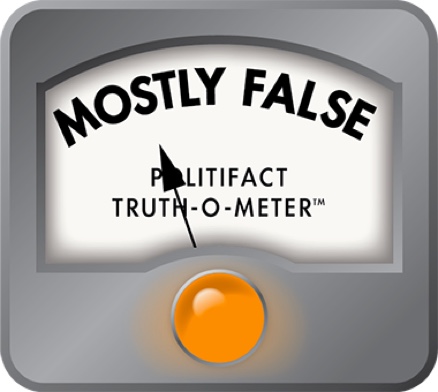
Rogers: El-Sayed “has a carbon tax that he wants to put on that would give you the highest utility rates, over $2,000 in new costs.”
The figure is based on a study of policies that partly align with El-Sayed’s platform — though he is not calling for a carbon tax.
Rogers released an Oct. 15 ad that made similar claims, citing a webpage from El-Sayed’s unsuccessful 2018 gubernatorial campaign and a Mackinac Center article in April about a different Democrat’s plan.
PolitiFact found an archived 2018 campaign page in which El-Sayed proposed a “corporate polluter fee and taxpayer credit” that he said would charge corporations for carbon emissions and give the money back to taxpayers as a stipend.
His Senate campaign platform says he will “hold polluters accountable” but does not mention a corporate polluter fee. El-Sayed says he will “fight for a pathway to 100% renewable energy” by investing in solar, wind and battery storage and a modernized smart grid.
The Mackinac Center, a free-market focused think tank, studied Democratic Michigan Gov. Gretchen Whitmer’s “MI Healthy Climate Plan” that state lawmakers approved in 2023. The center estimated that residential electricity rates could rise by about $2,000 a year by 2035, attributing the potential increase to a transition from Michigan’s electric grid to “almost wholly on wind and solar with battery storage.”
El-Sayed’s campaign said he supports temporarily suspending state and federal gas taxes.
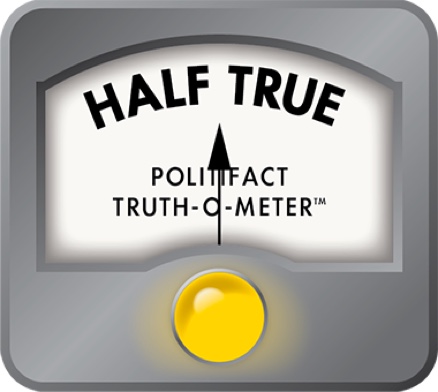
El-Sayed: Rogers made $14 million advising corporations he was regulating during his time in Congress
This needs context.
Rogers did paid work for technology and cybersecurity firms after leaving Congress in 2015, with payments exceeding $1 million in 2023. His net worth has increased by millions, according to his financial disclosures, but a full accounting of his post-Congress earnings is not available.
Rogers chaired the House Intelligence Committee from 2011 to 2015, and he sat on the Energy and Commerce Committee’s Communications and Technology Subcommittee.
Some of the organizations he consulted for, including AT&T, were under his oversight and affected by the decisions those committees made.
In 2015, he reported less than $1 million in nonproperty assets on his required financial disclosures. Rogers listed nonproperty assets between $7.2 million and $14.6 million on his 2026 financial disclosure. While his consulting career drove those earnings, it doesn’t mean he was paid $14 million for that work; some of the growth could be attributed to stock market gains over the last decade.
Social Security, Medicare for All
El-Sayed: Rogers is “on record” saying he wanted to privatize Social Security and “wanted to raise the retirement age to 67.”
Rogers’ record on both these issues is not as clear as El-Sayed said.
Rogers’ past statements show he was open to raising the retirement age, but his stance was not consistent. And although El-Sayed’s campaign pointed to what they said were votes showing Rogers supported Social Security privatization, the record on that is less definitive.
While serving in Congress from 2001 to 2015, Rogers voted against motions in 2011 and 2013 to add amendments that would have prohibited spending funds to privatize Social Security. A vote against something does not necessarily equate to a vote in support of its antithesis.
In 2000, Rogers said he supported the idea of allowing people to put some of their Social Security tax in a private investment fund.
We found no statements from Rogers during this campaign cycle regarding privatizing Social Security. Rogers did not respond to El-Sayed’s claim on the debate stage; his spokesperson Alyssa Brouillet told PolitiFact afterward that he is “committed to protecting Social Security.”
On changing the retirement age, we also found no recent statements from Rogers in support. But in 2023, when he was exploring a presidential bid, Rogers said he was open to changing the Social Security retirement age.
That year, when asked about an effort by former President George W. Bush that would have allowed people to invest their payroll tax funds in the stock market, Rogers said, “I think Americans see Social Security very different than their personal investments, and they don’t want to see them intertwined. And I’m not sure that’s the wrong answer, honestly.”
As recently as 2024, a Rogers spokesperson told PolitiFact Rogers didn’t support raising the retirement age.
Rogers: Medicare for All would be “$7 trillion a year in new expenses, about $20,000 per family, in new taxes.”
The cost and tax burden of Medicare for All, a national single-payer health insurance program that is core to El-Sayed’s campaign, varies by proposal.
El-Sayed hasn’t laid out a funding plan but has acknowledged it will likely increase taxes, while noting the taxes would replace copays and premiums. A Yale study from July estimated that a national healthcare system would lower overall U.S. health spending by $1 trillion annually.
In 2018, the Urban Institute estimated Vermont U.S. Sen. Bernie Sanders’ Medicare for All proposal would cost $32 trillion over 10 years. John Holahan, a fellow at the Urban Institute, told CNN this year that the price tag could have doubled since then because of inflation and rising healthcare costs.
Rogers’ $20,000 in new taxes figure is based on an estimate for the cost if the plan were funded by mandatory public premiums. The Committee for a Responsible Federal Budget estimated in 2020 that replacing private health insurance premiums with a per-person Medicare premium would average about $7,500 per person, or $20,000 per household. The report said that employers could pay some of that premium, as they do with health insurance costs now, or they could be reduced or waived based on income.
But other Medicare for All funding ideas exist, too, including financing it with increased payroll taxes, higher income taxes or a wealth tax. Some proponents have pitched financing the program with increased taxes on corporations and employers rather than individual taxpayers.
Rogers: El-Sayed’s Medicare for All plan “takes away your private health insurance. Five million Michiganders will lose their healthcare.”
Some versions of Medicare for All call for banning private health insurance that matches Medicare’s coverage, but El-Sayed has said he supports a plan that allows for private health insurance to coexist with a government-operated single-payer plan.
Under a Medicare for All plan, every American would be eligible for coverage provided by Medicare.
About 5 million Michiganders, and around 49% of Americans, receive employer-provided health insurance.
El-Sayed’s campaign website says his plan “does not have to ban additional private insurance through unions or employers, although Medicare for All should make those choices redundant and unnecessary.”
In an Oct. 11 interview on “Meet the Press,” El-Sayed said people could keep their employer-provided coverage under his plan, but his website does not explain the mechanisms.
That would differ from Sanders’ Medicare for All proposal, which would prohibit private insurers from offering duplicate coverage.
RELATED: Read all of our Michigan fact-checks
Our Sources
Sources linked in the article.