When will we know 2026 midterm election results? It may take some time, but that’s normal.


If you go to bed on election night and don’t know who won a midterm congressional race, that’s normal. And if you wake up the next morning and find that a candidate who was behind hours earlier has since pulled ahead, that’s normal, too.
That won’t stop some politicians and their allies from spreading misinformation during vote counting.
In past elections, elected leaders, candidates and social media users have spread falsehoods that “late night” arrivals of “ballot dumps” or “suitcases” of ballots are signs of fraud, or that only Democratic-led cities take days to count votes.
Some states such as Florida often complete the majority of their unofficial counts in fewer hours or days than elsewhere. But it is not a sign of fraud if other places need more time.
“States are neither fast or slow, they all count and certify the results in accordance with the laws passed by their state legislature,” said Ryan Macias, an election technology and cybersecurity expert. “What is fast or slow is how quickly the media can collect sufficient evidence to confidently predict the winner, which is typically based on the margin of victory.”
Voters can help elections run smoothly. People who vote by mail, for instance, should not wait until the last minute to submit their ballots. Many election offices provide secure drop boxes to speed the return of mailed ballots. The U.S. Postal Service recommends that voters mail in their ballot at least one week before the deadline.
“There are always a handful of really close Senate and House races in which the winner will not be determined for several days or, in the cases of Alaska and California, as much as a week or two,” said Joe Lenski, executive vice president of SSRS, which conducts a national exit poll on Election Day.
Control of the U.S. Senate could come down to a handful of close races with large numbers of ballots to count.
No state is required to complete the official count on election night. State laws set deadlines to certify final results, often weeks later.
Here’s a look at what could influence the timing of unofficial results.
Close margins
Polls and nonpartisan analysis show many U.S. Senate races are competitive, including in Michigan, Maine, Iowa, Alaska, Kansas and Texas. If the counts are close in the first few hours or even days after polls close, media outlets may have to wait for officials to count more ballots until journalists can project a winner. Some close races could end in a recount completed days or weeks later. In 2018, three Florida statewide races were settled in recounts.
Candidates who lead early in the vote count may not ultimately win. In 2020, Donald Trump was up by more than 100,000 votes in Wisconsin early in the night, but the picture quickly shifted after Milwaukee’s central count finished processing mail-in votes around 3:30 a.m local time. The late boost for Joe Biden from Milwaukee was expected, especially because Wisconsin’s mail-in ballots tend to skew Democratic.
The pattern of when votes are counted — and what political leanings those jurisdictions’ voters tend to have — varies by state.
Mail ballot volume and receipt deadlines
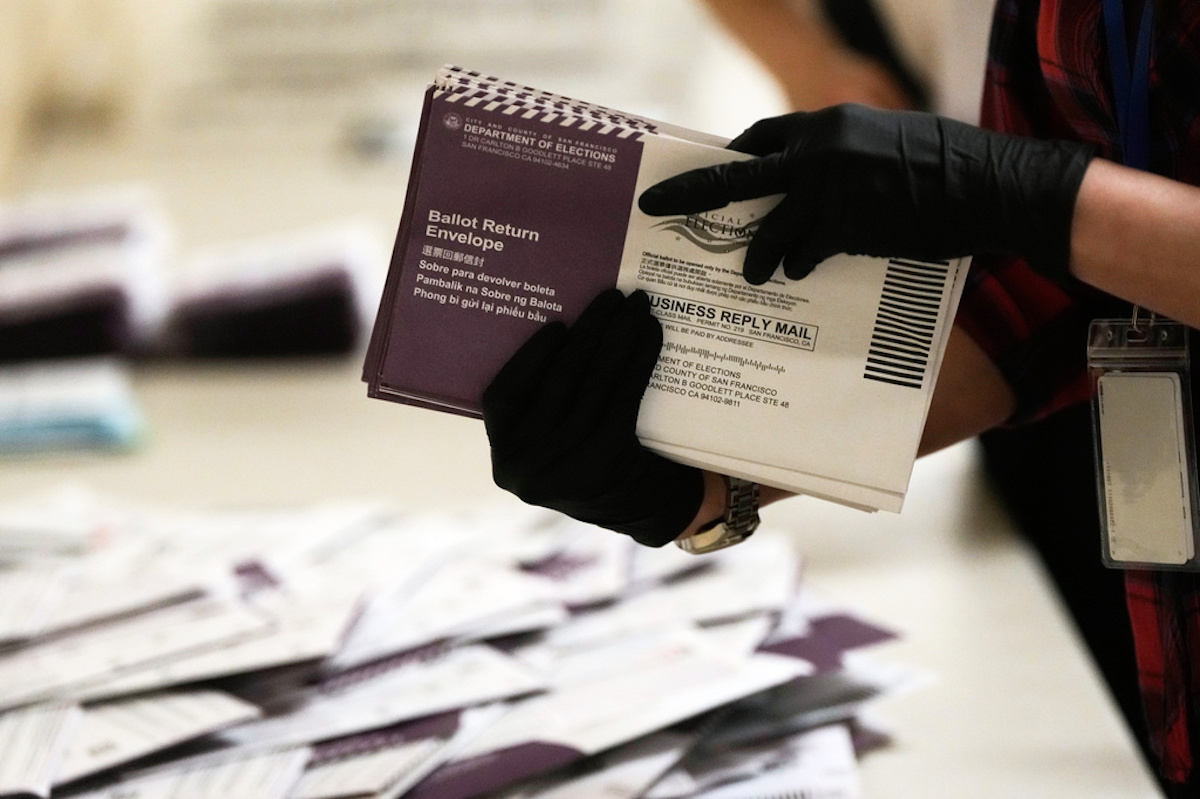
Department of Elections workers sort mail-in ballots for the California primary election at City Hall on June 2, 2026, in San Francisco. (AP)
It takes time to process mail ballots. Election workers must verify voter identity, for example, by matching envelope signatures against registration records.
Most states, including Florida, require that mail ballots be received by Election Day. But some states allow voters to return ballots later as long as they were postmarked by Election Day.
In California, which runs nearly all-mail elections, ballots postmarked by Election Day and received up to a week later are permitted. The U.S. Supreme Court in June upheld the right of states to have such a policy, a blow to Trump, who says he wants a faster process and has spread falsehoods about California’s vote counting.
Ohio passed a law in 2025 that said most absentee ballots must be received by the close of polls on Election Day; previously it had a four-day grace period.
In California, counties must count and report the results from most ballots by the 13th day after the election. There are some exceptions to that, including for provisional ballots and mail ballots with signature verification needs; election officials should be done counting those within 30 days after the election.
In U.S. House races, there are always a handful of districts that are not called on election night or the day after, mostly in California, Lenski said.
RELATED: Trump said the pace of California ballot counting proves a rigged election. Pants on Fire!
Last minute absentee ballot submissions: A Michigan case study
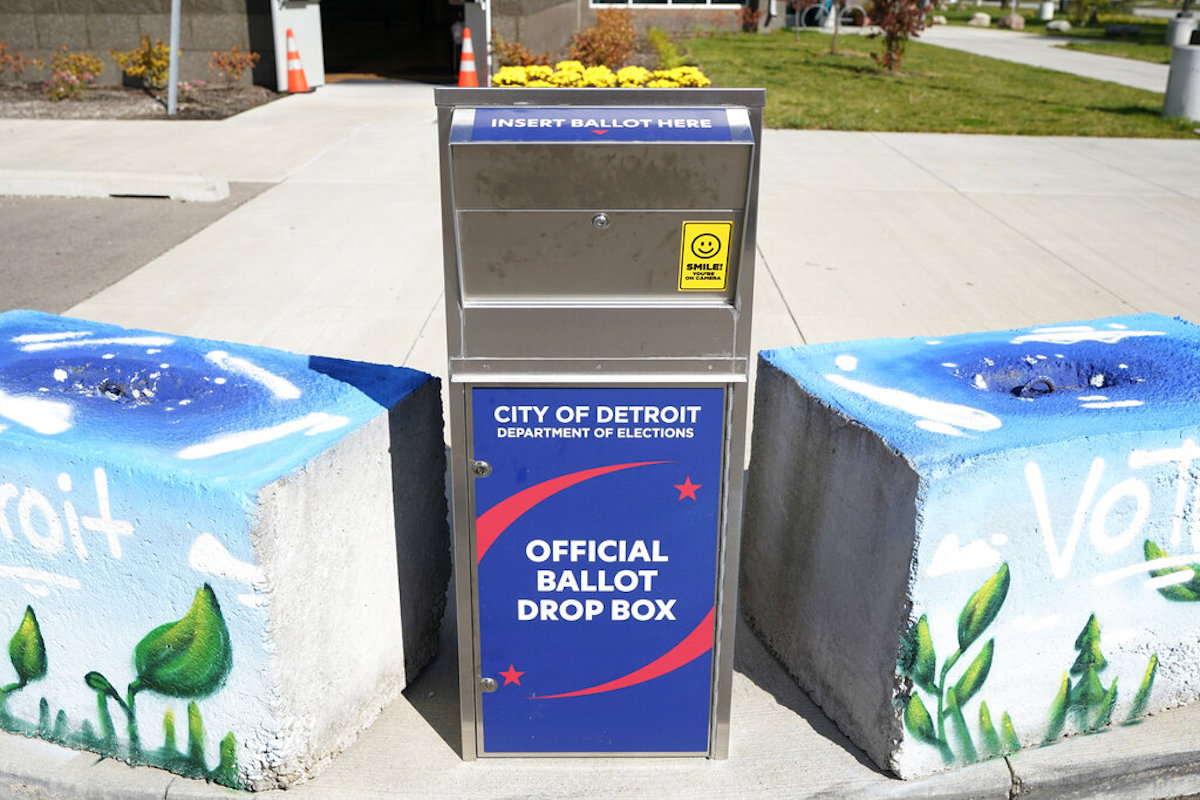
A ballot drop box in Detroit on Oct. 16, 2020. (AP)
When thousands of voters procrastinate sending in their mail ballots until the last minute, it takes election workers extra time to process and count those ballots. In past elections, some people have spread falsehoods about such “delays” in places like Detroit, pointing to vans with ballots arriving late at night as evidence of foul play.
The winner of the U.S. Senate race may not be clear until officials can count nearly all of Detroit’s ballots.
With more than a half million voters, Detroit election officials predict they will report results for approximately 95% of ballots on election night.
“It is an estimate, not a statutory deadline or guarantee,” said Daniel A. Baxter, Detroit elections chief of operations.
The variable is the number of absentee voter ballots received by 8 p.m. on Election Day (the deadline in Michigan law). Baxter said officials will make every reasonable effort to complete tabulation by 4 a.m., though it could take longer if a ton of absentee ballots arrive near the deadline.As of the evening of Oct. 26, about half of the 106,000 absent voter ballots in Detroit had been returned.
Detroit, a city that spans about 140 square miles, has 38 drop boxes. It takes a few hours after the polls close for election workers to collect ballots and bring them in a truck to Huntington Place for tabulation.
Smaller Michigan cities such as Troy, home to 66,000 voters, have a handful of drop boxes. During past elections, City Clerk M. Aileen Dickson said, Troy has finished counting ballots before midnight.
Preparing ballots for counting
No state posts mail ballot results before the polls close. But some allow election officials to begin processing mail ballots before Election Day. That means they can verify that the ballot was submitted by a valid voter, including checking signatures and often removing the ballot from the inner security envelope, flattening it and stacking it.
The steps election officials can take and when vary according to their state laws. A handful of states including New Hampshire don’t allow the process to begin until Election Day.
Ranked choice voting
Two states with competitive U.S. Senate races use ranked choice voting: Maine and Alaska. The system allows voters to rank their candidates in order of preference.
If a candidate wins more than 50% of first choices, then that ends the race. If not, the candidate who received the fewest votes is eliminated and voters who ranked that candidate first have their vote re-allocated to their second choice. That process repeats until a candidate wins over 50% of the vote.
Alaska accepts ballots mailed from outside the U.S. for 15 days after Election Day and has a long history of close races that take that long to count.
California races could take longer to count than Alaska this year, and any race recounts could run into December or beyond. A 2024 contested North Carolina state Supreme Court race did not lead to a resolution for about six months.
In Alaska, there are four Senate candidates on the ballot including Republican incumbent Sen. Dan S. Sullivan and Daniel J. Sullivan Jr., who will appear on the ballot without a party affiliation. In an unusual move, the U.S. Justice Department filed a lawsuit Oct. 22 seeking to block certification if the incumbent loses, alleging voter confusion. Lawyers on behalf of Mary Peltola, the Democrat, have asked the court to dismiss the case.
Maine could end up in ranked choice voting because Republican Sen. Susan Collins and Democratic challenger Troy Jackson appear on the ballot along with six write-in candidates.
Municipalities report the results from the first round and then the state will know either the next day or the day after if it will proceed with ranked choice, Maine Secretary of State Shenna Bellows told PolitiFact. Historically, the state has known the ranked choice outcome the week after the election.
“We will work as expeditiously and efficiently as possible to get results as quickly as we can,” Bellows said, “but what is most important is that it is accurate and reflects the will of voters.”
RELATED: Live fact checks of the midterms
RELATED: MAGA-Meter: President Trump’s promise to count all votes on election night
Our Sources
MIT professors Charles Stewart and Sina Shaikh, Why the Wait? Preprocessing, Mail Ballot Usage, and Vote Reporting Dynamics in the 2020 and 2024 Elections, Jan. 27, 2026
Center for Election Innovation and Research, CEIR Explains: How Election Results Coverage Really Works, June 2026
Washington Attorney General Nick Brown, x post, Oct. 19, 2026
Washington State, vote-by-mail timeline, November 2024
California Secretary of State, Official Canvass – Vote Counting Process, October 2026’
Alaska, ballot, Nov. 3, 2026
Alaska Division of Elections. Media packet, 2026
U.S. Postal Service, U.S. Postal Service Says It’s Business as Usual for the 2026 Election, Oct. 20, 2026
Decision Desk HQ, Polls, October 2026
Inside Elections, Senate, Oct. 29, 2026
Cook Political Report, 2026 CPR Senate Race Ratings, Oct. 20, 2026
The Center for Politics, Sabato’s Crystal Ball, 2026 Senate rankings, Oct. 27, 2026
National Conference of State Legislatures, Election recounts, Oct. 19, 2026
National Conference of State Legislatures, Table 11: Receipt and Postmark Deadlines for Absentee/Mail Ballots, Sept. 25, 2026
National Conference of State Legislatures, Table 16: When Absentee/Mail Ballot Processing and Counting Can Begin, Sept. 15, 2026
FairVote, When should we expect results in Alaska’s ranked choice voting elections? Oct. 6, 2026
FairVote, Which Maine elections will use ranked choice voting this November? Oct. 20, 2026
WRAL, Republican Jefferson Griffin concedes long-unsettled NC Supreme Court election to Democrat Allison Riggs, May 8, 2025
The Almanac of American Politics, Oregon pioneered voting by mail. It’s now trying to halt efforts to overturn it, Sept. 11, 2026
PolitiFact, Donald Trump and Rick Scott allege fraud in Broward, Palm Beach vote counting without any evidence, Nov. 13, 2018
PolitiFact, Donald Trump wrong that a winner has to be announced Election Night, Oct. 28, 2020
PolitiFact, No, Wisconsin did not take a break from counting election results, Nov. 5, 2020
PolitiFact, Trump rehashes debunked claim about ‘suitcases’ of ballots in Georgia phone call, Jan. 4, 2021
PolitiFact, Not all results will be known on election night 2022. That’s normal, Oct. 3, 2022
PolitiFact, No, every vote wasn’t previously counted on election night, Nov. 4, 2022
PolitiFact, Election result delays are not proof of fraud, Nov. 8, 2022
PolitiFact, Why days of ballot counting isn’t suspicious, Nov. 9, 2022
PolitiFact, No, these photos aren’t evidence of voter fraud in Detroit, Nov. 10, 2022
PolitiFact, It takes longer than 24 hours to count presidential election votes, despite claim to the contrary, March 14, 2024
PolitiFact, No, ballots counted after Election Day don’t mean elections were stolen, Nov. 21, 2024
PolitiFact, Alaska voters gave themselves the power to rank candidates. Why do some people want to repeal that? June 17, 2024
Statement to PolitiFact, California Secretary of State’s office, Oct. 26, 2026
Telephone interview, Maine Secretary of State Shenna Bellows, Oct. 26, 2026
Email interview, Joe Lenski, executive vice president of SSRS, Oct. 26, 2026
Email interview, Daniel Baxter, Detroit elections director of operations, Oct. 26, 2026
Email interview, M. Aileen Dickson, Troy, Michigan city clerk, Oct. 26, 2026
Email interview, Cheri Hardmon, spokesperson, Michigan Department of State- Secretary of State Jocelyn Benson, Oct. 23, 2026
Email interview, Ryan Macias, owner of RSM Elections Solutions, election technology and cybersecurity expert. Oct. 22, 2026
Email interview, Will Mantell, FairVote spokesperson, Oct. 26, 2026